How Far Are We From Full-Dive VR?
Photo from Eren Li via Pexels.
Kaviyan Jayalaksshme Srinivasan
You are in a world where you soar with a flock of birds across an indefinite, blue sky, the crisp air circulating through your lungs, as the sun lights up an ethereal stage. In this world, you stand before a beast twice your size with gnarly claws, spiky fur, crimson red eyes, and deep blue scales, like a single headed Cerberus. Yet you do not fear, as you feel the power surging through your body, unleashing your fury in a fantastical strike of blue light, bending space as it hunts its target through the dark labyrinth. This is a hyper immersive reality indistinguishable from our own. This is the technology of the future: Full-Dive VR.
So…how far are we from it?
Traditional VR:
The answer requires a deep dive into two parts: current technology and developmental limitations.
To understand Full-Dive VR, we first need to look at what we already have.
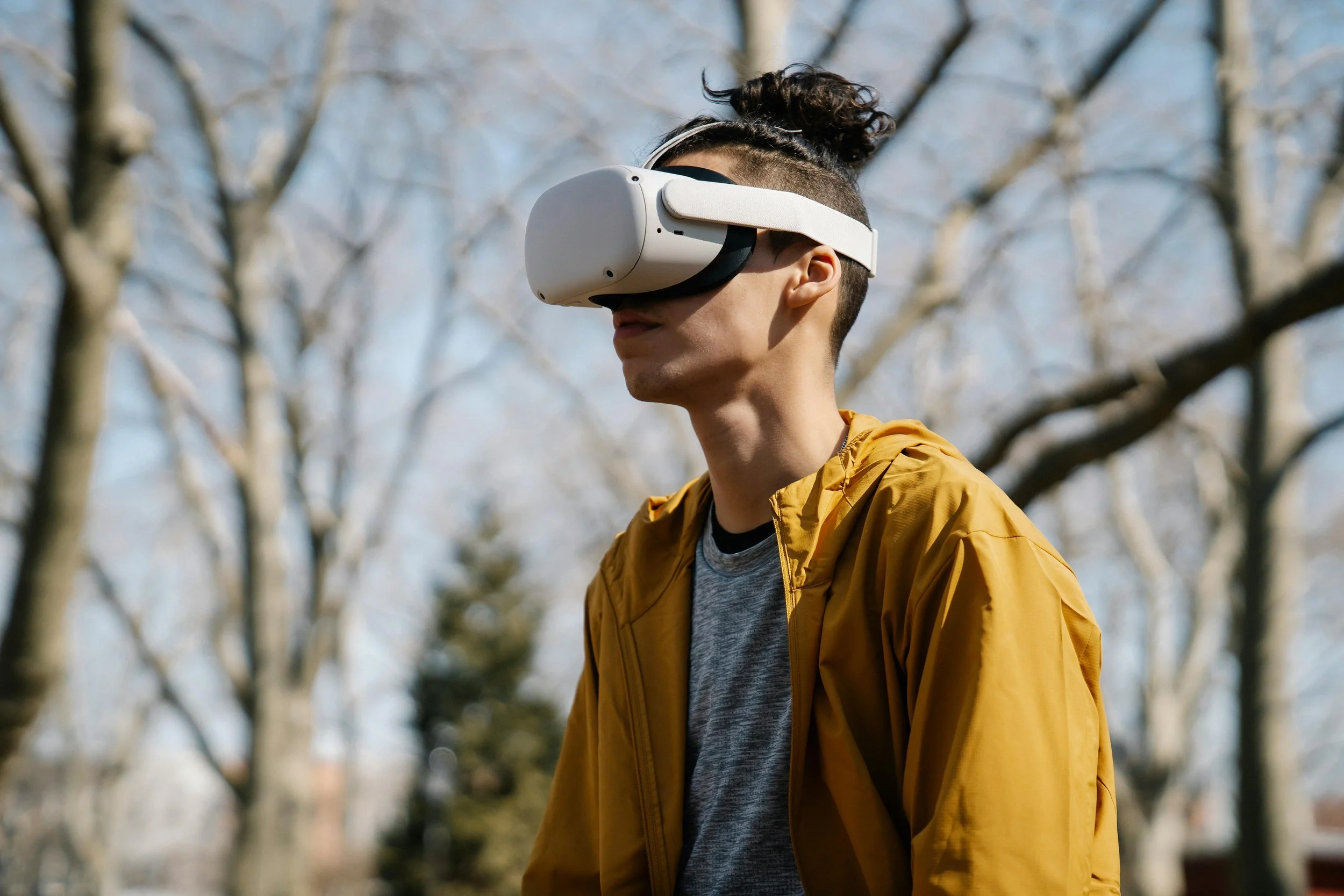
Traditional virtual reality is a digital 3-D environment designed to create a comprehensive visual immersion in space. VR allows us a higher degree of interaction with the digital world by using technologies that track our eyes, hands, and body movements, allowing us to move what we can’t physically touch.
VR headsets use several components: head-mounted displays, lenses and screens, latency and field of view, fast frame rates, gyroscopes, accelerometers, spatial audio, and motion controllers. Respectively, these help block outside light, project slightly different images to each eye to create 3-D vision, reduce lag, maintain smooth visuals, detect head and body movement, allow directional sound, and let us grab or throw objects.
You may know that traditional VR is being applied more prevalently in industries such as real estate, engineering, and military operations. We get to visualize and customize our homes before building them, design and test theoretical structures, and optimize training for combatants without the risks of evaluating physical models or undergoing strenuous situations.
However, the problem with modern VR is that we can only see and hear the digital world.
But what if we could live in that reality?
That is the promise of Full-Dive VR.
Full-Dive VR:
This is where things get interesting. Full-Dive VR allows for absolute sensory immersion into a digital world by directly interacting with the brain. It creates an alternate reality internally, bypassing your external senses by feeding images and sensations straight into your mind. You would move simply by thinking, maintaining full control over your virtual body while your physical body remains completely at rest. Absolute immersion means sight, sound, touch, taste, and smell—indistinguishable from real life.
The easiest way to imagine this concept is through the common phrase “the world is a simulation.” Because you wouldn't be able to tell the difference between what is real and what is not, aside from the fact that you chose to use Full-Dive VR technology.
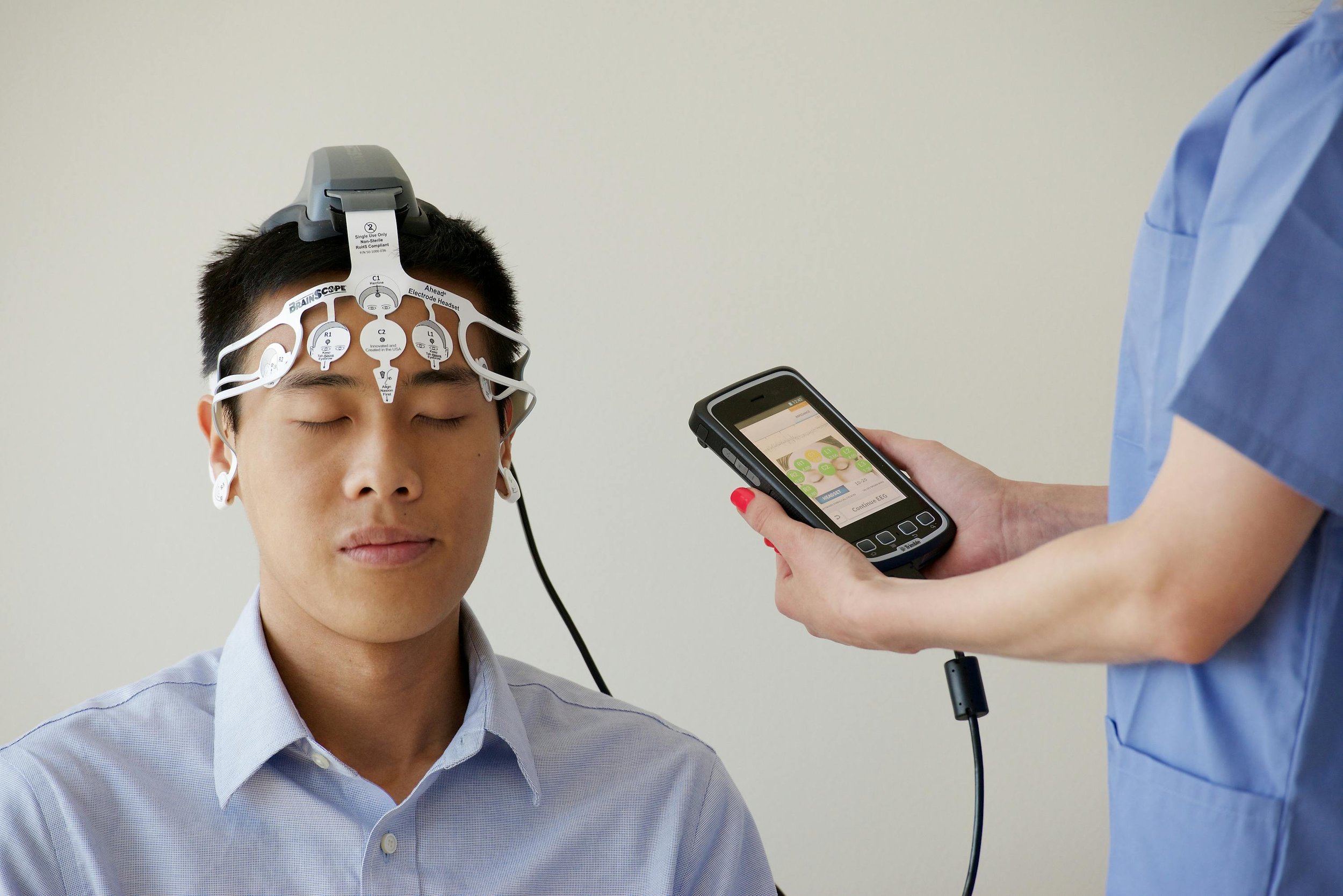
Unlike traditional VR, this technology interacts with the central nervous system to artificially induce sensations through a compact, non-invasive brain-computer interface (BCI). BCIs interpret your brain’s electrical signals and turn them into information a computer can understand, allowing control over a virtual avatar through thought or emotion alone. While most BCIs require implants that pierce the scalp, non-invasive BCIs function as simple headsets. These are becoming smaller and more ergonomic for commercial VR use—but we’re still far from instantaneous thought-to-world feedback with hyper-realistic graphics and precise neural stimulation.
What needs to be done?
We are 6 main hurdles away from Full-Dive VR Technology:
Advanced Brain Computer Interfaces:
These devices must first act as standalone wireless computers, possess a high bandwidth (capacity to send and receive data quickly), be compact without compromising functionality, and be easy to mass produce at affordable prices without sacrificing performance.
Decoding and Encoding Neural Signals at a Moment’s Notice:
Hardware cannot be accurately developed without a complete understanding of how our brain receives, processes, generates, and sends signals. Only when we achieve this comprehension can we work on systems that translate these signals into instantaneously interpretable language.
Biocompatible Materials:
Biocompatible materials do not harm the skin or body when in contact, nor harm the body through emitted bio-mechanical means. Since Full-Dive VR involves sending information directly into the brain, the materials conducting these signals need to be precise and carefully curated to avoid damage.
Highly Sophisticated AI Software:
We need vigilant systems that interpret human signals with 100% accuracy and instantly output the appropriate directives to the rest of the gear, generating the right images and sensations for the brain in real time: a reality in the mind.
Ethics:
Addiction, immersive explicit content, psychological dependency to the virtual environment, collection of personal data such as thoughts, and the fading line between reality and fantasy must all be addressed.
Physiological and Neurological Issues:
Prolonged usage could lead to a neglect of physical health, opening the gateway to atrophy, heart problems, extreme nervousness & isolation.
We must overcome all six challenges to develop, legalize, and integrate Full-Dive VR into our reality.
Seems insurmountable, right?
Not really.
We live in the information age, where technology and our lifestyles are transforming faster than we could ever imagine. In fact, most of the hardware and software hurdles to reach Full-Dive VR are being solved today!
What is being done:
Neuralink has developed neural implants that restore locomotion, vision, and other senses. This technology not only receives signals — it also sends signals directly to the brain and creates images. Elon Musk stated that Neuralink will soon, if not already, restore sight to those blind or born blind, meaning it is possible to see another reality and interact with it. A company known as OpenBCI is developing headsets that bridge the gap between the brain and computer simulations noninvasively and collect information on emotional states, physiological activity, and nuanced thought to power an AI framework. This framework would then control the environment and stimuli one experiences in Full-Dive VR.
Game Spotlight: The Lost Foxfire
This game is the closest we have to full sensory immersion externally. Players must stop a “Foxfire Spirit Bride” from setting a temple ablaze. What is unique about this VR experience is that the game comes with a multisensory suit that allows for heat, smell, haptic, and touch feedback based on the avatar’s position, in addition to visual and auditory input from the headset. Though it does not analyze brainwaves or project stimuli directly to the brain, its multisensory concept is the kind of experience that invokes curiosity in immersive VR, the gateway to Full-Dive.
Other Immersive VR Concepts:
Nosewise Wine: Users select virtual wine bottles and smell them, guessing the type.
La La Land: Releases aromas based on a patient’s virtual location to help them get familiarized with the hospital.
Haptic Suits: Recreate sensations such as recoil, touch, and terrain for more interactive VR.
Translational Applications:
Full Dive VR would allow accelerated learning as students can learn at different speeds in a reality unbound by time. We could institutionalize disciplinary correction for misguided lives. We could collect massive amounts of data in theoretical laboratories, such as experiencing time dilation near black holes. We could directly communicate and live with loved ones separated. We would be able to live in our childhood stories as the heroes and experience their grief and triumph as our own.
The Reality:
Research for Full-Dive VR is time-consuming, and integration will only add to that. Manufacturing such sophisticated technology at a profit and at mass scale, while revolutionizing the digital space to prepare for Full-Dive, is an ordeal. Unprecedented collaboration between neuroscientists, computer engineers, marketing teams, law firms, and international governments will be necessary to bring a functional and safe experience to the common people. But, this isn’t just a dream for gamers—Full Dive VR opens the gate toward inconceivable possibilities in any endeavor, which is why it has to exist, no matter the time it takes.
The Beginning of the Journey:
If there is one thing that Full-Dive can promise, it's this: Limitless Expedition.
From diving into wartime memories you never lived, to conquering a 100-floor iron fortress—each level with its own terrain in a medieval world. There is no adventure to lose and no possibility of being alone. The greatest failure of mankind would be to abandon an idea that could bring about immeasurable wonders to all. We are called pioneers because we push forward with our own creations for the betterment of ourselves and society. Full Dive VR is the next pursuit we must embark on, and the level of involvement is our own. Uncovering the mysteries of what it could be is up to you!
Here’s a starting point—Google search “Sword Art Online.”
Best of luck in your adventure!