Purpose in Every Pickup
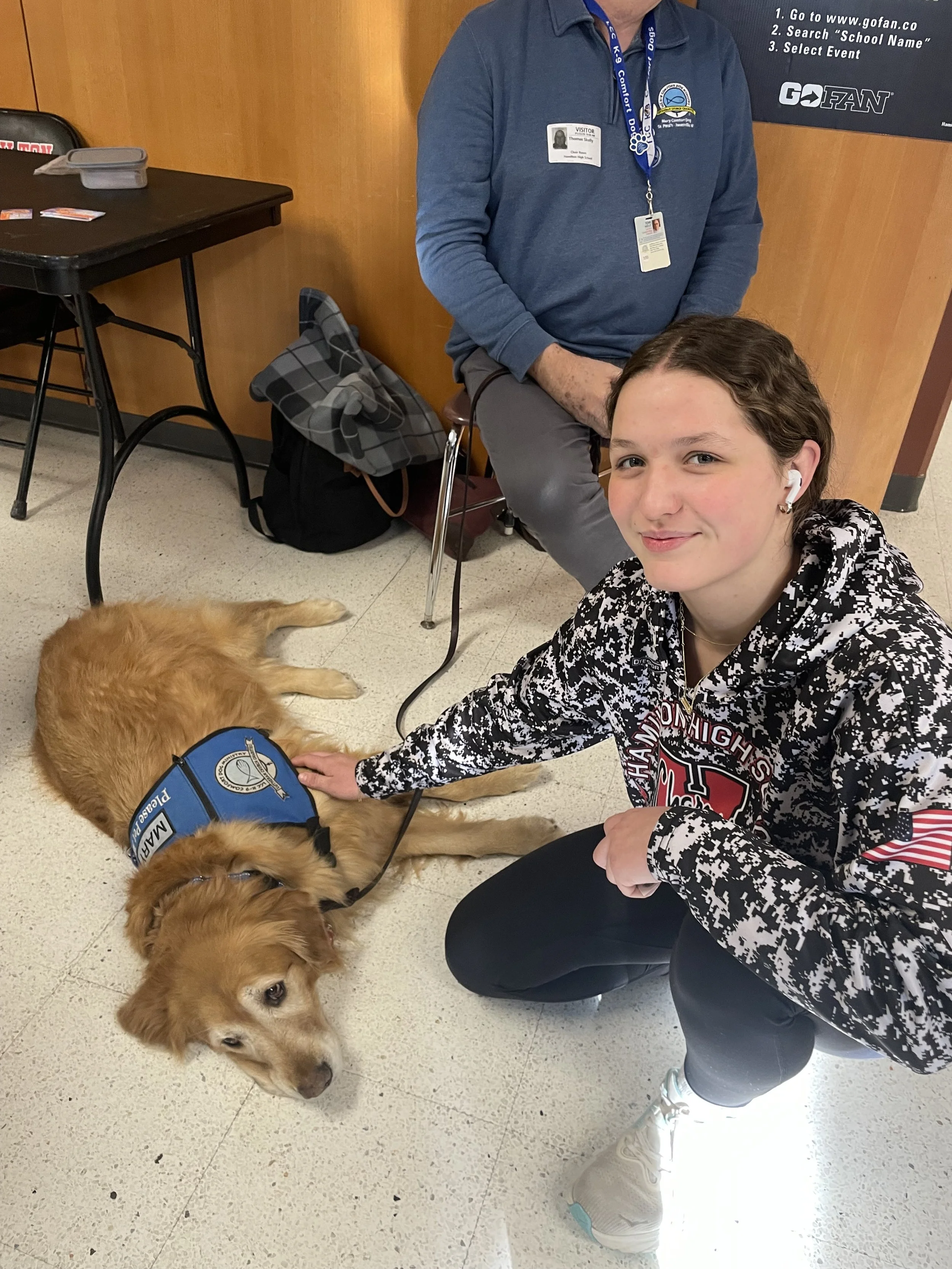
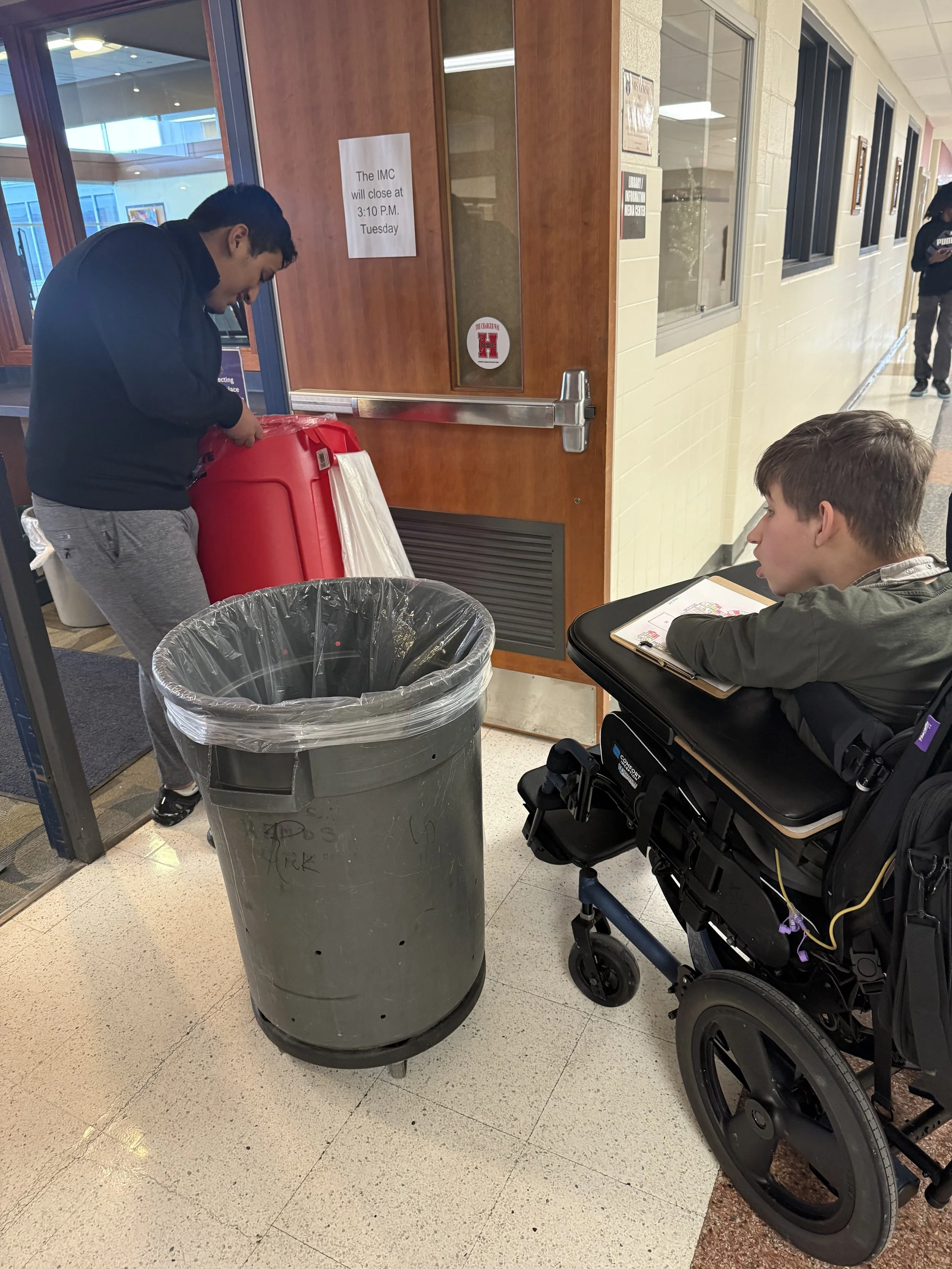
Photo submitted by Megan Rauter.
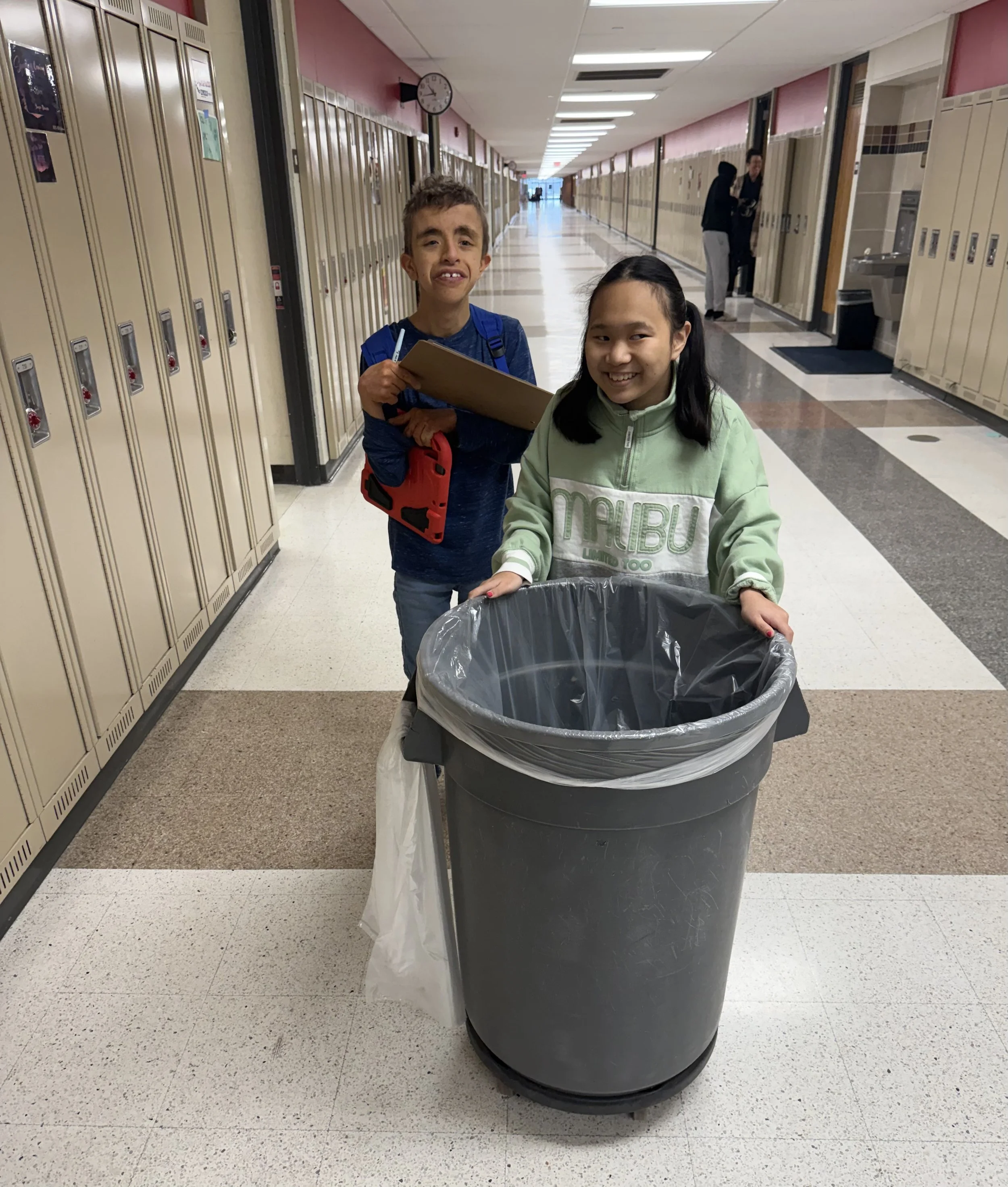
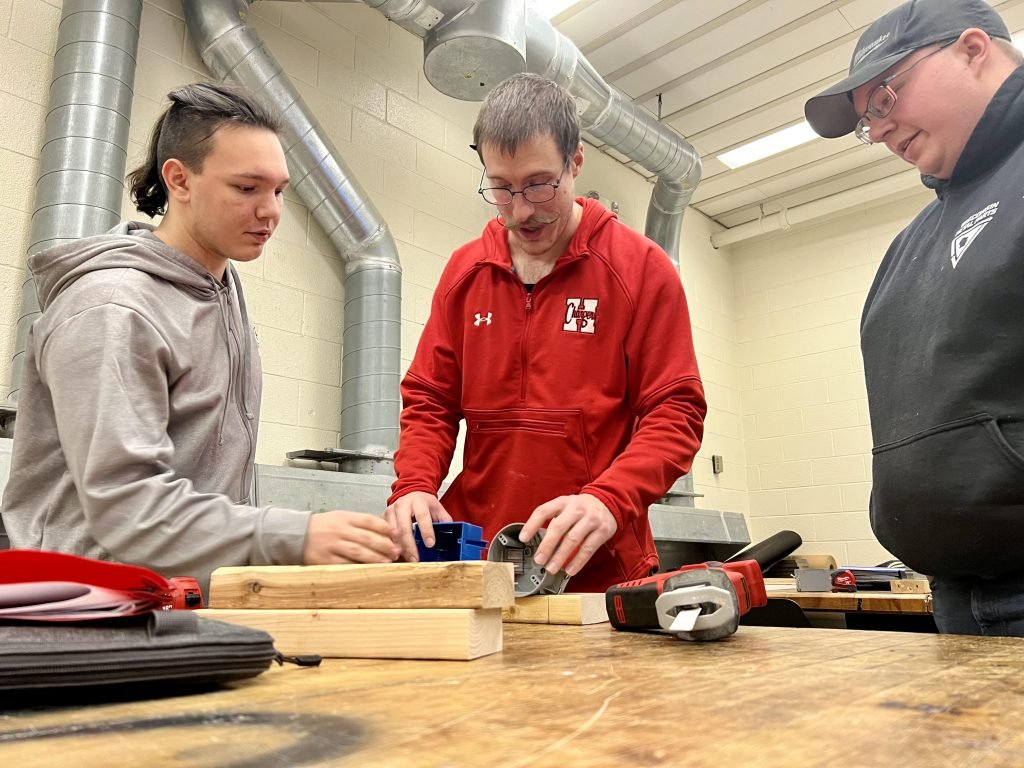
Photo submitted by Megan Rauter.
You may have noticed students walking through the hallways during the school day, stopping by empty classrooms with bins in hand and exchanging quick hellos with staff along the way. What might look like a simple recycling route is actually part of a larger effort led by Hamilton High School’s Life/Vocational Skills class, a special education program focused on building real-world, job-readiness skills. Through the can collections program, students practice communication, responsibility, and independence while giving back to the community and working closely with custodial staff. I had the privilege to speak with Mrs. Rauter, a Hamilton Cross-Categorical Special Education Teacher, to learn what inspired the program and how it has already made a positive impact on students and the school.
What inspired you to start this can-collection program with your Life Skills students?
I teach a Life/Vocational Skills class for students to learn and implement skills like cooking, social skills, and jobs skills like advocacy, problem solving, completing assigned tasks with accuracy and efficiency, and filling out forms to apply for jobs. Upperclassmen attend weekly volunteer jobs within the community three days a week and we have amazing community connections. Our school staff has also been incredibly helpful in finding jobs to complete at HHS for the underclassmen in Life/Vocational Skills. The custodial staff came to me to ask if this task would be something our Life/Vocational Skills class would like to help out with. Although we are not able to collect every block of the day, we are happy to help out and be a part of something positive for the school.
What skills do you hope students gain by participating in the daily collection route?
Although collecting cans may seem like a very simple task, this job allows students to work on several important skills. The students assigned to this job are practicing communication skills with other students and staff within the building. They get to practice using appropriate "small talk" as well as more professional interactions. They use a map of highlighted classrooms as a checklist to ensure they have collected from all rooms and they need to follow the guidelines to only enter classrooms without students in them during a class (we collect during 3rd block so sometimes rooms are available and sometimes they are not due to early and late lunch schedules). Attention to detail and accuracy are important as well-checking all areas where cans could be and making sure that we are only recycling cans, not bottles, for example.
How did you decide on the schedule and process for collecting cans around the school?
We looked at the staff schedules for 3rd block to determine which classrooms could be accessed during this block. Then we highlighted a school map identifying the classrooms to collect from. Students are given a strict route to follow to build their independence once they are comfortable and familiar with this route. The ultimate goal for this task is to have students from the Life/Vocational Skill class complete collection with minimal support.
How has the custodial staff helped support or shape this project?
HHS has amazing custodial staff. They truly care about all students and have taken extra time to assist/work with the students in my class frequently. When we first took on this job, there were many aspects I had not anticipated. For example, in order to recycle the cans, they need to be emptied (you would not believe what a messy task that is!) and crushed. Tabs are also pulled off to save for the Ronald McDonald House. Then there is the storage of the cans before dropping them off at the recycling center. The custodial staff saw that our volunteer group was falling behind with all of these steps and are now helping us complete them to ensure things run flawlessly. It is a partnership, for sure, and we are so grateful.
What has the student response been like so far during the trial run?
The students in the Life/Vocational Skills class LOVE this job! They love the movement involved with it as well as the social aspect. This job is purposeful and important to them as they are helping their school.
Students in the hallways have been incredibly supportive and encouraging when they see us collecting cans. They greet us, ask questions about what we are doing, and encourage us as well. It has been a very positive experience.
What should teachers know to help the process run smoothly in their classrooms?
HHS teachers have welcomed us into their classrooms during their lunches and prep periods which is greatly appreciated. It is so important for the students in the Life/Vocational Skills class to have a community supporting them and getting to know other teachers and staff from around the school helps foster relationships and a sense of belonging. Although there is staff from Life/Vocational Skills supporting the students during this job, teachers should also know that if there is a problem, they can also redirect or ask our volunteers to do things differently. Responding to all "supervisors" is also a skill we work on!
Do you see this program expanding or evolving in the future?
Our Life/Vocational Skills class continues to grow-next semester we have the largest group we have ever had! With this large group, I hope that we can add another block of collection as well as help the custodial staff with a few more steps of the process. We are looking to purchase can crushers to install in our Life Skills classroom to help out as well!