Ringing the Alarm on Start Times
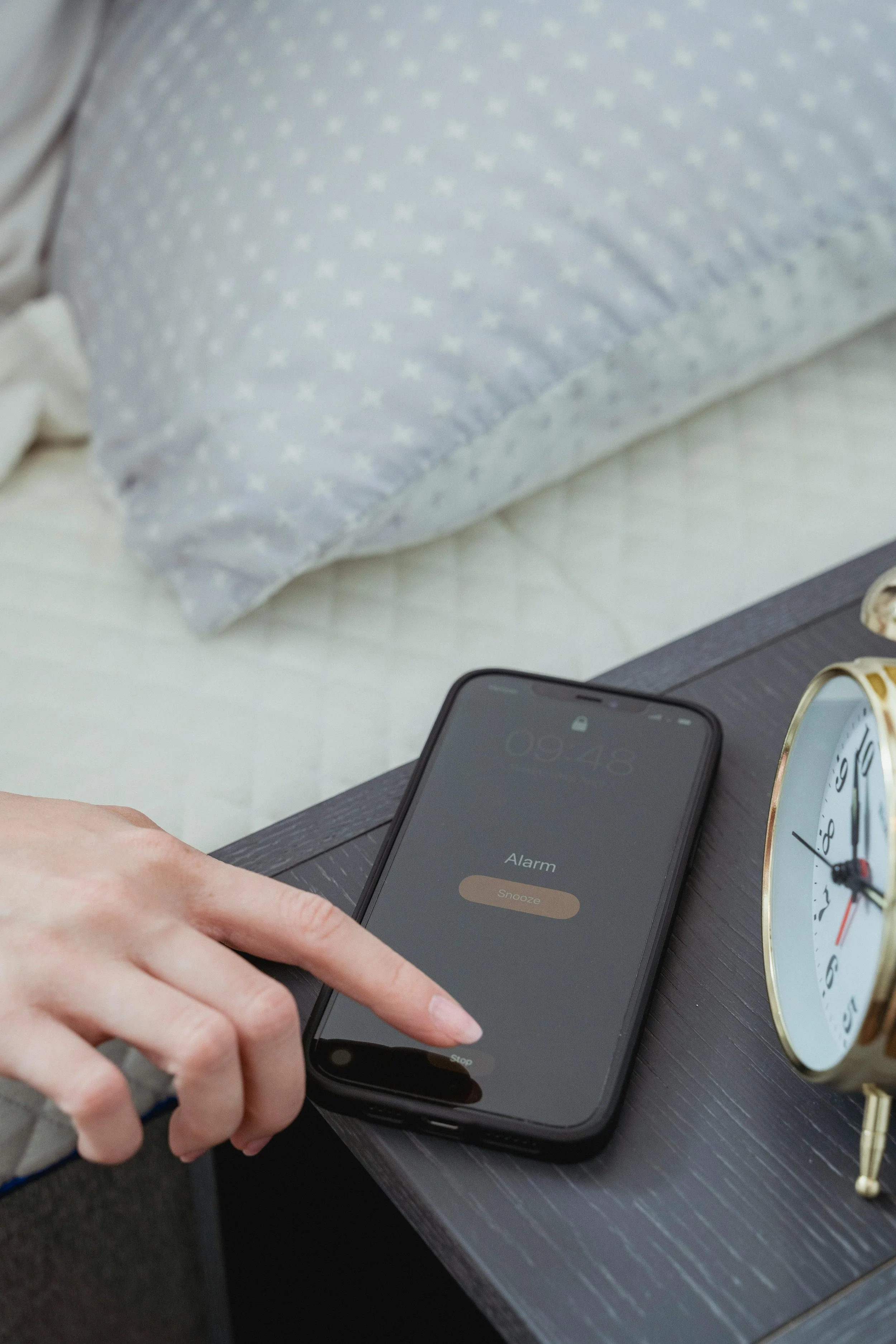
Photo from Pexels by Miriam Alonso.
Patrick Wang
Last summer, I got to meet a childhood friend of mine whom I hadn’t seen in the 7 years since he moved to California! While we were very close friends before we moved, we hadn’t talked much since so it was incredibly fun to hear about all the new and different things he had been through since moving. We were talking about school and classes and getting to catch up with each other when I mentioned waking up at 6:00 a.m. each day, since Hamilton High School begins at 7:20 a.m. When he heard that, his jaw dropped.
As it turns out, his school started at 8:30 a.m. each day, over a full hour after mine did. And it’s not just his school; in fact, all schools in California are required to start after 8:30 a.m., as California is part of a growing list of states that have passed or are attempting to pass bills on school start times. But if you’re a student at Hamilton reading this, or even a parent that grew up with a similar start time to Hamilton, that might sound completely unnecessary. Shouldn’t schools be allowed to set their own times? Can’t kids just learn to be responsible and tolerate waking up and going to bed earlier?
Well, no.
In 2022, a major meta-analysis study in the area of school start times was published by the American Academy of Pediatrics. After using random-effects models to analyze data for over 1.7 million participants spread across 28 studies, the study concluded that “...later [school start times] are associated with better overall developmental outcomes, longer sleep duration, and less negative mood” (Yip et al., 2022). This was followed up in 2023 when the American Psychological Association published an article covering the concept of starting school later. It explains that teenagers experience shifts in both their circadian rhythms (an internal clock that controls the sleep-wake cycle) and their homeostatic systems (which create the “sleepy” feeling that builds up throughout a day), making it hard for them to fall asleep and wake up early enough to meet the demands of school start times (Weir, 2024). This is just scratching the surface, though; the Start School Later organization references a document containing a mindboggling 51 PAGES of sources that they’ve referenced in articles about the importance and impacts of school start times, with some of their sources being over 30 years old.
Furthermore, early start times put new drivers at serious risk. Research, such as a 2020 study from Bin-Hassan et al., a 2018 study from Foss et al., and even a study all the way back from 2008 by Danner and Phillips, all shows that later school start times consistently decrease the risk of kids getting into crashes. Not only that, but for Wisconsin specifically, our geographical location means that we have sunrises as late as 7:10 a.m. in the winter. So when a school like Hamilton decides to start at 7:20 a.m., hundreds of kids are forced to drive in the dark on days where there might be snow or rain, obscuring visibility, putting these students in a simply unjustified amount of danger.
So if there’s this much evidence, why is it that in 2020, almost half of all schools in the US still start before 8:00 a.m., despite the recommended start time being after 8:30 a.m. (2020, NCES; SLEEP et al., 2014)? Surely there must be something major stopping schools from shifting back, right?
Well, no.
The main resistance to pushing back against later start times is that it’ll take time and effort to change. My friend in California lives in a pretty urban area where he can easily bike to school every day. For a more spread-out suburban school district like Hamilton, however, starting later might mean hiring more buses if high school and elementary school bus routes begin to overlap. Not only that, but many of the school districts around Hamilton start and end at similar times, so if Hamilton were to suddenly shift its entire schedule back an hour, it would make it much harder for sports and other inter-school activities to run. In fact, these were some of the reasons that Florida ultimately repealed a 2025 bill, which, similar to California, would’ve mandated later start times.
However, don’t think for a second that these problems should stop usーwhile most students at Hamilton can’t easily bike to school like some schools in California, Hamilton is also located far more north than Florida, and thus needs to put additional weight on the safety of student drivers in the dark. On top of that, Hamilton is actually already behind the national average by 40 minutes (2020, NCES)! Keep in mind that Florida wasn’t just mandating later school start times; they were mandating start times 30 minutes after the national average. There is a world of difference between that and Hamilton starting at the same time as every other school in the nation does. And on TOP of that, even though Florida ended up repealing their bill, Connecticut, Illinois, Nevada, and an astonishing 25 other states and territories (reminder that there are only 50 states and 5 territories in the US) have introduced and begun looking at bills to push back start times. Clearly, there are other avenues still to be considered, and I wouldn’t be surprised if, over the course of the next few years, later start times become the norm.
But don’t get me wrong, I also don’t expect later start times to be a policy that can be rolled out overnight. There are definitely challenges with starting school later that have to be addressed first. But that shouldn’t stop us. If you’re a student or a concerned parent reading this, and you agree that schools should start later, the most important thing you can do is stay informed and voice your opinion. Go as far as reaching out to the governor, or just bring it up with other parents and spread the word that way. The consequences of early start times are real, and they do impact students. Change is not just possible, but essential to the future well-being of students.