
Understanding Student Disengagement Amid Grade-Driven Goals
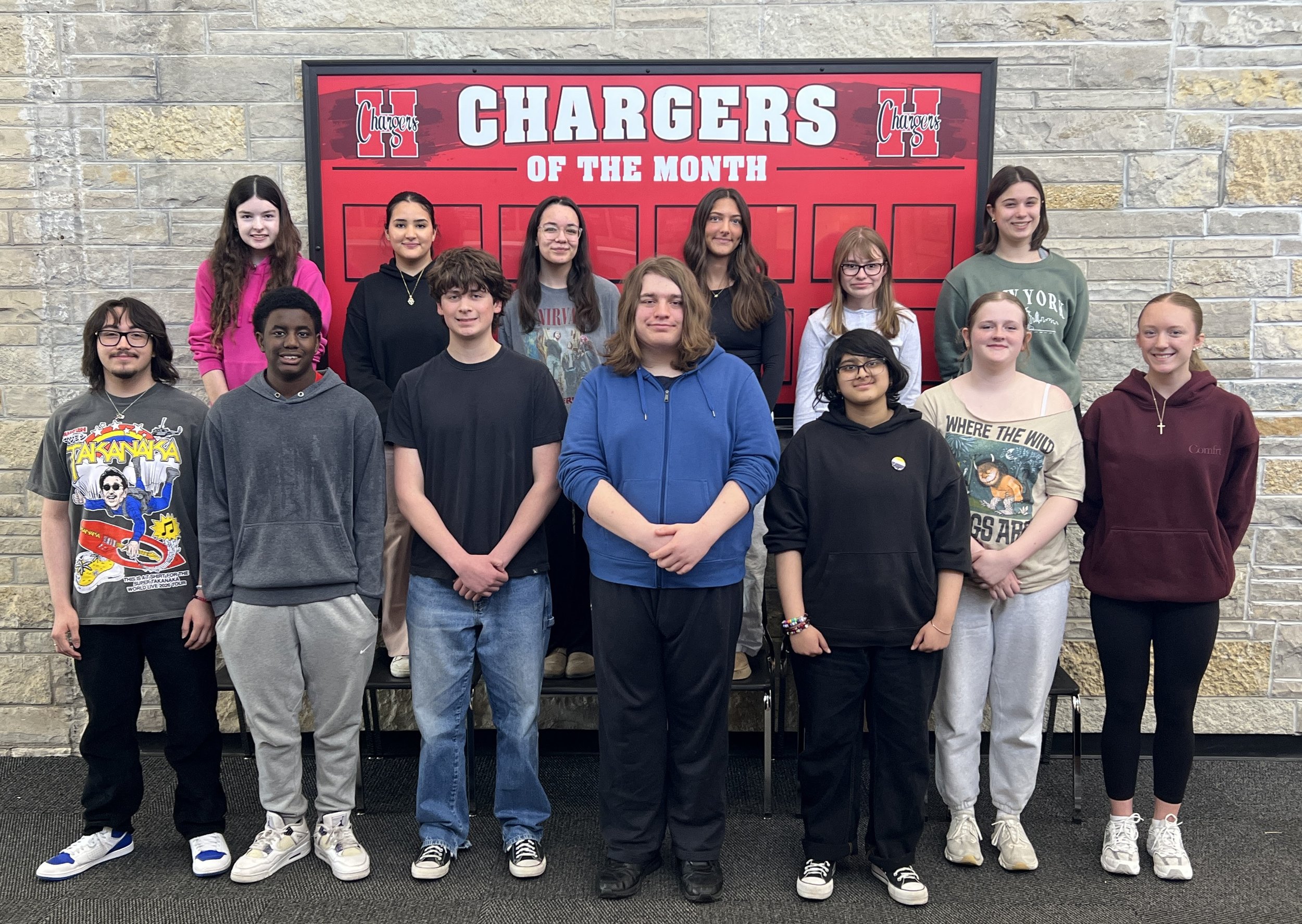
Photo by Andy Barbour.
In the fifth grade, Mr. Christman’s class read The Perfect Score by Rob Buyea, a story about five middle school students who come up with an elaborate plan to cheat on the upcoming standardized test. The book is supposed to teach the importance, or lack thereof, of grades, but that wasn’t why this book stuck with me. Now that I am a senior, I find myself coming back to this book and questioning the reality of this situation. In actuality, most students I know would be willing to cheat on a standardized test if it meant getting a good score. This begs the question: What is more important to students, grades or learning? As a student, I would immediately answer with grades. I have often caught myself saying common phrases such as, “This class is an easy A,” or “Will this be on the test?”
To me, it is more important to know the information that I will be graded on rather than knowing all of the information presented in my classes. Gerald Knesek, a professor at the University of Michigan-Flint and a well known student-oriented teacher, wrote, “When I encounter students after they have graduated, they almost always remember what grade they received in my class; yet when I ask about what concepts they learned, they hesitate before answering” (2022).
How does this grade-centered mindset affect students?
The easiest way this mindset has been measured is through cortisol levels of students. Cortisol is a hormone associated with stress and can indicate when the body is going through a high-stress situation. A study conducted at a New Orleans Charter School found that, “on average, students had 15 percent more cortisol in their systems the homeroom period before a standardized test than on days with no high-stakes testing” (2019). Why tests in particular? Well, all students are familiar with the way that formative and summative tests are broken down in the gradebook, with summative assessments being the largest portion. So, test scores have the biggest impact on grades, leading to students caring the most about these scores.
This can also be seen as most faculty and schools nationwide push the idea that the only option post high school is a four year university. Students who are planning on taking that route are more likely to feel supported and valued at their school than kids who don’t. A recent NPR study found that students who are not planning on going to a four year college are 6% less likely to believe that there is an adult at their school who cares about their future career (2024). This statistic sadly proves that schools are geared towards students who want to go to a four year university, rather than students who are actively engaged with the content, but plan on taking a different path.
The way schools are set up makes kids more stressed out surrounding testing and forced into a mindset that college is the only acceptable path beyond high school. With this data, it makes sense that kids aren’t motivated to engage with the actual content because the idea that is pushed towards them is that they need to get good grades to succeed in life.
Reading this data it is easy to see the cycle that students fall into: take a class, see what is expected of them, fear getting a lower grade, then use shortcuts, such as AI, to achieve what is expected of them. This is a dangerous cycle because when students in this cycle get good grades, it reinforces that these shortcuts are the answer.
How can this be seen here at Hamilton?
I sent out a survey to many teachers across all different subject areas and asked them to share the form with their students. The questions were, “What is more important, learning the content or your grades?”, “What did you learn in school today?”, and “What is your GPA?”
Out of 151 students that filled out the survey, 119, or 79.3%, said that their grades were more important than learning the actual content. 13.2% of students responded that they hadn’t learned anything that day, not including students who responded that they didn’t learn anything due to having multiple tests that day, and only 8.6% said they did not know their GPA. There were more people who didn’t know their GPA than I expected, so I decided to look at the breakdown of those who responded that they hadn’t learned anything that day, and those who knew their GPA. Of the students that responded with some variation of they didn’t learn anything at school that day, 85% of them knew their GPA and many responded with a specific GPA. That means that only 15% of students who responded that they hadn’t learned anything also didn’t know their GPA off the top of their head.
While it is unsurprising to everyone that almost 80% of the student body said their grades were more important than learning the actual content, the important statistic is that out of the students who said they hadn’t learned anything at school on the day of the survey, 85% of them knew their GPA off the top of their head. While this isn’t a complete study that can account for students simply making up a GPA, it is still an astonishing statistic.
Hamilton students are no exception to the fact that school has become more about getting good grades than learning about the concept. Students often find themselves cramming a bunch of information in their brains for a test and immediately forgetting that information when the test is finished. The reason for this cycle is that students have to clear out old units to make new room for the next round of content. In elementary school, the content builds on itself, for example, learning to read or count builds into more complex ideas, but high school isn’t like that. The concepts rarely build on each other and, for many students, the perception is that it is more important to get into a good college than understanding the material.
The Cycle
Talking about college in high schools is not inherently bad, and is very beneficial to preparing students for what the next step may be. The problem, however, is when schools lead students to believe that the only way to get into college and be successful is with perfect grades. According to a study conducted by NPR, 68% of Gen Z students said their schools talk about college “a lot” (2024). So what does this mean in the context of students feeling unmotivated to learn actual content? The result is students going into college with no actual skills that will help them succeed in college. High school has taught students how to learn the information they will be tested on, forget all of it in time to prepare for the next test, and how to take a standardized test—all skills that will not help students when they get to the college level.
The College Board recently conducted a survey of faculty members at various colleges and the results were astounding. The study found that 76% of incoming students are “much less or slightly less prepared in critical thinking skills and analysis” compared to freshmen entering college before the pandemic (2025). And the use of AI has not helped this statistic as more and more students are using AI to do their critical thinking work. The result is a cycle of students who are taught by the education system to get good grades, pass classes to get to college, and then get into college with minimal critical thinking skills to help them.
In the book, The Perfect Score, the students are told that they must get a perfect score on the upcoming standardized test for a variety of reasons, so many students end up cheating on the test to get that perfect score. In the end when they are inevitably caught and the parents are brought in by the teacher, the parents recognize the stress the kids were going through and agree that they did what was asked of them: Get a perfect score by any means necessary. This is what AI is doing to students today. Students are told by the education system that the only thing that matters is getting good grades and going to a good college. Often they don’t care about the work they are doing or learning the content; all they care about is the grade they will receive at the end of the day. So, they use AI, cheat on tests, find shortcuts when available, and do anything they can to fulfill the societal expectation of going to a “good” four-year university.
Obviously, this is not just a Hamilton issue, it is one that affects every student nationwide. Society in general needs to work on shifting expectations around schooling. This means everyone: teachers, administrators, and parents. If we as a whole don’t focus on this issue, the entire situation will only get worse as AI and technology improves. With schools driving home the idea that the only acceptable post high school plan is a four-year college, students will continue to feel like their classes are useless. We need to focus more on learning and maybe we should fear the reality behind all students getting a perfect score.
Sources
Why Focusing on Grades Is a Barrier to Learning | Harvard Business Impact Education
Teens are losing interest in school, and say they hear about college 'a lot' : NPR
Recent Trends in College Readiness and Subsequent College Performance: With Faculty Perspectives on Student Readiness
Students Are More Unprepared For College Than Ever Before—Here Are The Essential Skills They Need To Succeed