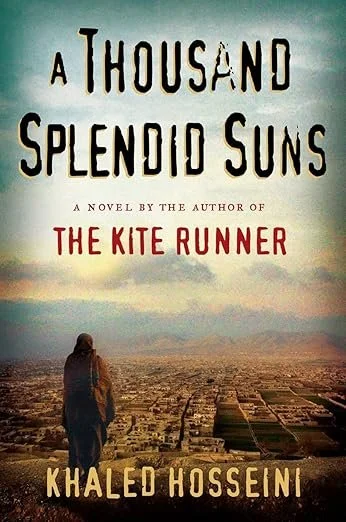
Banned Book of the Month: A Thousand Splendid Suns by Khaled Hosseini
Photo from Amazon.
This article features themes of suicide and domestic violence.
About the Author
Khaled Hosseini was born in Kabul, Afghanistan in 1965. In 1980, he was able to seek asylum in the United States to flee Afghanistan, because after his father’s job relocation to Paris, the Hosseini family found that their life in Kabul had been turned upside down. The height of the Afghanistan conflict with the Soviet Union was rampant, where the USSR began to take control of major Afghan cities. To rebel, groups such as the Mujahideen used guerilla warfare to resist the USSR invasion, making for a tense environment for the Afghan people to live in. Eventually, the USSR left Afghanistan, but a new detrimental organization formed. The Taliban stepped in and promised to maintain anti-corrupt practices in Afghanistan, and began to instill extreme interpretations of Sunni Islam beliefs. Once the Taliban gained enough control, they began enforcing radical laws on the Afghan people. Women had to be accompanied by a man at all times. Women couldn’t go to school. The media was controlled so that no anti-Islam ideologies could be shared. These laws cracked down on basic civil rights, and A Thousand Splendid Suns immerses readers into the experiences of Afghan women living through a tense regime change.
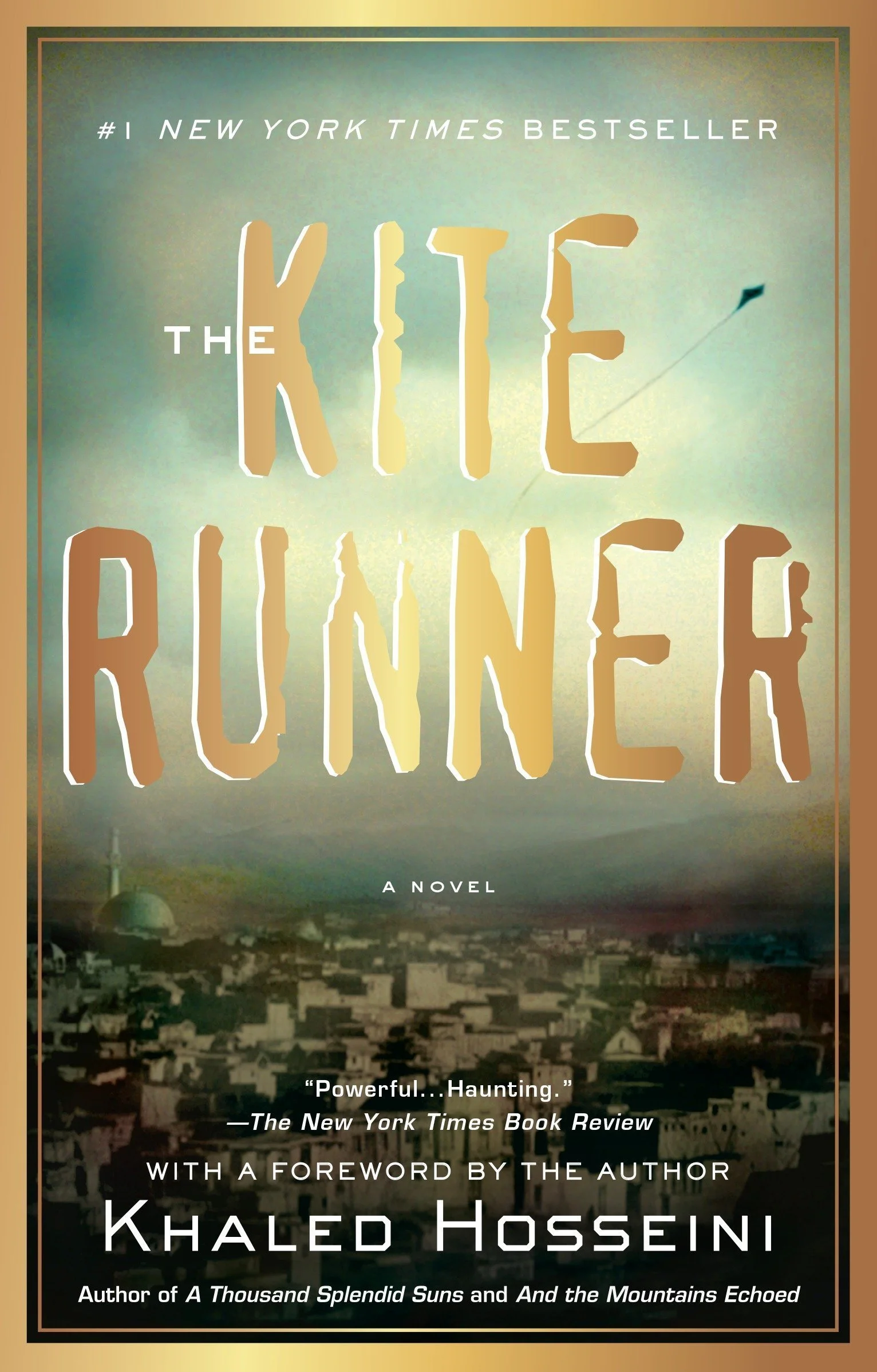
While Hosseini was in the United States, he graduated from high school in San Jose, California, received a bachelor's degree from University of Santa Clara, and then received a medical degree from the University of California San Diego. Although Hosseini has an extensive background in medicine, the horrors that Afghanistan was going through led him to embrace literature. Hosseini first published The Kite Runner in 2003, and then later published A Thousand Splendid Suns in 2007. Hosseini’s work in literature earned him recognition in the form of awards and praise, and he also became a goodwill ambassador for the United Nations High Commissioner for Refugees. He is still a substantial advocate for the UNHCR and visits different countries in need. He often returns back to Afghanistan to provide aid for the Afghan people, especially women, who have had their rights further stripped from them.
Summary (includes spoilers)
A Thousand Splendid Suns begins with the life of young Mariam, a “harami,” or an illegitimate child born out of wedlock. She felt out of place growing up and unfortunately was forced into an arranged marriage after her mom committed suicide. Mariam’s arranged husband, Rasheed is abusive physically and verbally, solidifying Mariam’s insecurities. For much of the beginning of the novel, Mariam’s life unfolds, but soon after in A Thousand Splendid Suns, a new protagonist, Laila, is introduced. Laila is younger than Mariam and is witty and creative. Laila’s young life originally seems optimistic. She is close with her family, is intelligent, and has a close relationship with her friend Tariq. Eventually, Tariq and Laila have a romantic relationship, which comes to a tragic halt when Tariq flees Afghanistan and Laila ultimately is arranged to marry Rasheed, the same man who is married to Mariam.
Mariam and Laila don’t start off their relationship on a good note. They both are overcoming trauma, while also grieving the loss of family and the lives they are familiar with. However, they begin to connect after facing abuse from Rasheed. Rasheed typically favors Laila, but eventually begins to resent her after developing a hunch that Laila’s oldest child Aziza isn’t his. His abuse towards the women develops a mutual bond for survival between Mariam and Laila. They begin to formulate a plan to flee from Afghanistan to Pakistan in hopes for freedom. However, Mariam, Laila, and Laila’s children get caught before ever crossing the border into Pakistan. They are brought back to Rasheed where they are abused even further. They seem to have lost any chance of freedom. Mariam and Laila continue to live a life of control and abuse, seemingly worsened after their attempt to escape.
A silver lining begins to appear for Laila, as one day, Tariq appears at Laila’s door. Laila had thought Tariq died, so reuniting with him again gave her a hope that she hadn’t felt in years. Rasheed finds out that Tariq and Laila reunited, and attempts to murder Laila. Rasheed’s hunch about Laila’s daughter is solidified, and he now knows that Tariq is the father of Aziza. As Rasheed nearly kills Laila, Mariam steps in and protects Laila by bludgeoning Rasheed to death. Mariam’s fate sets in as she realizes what she has done. Due to the strict laws enforced by the Taliban, a woman who kills her husband, even in self-defense, must be executed.
After a tragic ending to Mariam and Laila’s friendship, Laila and Tariq are able to flee to Pakistan. They live there with the children, but eventually return to Kabul, Afghanistan once the Taliban are overthrown.
Why it’s banned/challenged
A Thousand Splendid Suns is often challenged for its depictions of violence and abuse towards women and intense scenes of trauma. Many schools feel that A Thousand Splendid Suns contains too mature of content for students to be reading about. Although the novel is intense and contains traumatic scenes, banning the book covers up the history of Afghanistan and how the country came to be. The Taliban still has control in Afghanistan, and after the United States removed troops from the country in 2021, their control has only grown stronger. The fictional story of Mariam and Laila, as unfortunate as it is, is true, and is the reality of many women in Afghanistan in the present day. Covering up history and stories of these struggles only creates ignorance in society.
If you or someone you know is considering suicide, please call or text 9-8-8 for confidential, free support.