Locked Away and Dehumanized: The Abject Failure of Punitive Justice
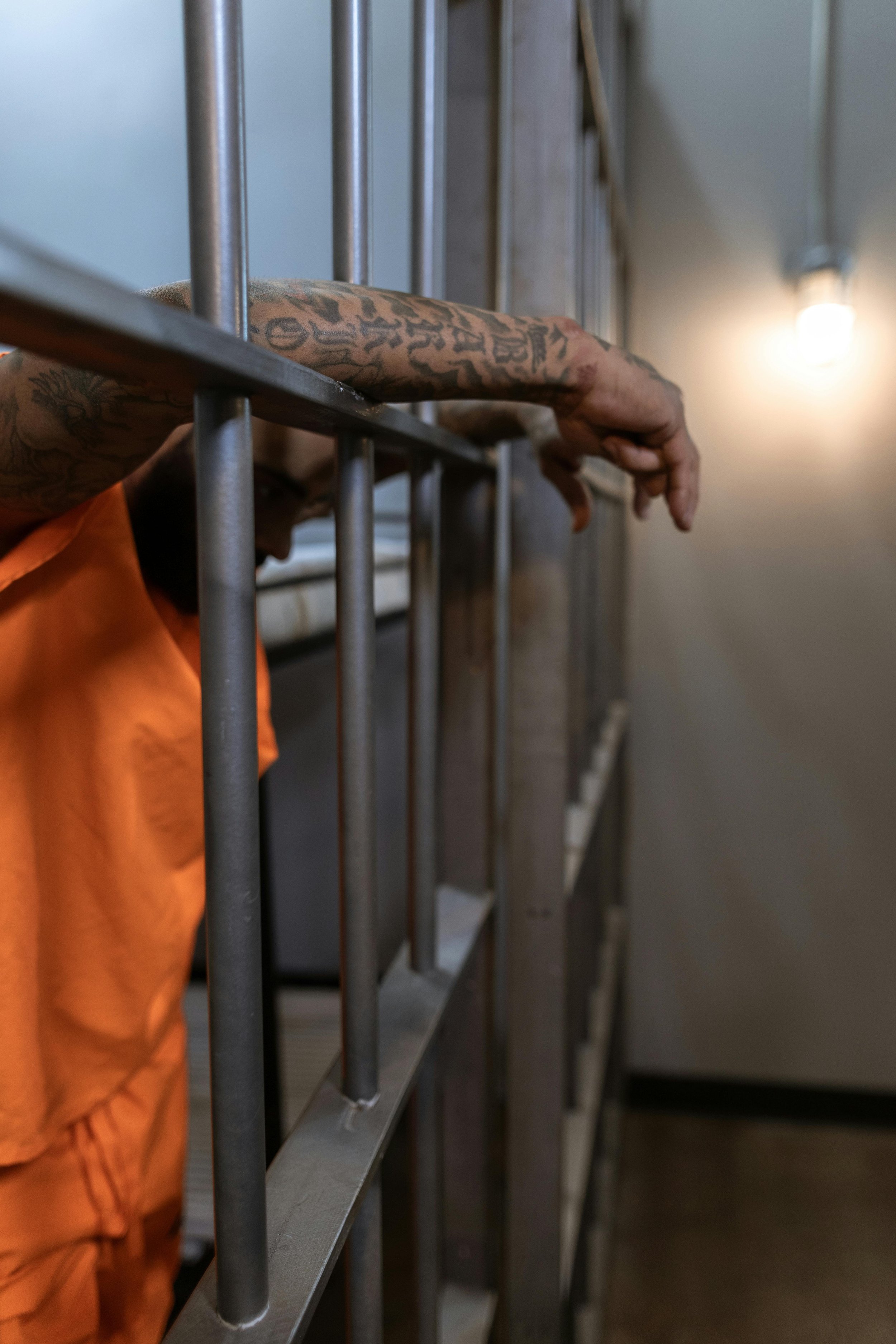
Photo by Alejandro De Roa from Pexels.
PRISON ABOLITION ARTICLE 2 of 3
CONTENT WARNING: This article contains descriptions of sexual assault, violence, and drug abuse. If you are sensitive to these topics, do not continue reading.
Teenagers are considered the most individual age group. Most teens have a strong friend group that they want to fit into, sometimes at a cost. Peer pressure and societal expectations can sometimes push them to do things they know are wrong, and against the rules their parents have set up for them, for example, smoking or drinking, or any of the numerous other rules. For most parents, the typical response is to limit their freedoms: curfew, room searches, no more phone. It's the typical punitive approach. It claims that after some time deprived of a valued privilege, their behavior will be set straight and they will have learned their lesson and never do what they did again. This, of course, is absurd. Punishment doesn’t remove peer or societal pressure, nor teach them how to handle it. And it certainly doesn’t shift how a teenager feels about the rule they broke. Maybe it fixes behavior for a short period, but in the future, teens don’t become more obedient, just more sneaky.
The same concept applies to prisons, where around 70% of convicts aged 18-29 will re-offend within the next five years. The statistic jumps to 80% who re-offend for those arrested at age 17 or younger. With almost 2 million people incarcerated currently, the United States has the largest prison population in the world: 25% of the world's prisoners, despite being only 5% of the total world population.
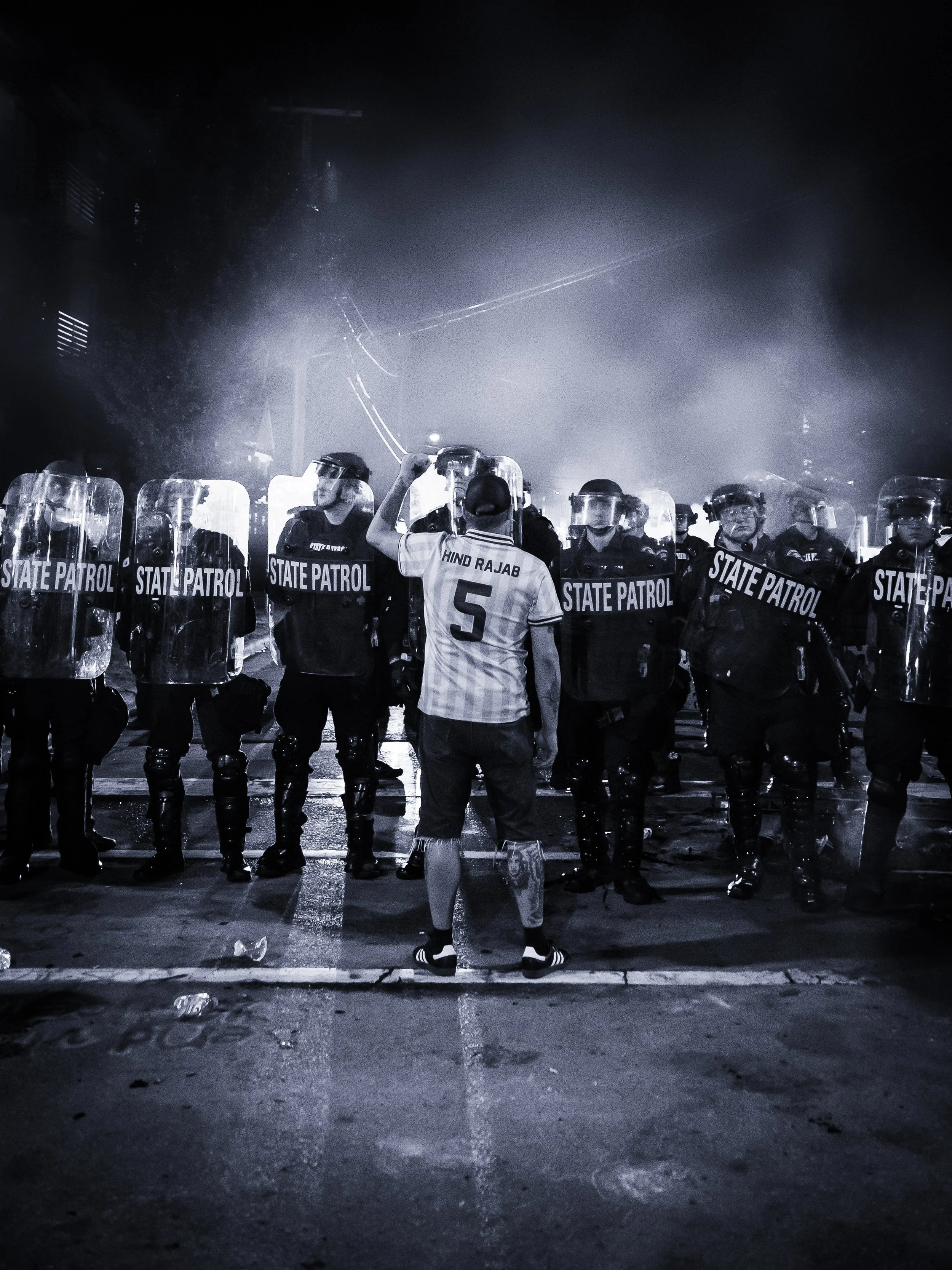
Punitive justice starts with getting people into jail in the first place, and that's through the police. The increasingly funded institution of policing across the U.S. has for decades been known to America's underclasses to be the armed guards of capitalism and the primary workers of state violence. To start deconstructing the notion that punitive justice is the only way to combat “crime,” you have to first deconstruct the perceived relationship between the police and “criminality.”
There are numerous examples about how police cause more danger, are systemically racist, and only serve as the security force to protect the interests of the rich. The most prominent, and arguably most relevant example is the “War on Drugs,” which turned out to be one of the most catastrophically disastrous policies of the late 20th century. The central framework for the War on Drugs was that if the government criminalized drugs like marijuana and crack cocaine, that the epidemic would die down because people are afraid to lose their freedom. This is the encapsulating idea for what punitive justice is—taking away someone's liberty as a punishment for unwanted behavior. You do a crime, you do the time. The War on Drugs acted like an accelerated microcosm of what reactionary and punitive politics has done for decades.
The War on Drugs caused the prison population to accelerate rapidly, and according to the U.S Bureau of Justice, it increased to over three times the size of pre-1971 prison populations. But over the same period, drug deaths also skyrocketed. The label of criminal was expanded to addicts, but instead of controlling the drug abuse problem in America, it wildly exacerbated it.
This unfortunately isn’t a new phenomenon. The War on Drugs eerily mimics the Prohibition era, in which the sale and consumption of alcohol was made illegal. The Prohibition years saw the biggest spike in violent crime and alcohol related deaths as laws were attempted to be enforced. That gave way for massive enterprises to corner the market and sell the banned alcohol through unregulated underground methods, just the same as how drugs are treated today. Calling someone a criminal removes any nuance or how material conditions affect their decisions. With the example of drug dealers, the majority are poor and already disenfranchised by the system whether it be because of medical bills, student loans, or generational poverty.
The criminalization of drugs continues to affect us even into the modern day. 2022 saw 107,941 drug deaths, which is the most the country has ever seen, even outnumbering the crack epidemic. (1) Criminalization doesn’t combat the conditions that lead to drug dealing being so prolific, but instead fights the individuals that engage in it.
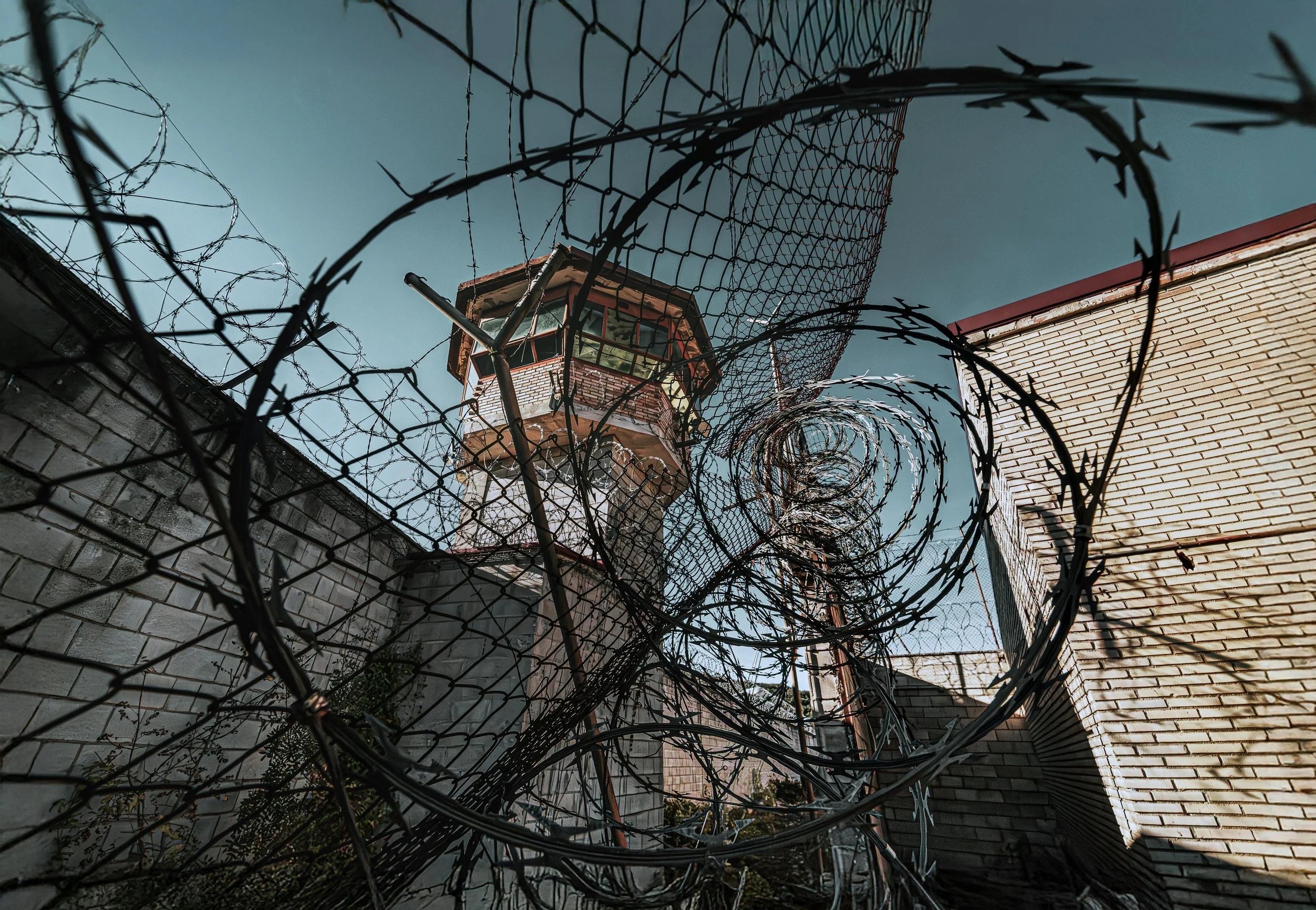
Clearly, criminalizing drugs and drug related crimes did not make for less drug use, but what it did achieve was millions of (disproportionately Black, Native, and poor) people thrown into the prison industrial complex. I’ve already touched on why this happens in the previous article. According to politicians, the prison industrial complex is far too important to the foundations of American capitalism. But the heart of the brutality of punitive justice is stored in a disastrous core, and that is prisons themselves.
Prison life and culture has long since been known to be rough, violent, and without much reprieve as its primary method of “preventing crime.” However, the outside world is not often privy to the torture that is commonplace in every single American prison, and considering the typical mindset that prisoners “deserve” abuse, it’s no surprise.
One of the institutionalized examples of prison brutality is solitary confinement. Prisoners who are on “bad behavior" are locked away by themselves without any contact besides with the guard who slides food through a slit in the door, a pratice considered to be torture by international war crimes treaties when done for more than 15 days. But in America, solitary confinement can last for months, or in some particular cases, years. According to PBS Frontlines, “Solitary confinement in the US, defined as isolation for 22–24 hours a day, often lasts 15 to 30 days or more, with many inmates spending months or years in segregation.” (2) Not only is it violent and degrading, as humans are social creatures, but extended periods of confinement have actually shown to make prisoners more violent and less able to reintegrate into society.
The award winning journalist Christopher Blackwell brings up statistics in a 2024 Appeal article: “In one study, recidivism rates after three years for prisoners who were released directly from solitary were 26 percent higher than people released from the same prison’s general population. Another study matched the prisoners from the general population to those in solitary based on age, criminal history, and propensity for violence. Researchers found that people released directly from solitary committed new crimes within 12 months, as compared to 27 months for prisoners from the general population.” (3)
It’s an intriguing insight into how isolation affects psychology and how doing prison time can have the same effects on a person's mental attitude on a larger scale. Among the largest group of offenders, 18-25 year olds, a whopping 70% reoffend (compared to the 67-71% for general prison population) and end up back in prison within five years after release. (4) Just like solitary confinement, taking someone away from the rest of society, family, friends and news deprives an individual of their intrinsic desire to connect. Even from a purely statistical perspective, prisons are ineffectual. They don't soften or scare off “criminals,” but exactly the opposite. It hardens people. Solitary confinement is one of many ways prisoners are dehumanized and controlled like animals, but many other methods like strip searching, a control over visitor and free hours, and public shaming exist for the same purpose and have the same effect.
The brutality of prisons doesn't end with the systemic abuses, but proliferates into the environment that prisoners are forced to. The presence of police and guards in the prison create a distinct hierarchy of power, and prisoners are frequently at the receiving end of abusive and vindictive prison guards who use their immunity to beat, rape, and kill inmates. This behavior is sometimes even rewarded by the system, as an Alabama Reflector article reported on how corrections officers at Donaldson Correctional Facility in Bessemer, AL were promoted after alleged excessive force allegations. In 2018 a man was rushed to the hospital with multiple broken ribs, fractured vertebrae and a collapsed lung.
“The officers said that the prisoner had refused an order to enter a cell. One officer then sprayed him with a chemical agent called ‘Sabre Red.’ They said the prisoner then refused to lie down. So another officer ‘took him to the floor,’ and the prisoner ‘continued to resist and engage in combative behavior.’ This version of the story was used to justify the 300-pound officer ‘forcefully’ kneeling on the man’s back, sending him to the hospital.” (5)
Entirely life changing injuries dealt out freely, all because he refused to enter a cell. The officer claimed that the use of force was not excessive. The three guards ended up paying only $40,000, did not get fired, and even received promotions.
Small settlements and little changes for abject abuse is not uncommon within correctional facilities. Prisons don't often publicly report their excessive force cases, and the ones that are noted are made by people with the resources to go through the legal process, which is by far a minority of prisoners. It's not just physical abuse that prisoners are subject to. Rape and sexual assault are one of the most common occurances in prison. At FCI (Federal Correctional Institute) Dublin CA, officers were guilty of nearly murdering inmates in a similar manner to the Alabama facility, with sexual abuse being so comonplace that the facility became known as the “rape club” by staff and those interned. (6) At a prison in New York, a 2016 lawsuit reported that around 30 officers, including staff supervisors, stormed the cells of 12 inmates on the accusation that they were involved with the attack of a prison guard earlier in the day. (It's important to note that the guard in question was not in fact attacked, but collapsed suddenly. It was three inmates who were the ones who reported his unconsciousness.) The guards acted erratically, violently jumping on and beating the prisoners, destroying their property, and making them undress. The inmates recount their disgusting, violating experience as follows:
“One inmate explained it like this: ‘they just put something in there. I don't know what the (expletive deleted) they put in there. They just shoved something in my rectum. I felt something penetrate in my rectum.’ While doing so, an officer referenced the alleged assault on Officer Kahl and said, ‘How does it feel to be helpless, like my officer was helpless?’” (7)
Another victim experience is described as, “While an inmate was giving a urine sample, he alleged an officer ‘flicked his penis’ saying ‘Come on there, little guy, we just need a few drops.’" (7)
At a Texas prison, FMC Carswell, a 52 year old Pakistani woman convicted on what many believe to be false or inflated terroism charges, describes the amount of sexual abuse as “unbearable” and, in similar language used to describe FCI Dublin, called Carswell a “rape camp.” She reported experiencing sexual assault in five different years, and further harassment that went unreported due to the fear of retaliation, which by her 2018 lawsuit was well warranted. In a 2012 case, she was splashed with an acidic liquid, which left visible burn marks on her arm, then beaten unconscious and raped by multiple guards. (8)
Trans and queer inmates are especially prone to being victims of sexual violence in prison. “[An] inmate undergoing gender-transition was sexually assaulted, their medication thrown on the ground and destroyed.” (8) Across the country, trans women specificlly are 58% more likely to experiencesome sort of sexual violence according to the UCLA Womens Law Journal. (9) Trans and queer people are already intensly dehumanized by the outside society, and inside the prison system, without any kind of protections or gender affirming care, are singled out at incredible rates and used as object of sexual pleasure.
It’s evident that prison abuse and subhuman conditions are not a symptom of “bad apple” police or just specific correctional institutions’ poor management that can be corrected by reforms, but instead a symptom of the larger cancer that is the carceral state. There's also reason to believe that the issue is much larger than it appears, with thousands of cases going unreported or unnoted. Abuse becomes a part of life in prison, and for the mostly poor, disenfranchised prisoners, combating every single beating is not possible. Interment is seen as the only right way to deal with crime—that the people behind bars are deserving of it is a sentiment that is often internalized in inmates. All of this for the vast majority to end up right back in prison.
Incarceration and a free society are two contradicting ideals. We cannot deprive one of their freedom for any reason if we are to hold true to the belief that all life is deserving of freedom and that all people are entitled to liberty. Prisoners are human; they are nuanced and complex beings that feel regret, pain, desperation, and betrayal. How radical is it to say that all people deserve respect and proper treatment? How radical is it to believe that broken systems shouldn’t continue to cause harm? In America, it's unthinkably radical.
Justice in America has always had the ugly face of retribution, vindication, and violence. But it does not have to be. We have the power to bring about the abolitionist future that protects and restores all people; it is within our reach to build strong worthwhile communities and stop harm before it happens.
I implore you to check out The Marshall Project, which chronicles prison abuses and the disaster that is punitive justice at The Marshall Project.
Drug Overdose Deaths: Facts and Figures | National Institute on Drug Abuse (NIDA)
Arrests by offense, age, and gender | Office of Juvenile Justice and Delinquency Prevention
In wake of excessive force allegations, some corrections officers got promoted | Alabama Reflector
Judge rules inmates were sodomized, beaten & neglected at Mid-State Correctional Facility
Pakistani prisoner beaten and sexually assaulted in Fort Worth federal prison, lawsuit says
Feminism and the (Trans)gender Entrapment of Gender Nonconforming Prisoners