Banned Book of the Month: The Glass Castle by Jeannette Walls
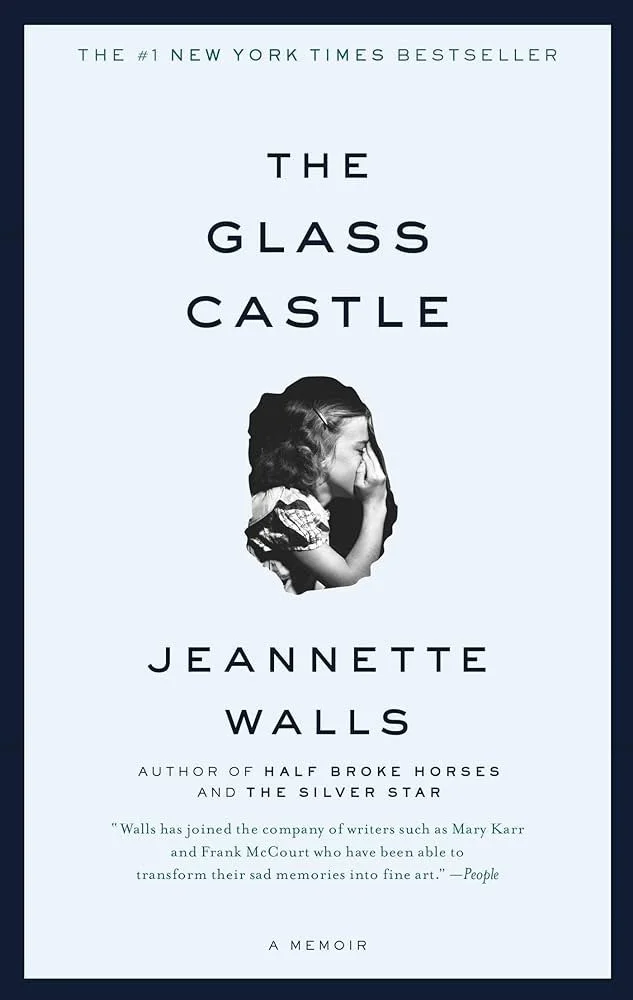
Photo from Amazon.
About the author: Jeannette Walls’ life is chaotically uncovered in her memoir The Glass Castle, where she recalls stories throughout her life while living with, for lack of better words, a “dysfunctional” family. Jeannette Walls never grew up in just one location. Her family was constantly “skedaddling,” as her father liked to call it. They moved from state to state in beat up cars in order to avoid consequences such as paying rent, loan sharks, and strict bosses. As Walls’ life progresses and she matures, she begins to realize her life is very different from children around her. Her family doesn’t use heat or air conditioning, even in the harsh conditions of West Virginia where they end up settling for a while. Jeannette rarely can bathe, and often has to visit her predatory uncle in order to get clean. The Walls’ kids have to dig through trash to find food and clothes, and even though the Walls’ parents struggle to make ends meet, they refuse to receive government aid. Jeannette’s father, Rex Walls, states “the Walls’ don’t take hand-outs.” Walls began her adult life in New York City where she had numerous side hustles, and began establishing a career as a writer. She attended Barnard College and received a degree in Liberal Arts. In 2017, The Glass Castle was adapted into a film starring Brie Larson and Woody Harrelson, and Walls was busy with aiding the film process to assure autobiographical accuracy. Walls currently lives with her husband on a farm in Virginia and continues to write and speak.
Book summary: The Glass Castle follows the chronological order of Jeannette Walls’ life. Her early years consisted of moving around all over the country due to her parents’ instability with jobs and paying bills. Walls lived in Arizona, California, and Nevada before the Walls family eventually settled in Welch, West Virginia. This nomadic lifestyle made it difficult for the Walls kids to make friends and have any sense of permanence. Walls describes some children she grew up around, but she never had solid friendships, as she always knew she would soon have to “skedaddle.”
Not only did Walls have unstable friendships, but also an unstable familial environment. Her mother, Rose Mary Walls, was care-free and felt no responsibility to hold down a job. She believed in non-traditional ways of life such as scavenging to eat, not using heat or air conditioning, and not improving their nearly dilapidated home, which had a hole in the roof and soft spots which would cause the family to fall through the floor. Rex Walls, her father, was a man with aspirations to become wealthy for his various inventions, but ultimately never struck rich. Whenever Rex got his hands on money, he’d then spend it on feeding his addiction to alcohol, rather than supporting his family. Rex’s unreliable behavior was apparent to Jeannette’s siblings Brian and Lori, but not Jeannette. She worshipped her father as a young girl. She envied his knack for science and critical thinking and was enamored by his promise to build her a glass castle. It wasn’t until Rose Mary went away on a trip to help grow her career as a painter that Walls began to see her dad’s unreliability.
At this point in Walls’ life, she was managing the family’s finances, and was the breadwinner through babysitting and side hustles. Rex would beg Walls for money to “invest,” but the money would actually be used for alcohol. Rex would repeatedly say throughout the book “when have I ever let you down,” which often eased Walls’ naive mind. However, the answer to that question eventually changed for Walls when she began to feel constant disappointment from her father’s actions.
Lori, the oldest of the Walls children, eventually was able to escape the dysfunction when she moved to New York City. A few years later, Jeannette followed Lori to New York. Jeannette began her life as a journalist and writer and started to feel a sense of establishment, a feeling she never had before. Jeannette was able to escape the unstable and negligent life she had grown up in and could create a new life for herself.
Why it’s banned/challenged: The Glass Castle is often challenged and even banned due to its serious and mature topics around alcoholism, sexual abuse, and intense depictions of poverty. Jeannette Walls has mentioned in interviews that she hoped readers—and viewers of the film adaptation of her memoir—who felt similarities between their own lives and the life of the Walls’, were able to feel less isolated in their experiences. Although Jeannette Walls highlights many traumatic and frustrating scenes from her life growing up, she has mentioned how there were good moments and lessons to be learned. These good moments are what add to the plot of The Glass Castle and build a connection with readers. Walls’ life is being silenced when schools attempt to ban The Glass Castle, and her human experiences are being covered up. For many authors who write memoirs, it’s often a relief to be able to share their personal story to the world and come to a solid sense of the person they have grown into. For Jeannette Walls to be silenced for sharing her story and becoming vulnerable to the public—I can only imagine—is maddening. Literature should never be silenced, especially when true; human experiences are what get repressed the most.
If looking to read The Glass Castle, Pauline Haass Public library, Menomonee Falls library, and Hamilton High School library all offer copies.