How Will the Government Shutdown Impact Students and Education?
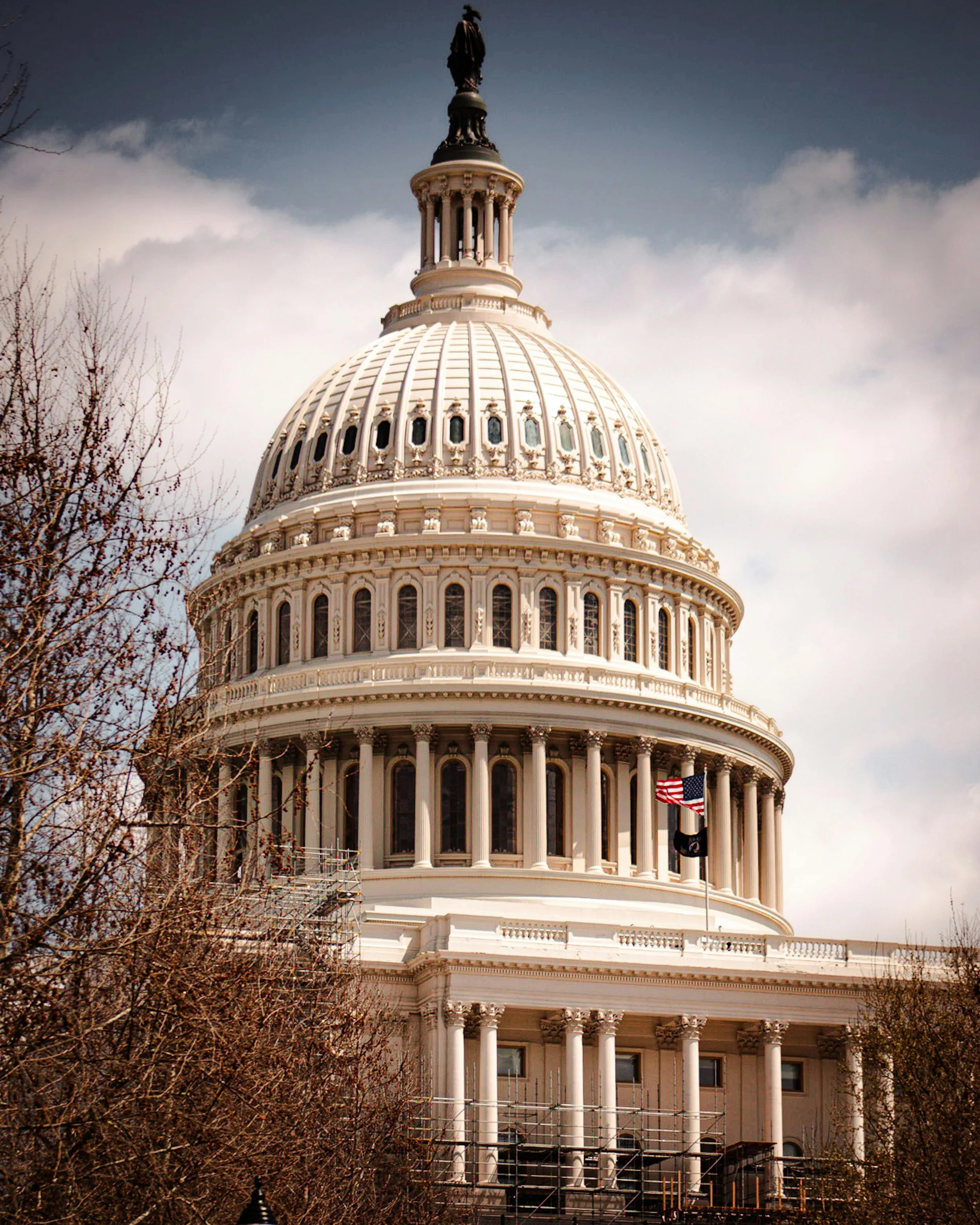
Image from Misael Consuelos via Pexels.
Emersen Cwiklinski
If you’ve scrolled through social media or the news, it is likely that you have seen updates about the recent government shutdown. Concerns for the uncertain future of our economy have been swirling around as a result of the mass spread of information. Oftentimes, this creates anxiety among citizens, and makes them wary of the future. A large concern is how the government shutdown will impact students. It is crucial to look at all the information, and how the government got into this situation in the first place.
America’s fiscal year spans from October 1 to September 30 of the following year. The fiscal year is broken down into four quarters. The first quarter of the fiscal year ends on December 1, and is arguably the most important quarter since it sets the tone for the rest of the year in economics. When the fiscal year nears an end, it falls on the executive and legislative branches to come to an agreement on how to spend the government’s budget. The President drafts a budget request—which comes from the proposals of federal agencies—on how to spend the country’s money. The President and Office of Management and Budget (OMB) collaborate on the budget request to move to the next stage of the process. When the budget is reviewed by the President and OMB, they then submit the budget to Congress for approval. Once it is approved, the President then signs the new budget into effect.
The behind-the-scenes of creating, proposing, and passing a budget is far more extensive than just a clear cut step-by-step process that can be attained easily. It takes numerous committees and reviews for a budget request to get past initial stages of progress. One of the most tedious and challenging aspects of beginning a new fiscal year with a prospective budget is getting the executive and legislative branches to come to an agreement. This is the current dilemma with the upcoming fiscal year.
President Trump’s new term has come with numerous executive orders which aimed to cut funding in hopes that America’s economy would be stable and flourishing; however, this has not yet proven to be the case. America has an estimated $37.8 trillion of debt, which makes it very difficult to have a balanced budget and even more difficult for parties to decide on where our country’s money should be allocated (Understanding the National Debt | U.S. Treasury, n.d.). Trump and many Republicans in Congress aim to cut money from healthcare and education in order to give money to defense and border control. The 2026 fiscal year discretionary budget request reads, “For Defense spending, the President proposes an increase of 13 percent to $1.01 trillion for FY 2026” (Vought, 2025, 1). However, many Democrats in Congress feel that those cuts to health and education should be reversed, and more money should be taken out of defense efforts. Since the Democrat and Republican members of Congress have not yet come to an agreement on how to budget for the 2026 fiscal year, the government has shut down. This is only the 11th time in history that the government has shut down, and the last shutdown prior to now was during Trump’s first term in 2018.
So what does it mean now that the government has shut down? More specifically, what does it mean for students? There are many organizations and policies that will be left untouched, but many face a severe detriment if the government doesn’t end the shutdown in the near future.
FAFSA and college spending:
FAFSA, a primary source where students receive financial aid for post high school plans, opened a few days before the typical October 1 opening date. Many families were eager to receive financial aid, but with the government shutdown, eagerness may have shifted to concern. Many aspects of student loans should be untouched, but there will be many delays that affect the efficiency of student loans. ABC News was told by the Department of Education that, “on an immediate basis, federal funding and disbursement of certain programs such as student loans and Pell Grants for nearly 10 million students is expected to continue” (Yu, 2025). However, ABC later went on to share that with employees being furloughed, student assistance programs will be delayed if financial aid issues arise (Yu, 2025). Although it is reassuring to hear that as of now, student loans should be left untouched, the inefficiencies of delayed staff as a result of furloughs is worrisome considering how often students have financial aid questions and need assistance with trouble shooting. The inability of staff to assist a complex step in the application process may cause students and families to stray from using government loans to fund their education, which puts a greater burden on families who have greater financial obligations. The longer the shutdown lasts, the worse the lasting effects on students.
Civil Rights laws within the Department of Education:
The Department of Education has a responsibility to protect all students, no matter the background or identity. With this, there is a protocol to enforce civil rights within education, and with the government shutdown, those protocols and processes may be delayed, or even halted. The Civil Rights Act in education protects students of all backgrounds from discrimination. When students are facing discrimination at school, they can act on behalf of the protections of civil rights laws. However, with a government shutdown, processes that strengthen those protections may be compromised, and discrimination may grow to be present without any repercussions. The Department of Education has already been hit hard under Trump’s administration due to the attempts to dismantle and defund it. The civil rights protections would be another target of these attacks. PBS News states that with a government shutdown, “the department will stop its investigations into schools and universities over alleged civil rights violations” (Ma, 2025). When discrimination is present, schools will be unable to begin the process of investigating the inequality which can negatively impact the success of students’ learning. The Department of Education has already faced mass layoffs due to significant cuts in March of 2025, but with a government shutdown, those layoffs are likely to increase, and further struggles with civil rights protections will as well.
Early Education programs:
Early childhood education programs face immense pressure with a government shutdown due to the lack of funding and protection of educational programs for pre K-5 children. Head Start, a program which allows infants through age five of lower income households to receive funds to go to partake in early education, is expected to face immediate disturbances. Classrooms under the Head Start program could shut down due to teacher furloughs and lack of resources. Head Start programs can also act as a kind of childcare while parents can go to work, especially since Head Start is directed towards low income families. If classroom closures begin, parents may be unable to work as often or provide for their families. On a positive note, an additional program for lower income families–the Funds for the Child Care and Development Block Grant–should be left mostly untouched due to state and territory funds which are set aside. Early education programs are pivotal to the development of young children, and allow parents to work, especially in low income situations. With the government shutdown, low income families may face immediate threats of lack of funding and childcare.
Impacts on colleges and universities:
Although minimal at first, universities will be greatly impacted in the long run by a government shutdown. International Business Times highlights some of the aspects of universities that will face challenges with a government shutdown. Some of the aspects include research, labs, international students, and day-to-day campus life (Parker, 2025). Universities are heavily funded by the National Institute of Health, National Science Foundation, and Department of Energy, and with a shutdown, these agencies will have a decreased amount of funding to provide to universities for their educational programs. Without funds from larger agencies, labs may not have adequate materials, research projects may be missing proper technology, and classrooms and buildings may not be up to date. Additionally, international students may face educational struggles from a domino effect of immigration programs being delayed due to employee furloughs. With immigration processes being delayed, student visas may be harder for international students to obtain which would later on prevent the potential to receive an education. International students are highly valued as educational assets and create a diverse society within schools, and without the presence of international students, a lack of community and opportunity will result. Having a government shutdown will terribly impact the universities and the long term effects of education, which is concerning due to how crucial it is to have universities thrive. Universities are significant for creating higher education, and without adequate funding, the ability for a higher education may dwindle.
It has been nearly a week since the government shutdown, and if the shutdown continues, many elements of student life and education may take a turn for the worse. As students it is important to be aware of the substantial impacts our government has on our daily lives, and how our futures could be impacted as well if the shutdown doesn’t end soon. Although some parts of education should stay as they are, many can change greatly.
References
Ma, A. (2025, October 1). How the government shutdown will affect the already shrunken Education Department. PBS. https://www.pbs.org/newshour/politics/how-the-government-shutdown-will-affect-the-already-shrunken-education-department
Parker, E. (2025, October 2). How a Government Shutdown Could Disrupt Universities, Student Aid, and Research. International Business Times. https://www.ibtimes.com/how-government-shutdown-could-disrupt-universities-student-aid-research-3785297
Understanding the National Debt | U.S. Treasury. (n.d.). U.S. Treasury Fiscal Data. Retrieved October 2, 2025, from https://fiscaldata.treasury.gov/americas-finance-guide/national-debt/
Vought, R. T. (2025, 5 2). Fiscal Year 2026 Discretionary Budget Request. Office of Management and Budget. Retrieved 10 10, 2025, from https://www.whitehouse.gov/wp-content/uploads/2025/05/Fiscal-Year-2026-Discretionary-Budget-Request.pdf
Yu, Y.-J. (2025, October 1). How the government shutdown will impact schools, student loans. ABC News. Retrieved October 3, 2025, from https://abcnews.go.com/GMA/Living/government-shutdown-impact-schools-student-loans/story?id=126113532