
It’s Time to Start Regulating AI
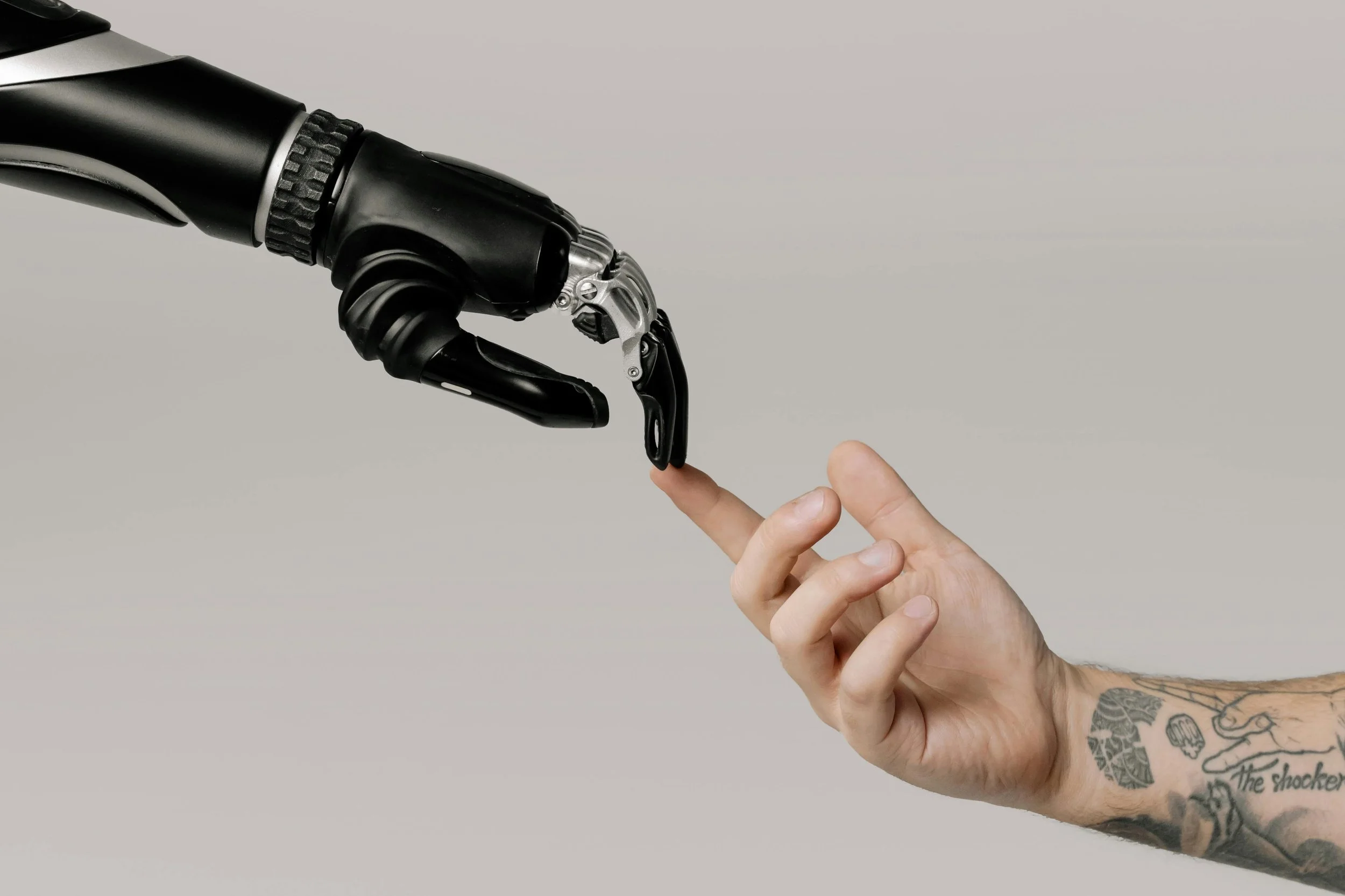
Photo from Cottonbro Studio via Pexels.
Artificial intelligence has become more than commonplace on the internet—it feels like every tech company in existence desperately needs you to use or try their AI features. Companies like Apple, Microsoft, Google, and Facebook all have some kind of artificial intelligence built into their programs. Sure, AI has many benefits for society, but without government regulation, the consistent use and production of artificial intelligence software is slowly killing humanity. It's destroying our culture, undermining creativity, lowering our attention spans, pumping slop into our algorithms, destroying our environment, and generally being completely useless for many of its original intended purposes.
AI “Art”
As many people know, AI is capable of making “art” in the form of music, animations, videos, writing, and images. This “art” is created by training an AI with hundreds of examples from other people’s actual art, stitching them together to create a Frankenstein's monster of original pieces. Right off the bat, an issue arises: the intellectual property of hundreds of artists is stolen and reused in AI imagery. The same applies to AI music and AI videos that have taken over social media, replacing and discouraging skilled artists and animators. Sora AI, ChatGPT’s AI video generator, has produced thousands of videos, some of which garner tens of thousands of views, as many artists struggle to find a living with talent they have spent countless hours perfecting.
The Consequences of AI video
Since AI video and audio have been improving exponentially over the past few years, concern is beginning to grow over the consequences of the everyday person having the power to take someone’s real voice or face and make them do or say anything. Imagine—someone could make a fake video of you committing a crime, saying things you would never say, or doing things you never do. Potentially, they could even use AI video as fake evidence in courtrooms. In a future where AI goes unchecked and unregulated, anyone can potentially become a puppet for users to control. Though such technology is not available to the public yet, the lack of restriction for AI is making this future seem more and more likely by the day.
AI on the internet
AI bots and trolls have been a problem for years, spreading misinformation and political divide every day. In fact, A 2024 Imperva Threat Research report reveals that almost 50% of internet traffic comes from non-human sources, and one-third of this traffic comes from “Bad bots” that threaten internet security. As access to AI becomes more mainstream, many people with various worldviews can make AI comments on internet posts, or spread misinformation on social media. Since there is no regulation on the use of AI for this purpose, it becomes difficult to understand what is true or not while using the internet.
AI misinformation
Another issue with AI is how it can often give people misleading or false information while making internet searches. Misinforming articles and fake news have been around for a long time, but AI makes them easier and quicker to make, and more believable for people who may not be paying attention. In fact, AI articles now make up as much as 50% of articles on the internet, with thousands being made per day, according to PC Magazine.This is not only an issue for humans as readers and writers-AI can feed off of information from other AI-which is known for inaccuracies and biases. When AI learns from incorrect and biased AI, it creates incorrect and biased articles and gives out false information when being used. Essentially, the AI snake eats itself, and the AI collapses into a mess of misinformation and nonsense.
AI and The Environment
While AI videos leak slop and misinformation into social media, AI also factors into the destruction of our environment. AI datacenters require a vast amount of resources to make, power, and cool the computers required to store and farm data. A report from Google regarding their ecological footprint states that single Gemini AI prompts “use 0.24 watt-hours (Wh) of energy, emit 0.03 grams of carbon dioxide equivalent (gCO2e), and consume 0.26 milliliters (5 drops) of water.” and According to Pew Research Center, U.S. data centers consumed 183 terawatt-hours (TWh) of electricity in 2024, accounting for a significant amount of energy consumption and demand, with many centers requiring between 100 and 1000 megawatts, (enough to power 80,000 to 800,000 houses of energy) according to a Government Accountability Office Report.
Solutions
It seems like every day AI is taking a step in the wrong direction. Without regulation from the government, AI can have a devastating impact on our lives. But, unfortunately, the government has been largely inactive in stopping the spread of AI, and often blindly supports its rapid advancement with little regard for its many issues. Though, however helpless it may seem, there are things anyone can do to reduce AI’s negative effects:
Avoiding AI use when possible
Report or block AI accounts on social media
Report AI articles or misinformation
Avoid interacting with AI
Advocate for government regulation on AI
Inform people on the consequences of AI overuse
All in all, it is extremely important to acknowledge the problems AI poses to society while also accepting its benefits. AI can be extremely beneficial to humanity so long as we proceed with caution and make the right decisions.