Modern Relics: The Edge of Modern Brain Computer Interfaces
Photo by KOS Chiropractic Integrative Health from Pexels.
Kaviyan Jayalaksshme Srinivasan
Since 1973, humanity has been using the exact same devices to non-surgically peer into the mind and decode the mystery of the human brain…
EEGs.
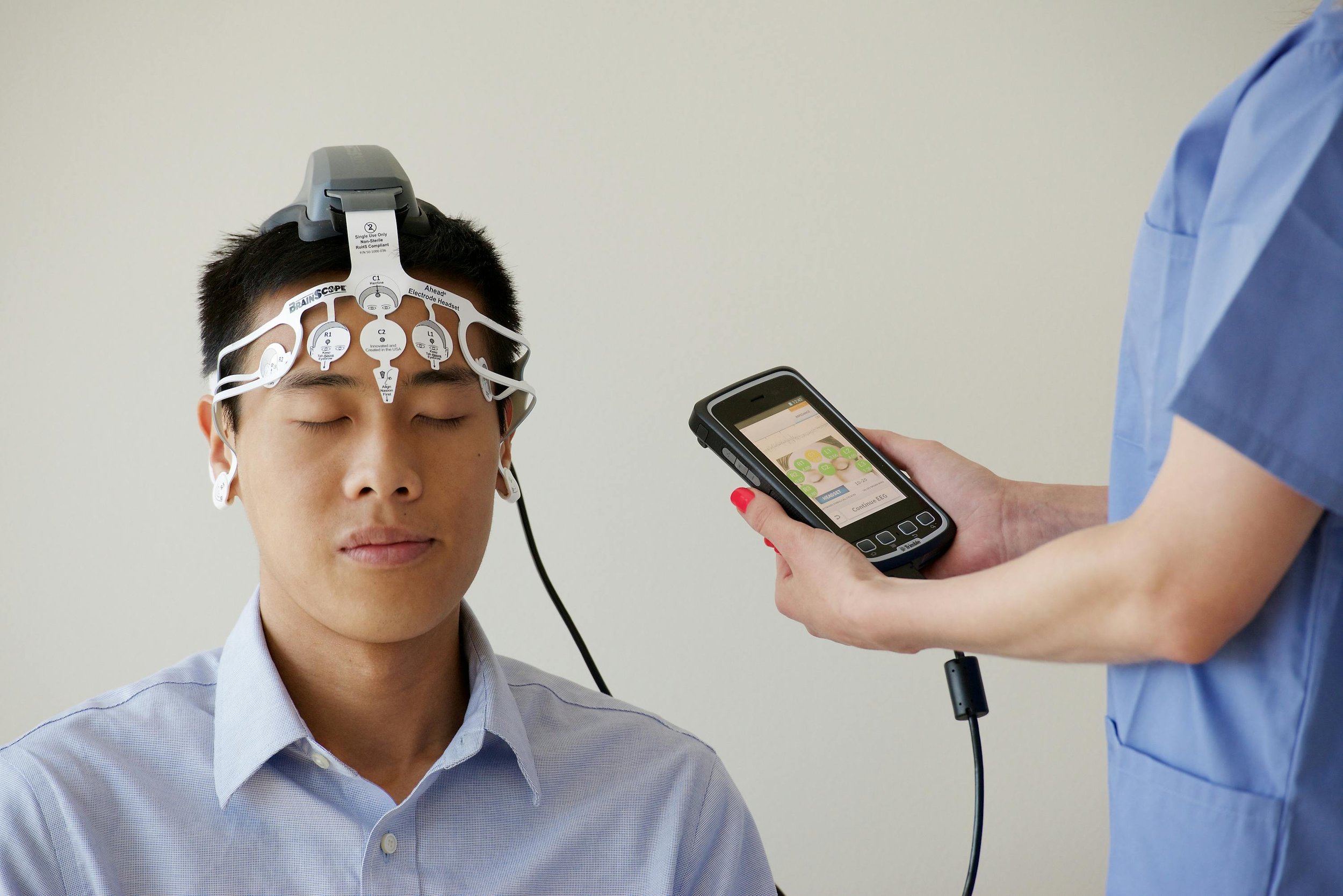
EEG stands for Electroencephalography, which is just a fancy way of saying: "using metal discs stuck to your scalp to read your brain’s electrical activity." For over half a century, we have supposedly stood at the "cusp" of neurotechnology. Yet only recently have we actually started looking for new, more reliable methods to read human intention.
But wait. If we’ve been using this technology for over fifty years, wouldn’t it be logical to assume it’s reliable?
And why should the above-average Joe even care?
Good questions. The answers, however, are a bit chaotic.
Let’s work backward. Neurotechnology affects everyone, not just the lab rats (A.K.A. grad students). Concepts like "privacy of thought" and "autonomous technological control" are moving from sci-fi tropes to consumer-level realities. Your mind is a massive bank of proprietary data that multinational companies would absolutely kill to harvest, which is exactly why there is massive funding for cheap, wearable headsets. Furthermore, because the fundamental goal of technology is to minimize human effort, being able to type and control a computer without lifting a finger isn't just a small step for humanity; it’s a hop, skip, and a jump all wrapped into one.
Now that you know why it matters, we have to answer the trickier question: Why have we used EEGs as the benchmark brain-recording device since forever?
Before I tell you the reason, let me tell you what it isn’t. It’s not because EEGs are reliable, easy to use, versatile, or optimal.
The real reason?
It’s because we are stupid.
The Mariana Trench of Progress
What do I mean by "humans are stupid"?
Exactly what I said, Genius. We lack the fundamental knowledge required to make our tech better, so we remain stuck using modern relics. Our collective pride in our understanding of physics is cute, but in reality, we know next to nothing. Sure, equations like E = mc2, F = ma, or the Shannon-Hartley theorem C = Blog2(1 + S/N) are groundbreaking. But compared to where we actually need to be to achieve true telepathic tech, our current progress is like jumping into a plastic kiddie pool when we need to dive 30,000 feet deep into the Mariana Trench.
Now, all hope is not lost. There are future pathways called "modalities" that hold massive promise. But before we look at the holy grails of neurotech, we have to expose why our current benchmark is failing us.
The Current State: A Statistical Illusion
Brain-Computer Interface (BCI) researchers love to publish papers advertising metrics like "97% accuracy" or "85% efficiency" in their Machine Learning models.
Those numbers are completely meaningless in the real world.
See, these results are manufactured in the comfort of a lab where every single variable is meticulously controlled. Subjects wear a pristine EEG headset, sit perfectly still, maintain peak alertness, and endure zero environmental interference.
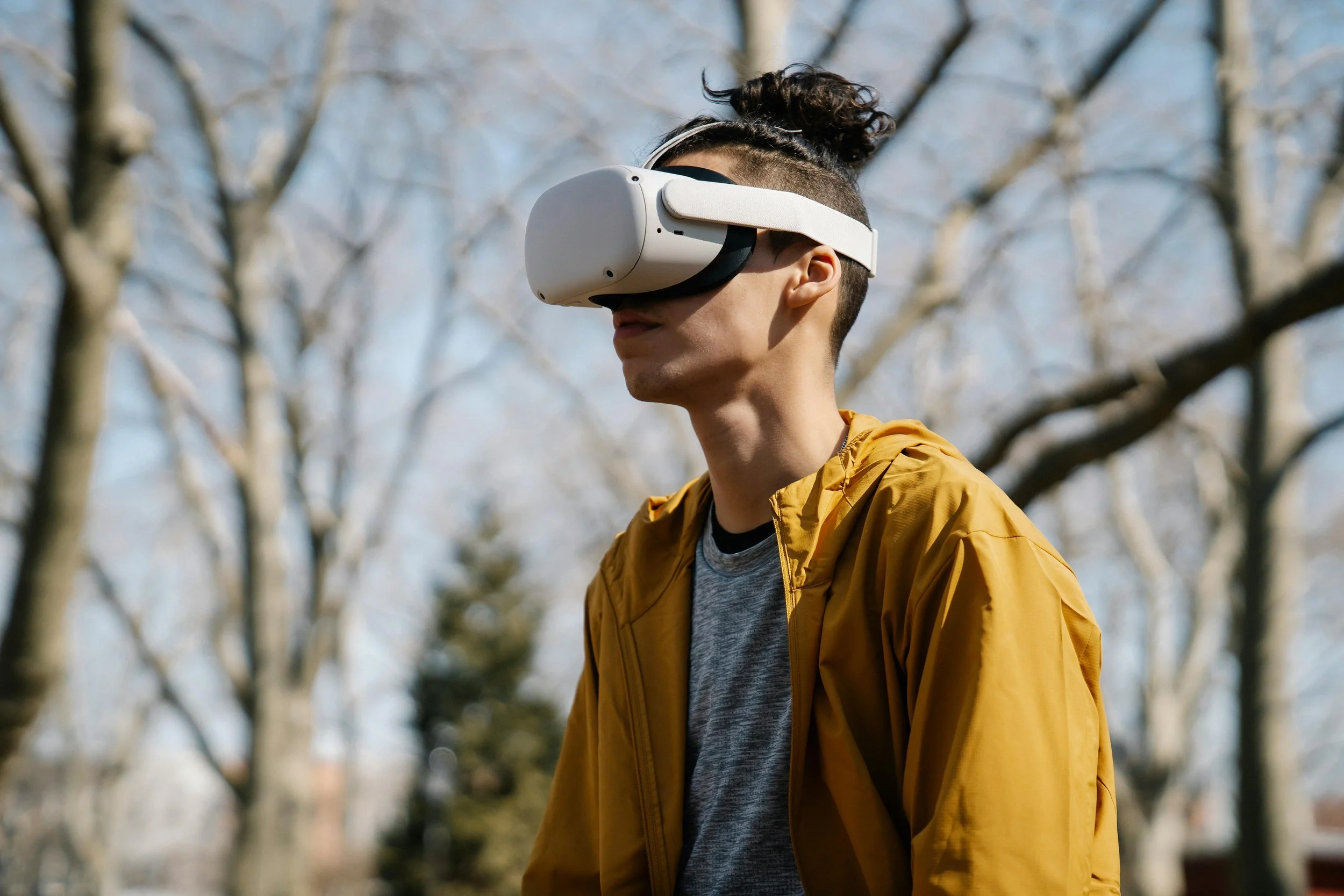
But in real life, you sneeze. You jerk your head. You move around playing sports or wearing a VR headset. Your everyday environment is loud, hot, dusty, and full of contaminants that disrupt fragile circuitry. Reality instantly tears down the marketing illusion.
To bypass this lab-only restriction, there has been a massive shift toward using Machine Learning to handle raw "consumer-level" EEG data. The most popular algorithm framework right now is Self-Supervised Learning (SSL).
Machine Learning (ML) is just a way for a computer to find the best method to achieve a goal based on programmed success and failure conditions. SSL specifically works by taking a vast ocean of unlabeled data and forcing the algorithm to make its own interpretations. It creates its own labels to complete tasks, such as reconstructing a missing signal or classifying data into groups (like distinguishing an eye blink from a hand twitch).
The reason researchers love SSL is because humans don't have to manually label thousands of hours of brainwaves. But like all things in life, there is an immediate opportunity cost: time.
Despite being trained on massive datasets, SSL models require significant computational time to run code and decode intent. While technically faster than manual human sorting, they hit a massive roadblock: cross-subject standardization. Every single human brain is structurally and electrically unique. A consumer device needs to adapt to your specific brain quickly and accurately. Unfortunately, training these models requires unaccommodating, rigid recording conditions that are impossible to maintain on a consumer level. The result? The model takes forever to train and yields terrible accuracy. In other words: useless.
Furthermore, these research papers constantly flaunt a metric called the Information Transfer Rate (ITR), measured in bits per second (bps). Papers advertising a theoretical 200bps are actively hiding two massive caveats:
The speed is purely theoretical. As mentioned, physics and reality are cruel, and those speeds are never achieved reliably in reality.
They hide an overlooked metric called the Flip Rate. A high flip rate (0.5 or 50%) means the model is essentially flipping a coin, guessing randomly, rather than actually classifying your brainwaves.
Inherent Shortcomings: The Complex Human Circuit
EEG technology suffers from fundamental biological bottlenecks. The electrical signals created by your neurons become highly attenuated, meaning weakened and blurred, by the time they pass through multiple layers of the head to reach an electrode.
This is the nightmare of volume conduction:
Neural Signal ──> Cerebral Spinal Fluid (Spreads Charge) ──> Skull (Filters & Leaks Voltage) ──> Weak Scalp Signal
Signals originating deep in the neurons must first travel through cerebrospinal fluid. Because fluid is highly conductive, it spreads the electrical charge across its surface area, causing the signal to instantly lose its distinct shape and specificity.
Next, the signal hits the skull, which is a structural nightmare. The skull is non-uniformly dense: the hard, compact bone on the outside is a terrible conductor, but the soft tissue on the inside is highly conductive. The hard parts filter out high-energy signals (loss of information), while the soft parts cause massive voltage leaks (more loss of information). The sad, mangled remnant that finally leaks out onto your skin is what the EEG electrode picks up.
Because of volume conduction, the Signal-to-Noise Ratio (SNR) is abysmally low. Measured global values hover around 0.12, meaning there is vastly more background noise than usable signal.
To make matters worse, EEG readings suffer from severe temporal jitter (latency variance).
There is a persistent time-delay fluctuation of at least 200 milliseconds (0.2 seconds) between the neural event and the recorded signal. In the context of computing, 200ms of random lag is catastrophic. It completely disrupts continuous data streams and makes seamless communication impossible.
In ML models, performance is often tracked by the Character Recognition Rate (CRR): the system's ability to accurately output characters based on neural input. Because the incoming EEG signal is so degraded, tiny mathematical errors made during early calculation steps compound exponentially over time. Eventually, this error accumulation causes a total collapse in character recognition, dropping real-world accuracy down to a useless 2% to 3%.
Ultimately, these systems are coddled by perfect training data. In the wild, everyday electromagnetic waves from your devices, muscle movements, loss of focus, and slightly misaligned electrodes instantly destroy the system's accuracy.
Why Modern Physics Cannot Fix EEG
They say that if you write down a problem clearly, it is half solved. So why haven't we engineered a solution to fix these shortcomings?
Because the bottleneck isn't an engineering problem.
It’s a physics problem.
And physics doesn't care about your software updates.
The Shannon-Hartley Constraint
The absolute speed limit of non-invasive brain reading is governed by the Shannon-Hartley Theorem:
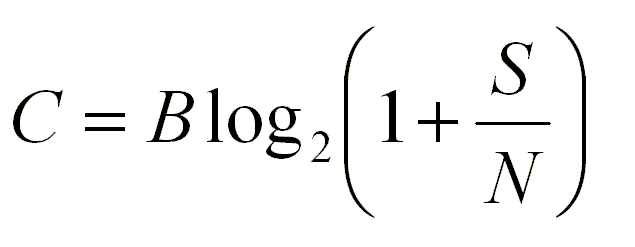
To break this down simply: this theorem dictates the maximum rate (C, in bits per second) at which error-free information can be transferred over a communication channel in the presence of noise. It relies on Bandwidth (B, the range of frequencies in Hertz) and the Signal-to-Noise Ratio (SNR or S/N in the formula).
When you plug real-world EEG variables into this equation (a tight 30-40Hz bandwidth and an SNR less than or equal to 1), the math forces the maximum bitrate into the mere tens of bits per second.
Live recording and analysis under these laws of physics is practically slower than a snail.
Immersive sci-fi neural setups like the ones from Ready Player One or Sword Art Online (SAO) can never exist using EEG technology. Those fantasy systems require data throughput in the megabits per second. EEG lacks that capacity by an astronomical 20,000x deficit.
Biological and Spatial Limits
Non-Stationarity & Drift: The human brain does not output one clean signal, pause, and output another. It fires millions of instructions simultaneously, creating a phenomenon called distribution shift or "drift." Mathematically, because brain states shift constantly, the signal variance increases unpredictably, rendering static intent-classifiers highly inaccurate.
Spatial Degrees of Freedom: This is a fancy term for electrode independence. Because the skull smears electrical fields across the scalp, neighboring electrodes end up reading the exact same blurred information. Adding more electrodes doesn't give you more data; it just gives you duplicate copies of the same blurry mess.
Acquisition Latency: This is the time required to collect a sufficient window of data to process a frequency signal. It accounts for a massive 84% of total system latency. Physics dictates a strict minimum time window to read these waves; if you shorten the window to make it faster, the math breaks, and accuracy vanishes entirely.
Because EEG lacks the physical capacity to collect high-fidelity (accurate) data within a usable timeframe, its best use cases are stuck in low-speed clinical rehabilitation environments. The modern high-speed world has no place for it.
It is a relic.
The Future: The Big Three Modalities
To build the future of immersive neurotechnology, we must ditch voltage-based scalp recordings entirely and exploit alternative physics. The future belongs to the "Big Three Modalities":
1. Optical: HD-DOT (High-Density Diffuse Optical Tomography)
A highly advanced evolution of functional Near-Infrared Spectroscopy (fNIRS). Instead of measuring electricity, it shoots safe infrared light through the skull. HD-DOT uses dense arrays of overlapping fiber optics to track precisely where light scatters. The goal is to measure how blood flow changes in the brain, and then use that information to predict what kinds of signals are being generated. While standard fNIRS is plagued by a slow blood-flow delay, advanced optical methods can localize brain activity down to millimeters and pack neatly into a wearable, consumer-friendly cap.
2. Acoustic: fUS (Functional Ultrasound)
This modality uses high-frequency sound waves to map blood-flow changes inside the brain, achieving a spectacular resolution capable of tracking clusters as small as 60 neurons. The catch? Ultrasound waves cannot cleanly penetrate a thick adult skull. It requires a tiny "acoustic window," replacing a minute piece of bone with a sonolucent (allows ultrasound to pass through) polymer, making it minimally invasive. However, it completely bypasses the electrical smearing of cerebrospinal fluid, resulting in pristine spatial maps.
3. Magnetic: OPM-MEG (Optically Pumped Magnetometers)
Magnetoencephalography (MEG) tracks the magnetic fields generated by neural activity.
Magnetic fields have a superpower: they pass through the skull completely undistorted.
Historically, this required a multi-million dollar room cooled by liquid helium. Enter OPM-MEG, which uses room-temperature sensors the size of Lego bricks built into a lightweight, 3D-printed helmet. It offers the lightning-fast speed of EEG combined with perfect spatial clarity.
The drawbacks? It is highly sensitive to external magnetic interference, and the cost is astronomical. While a consumer EEG costs $100–$1,500, an OPM-MEG setup will run you anywhere from $200,000 to $1.5 million. It is definitely not sitting on Best Buy shelves just yet.
Conclusion
While these alternative modalities provide the resolution, depth, and speed that EEG never will, our collective bottleneck comes down to manufacturing economics, engineering consumer versions, and generating the immediate societal demand to fund the frontier.
The future where you can lie in bed, throw on a sleek headset, and explore fully immersive digital worlds is absolutely coming. But based on our current trajectory, the real question is two-part: when, and how?
In truth, I don’t know. But history shows that a relentless pursuit of greatness combined with a hyper-optimistic, can-do mindset can force miracles into reality.
You have two choices: you can sit back and passively hope you live long enough to experience this future before you pass, or you can actively help drag the future closer while you're still alive.
I’m not asking you to go get a Ph.D. in neuroscience or become a big-tech billionaire overnight.
I’m just telling you to look into this field with insatiable curiosity. I can practically guarantee you'll get hooked.
At the very least, you’ll walk away with a mind-blowing new fact to brag about on your next date. I’m certain they’ll be thoroughly impressed.