New Ice, New Eyes
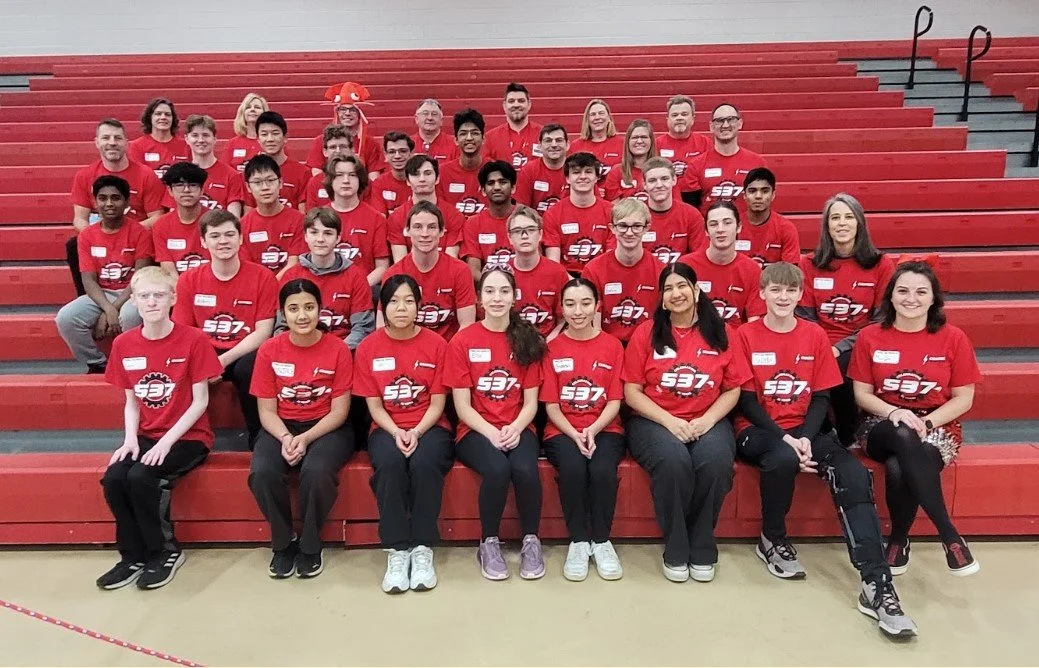
All photos provided by Li.
Lari Li
One conversation as a speed skater that really stuck with me was a couple of skating parents giving me advice. I was injured, waiting for my brothers in the Pettit lobby, and sat at the parents’ table while my teammates resumed practice. We had time to kill, and the conversation eventually shifted to my post-graduation plans. They talked about their wishes for their own children to go to the east and west coast for college. They talked about the importance of the coasts and big cities, and how that not only opens up doors in terms of opportunities, but also shifts your perspective and mindset of the world.
Months later, my team and I were invited to two competitions held in China’s most bustling cities. I wanted to get a read on my teammates’ mindset shifts before and after traveling, as well as some international skater experience.
So there I was, interviewing my teammates in locker rooms and crutching around ice rinks interviewing foreign skaters. I was speeding through hallways and sliding down ramps as my teammates pushed me around. Skaters knew it was serious when they saw a lady in a wheelchair approach them with a microphone, asking to interview them. The following is what I learned and synthesized from these interviews.
““I used to think our town was already really big but then we came here. And then I realized that our town is not the whole world and that there is a lot more that’s possible.” ”
We’re pushing limits now. From the Sussex Bugline Trail to the Beijing Ritz-Carlton, our environment shapes what we dream. Growing up in the Midwest leads a quiet life—get an education, find a house, enjoy everything while it lasts. There’s nothing inherently wrong with it; sometimes a quiet life is all we need. But standing 500 feet overlooking Beijing’s skyline, you begin to realize there’s so much more out there. My sense of possibility grew a hundred-fold after traveling and uniting with esteemed skaters from around the globe. Everything I thought I knew—the speed, the scale, the stakes—were magnified. There are so many worlds on our planet.
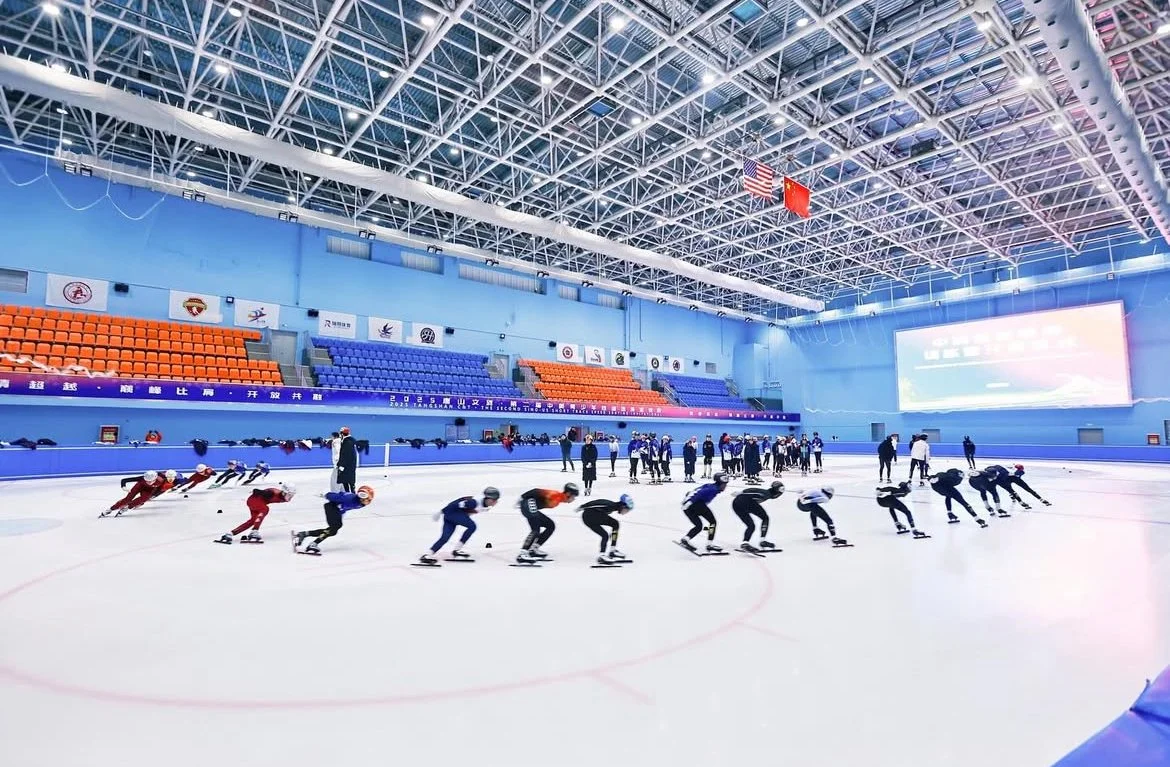
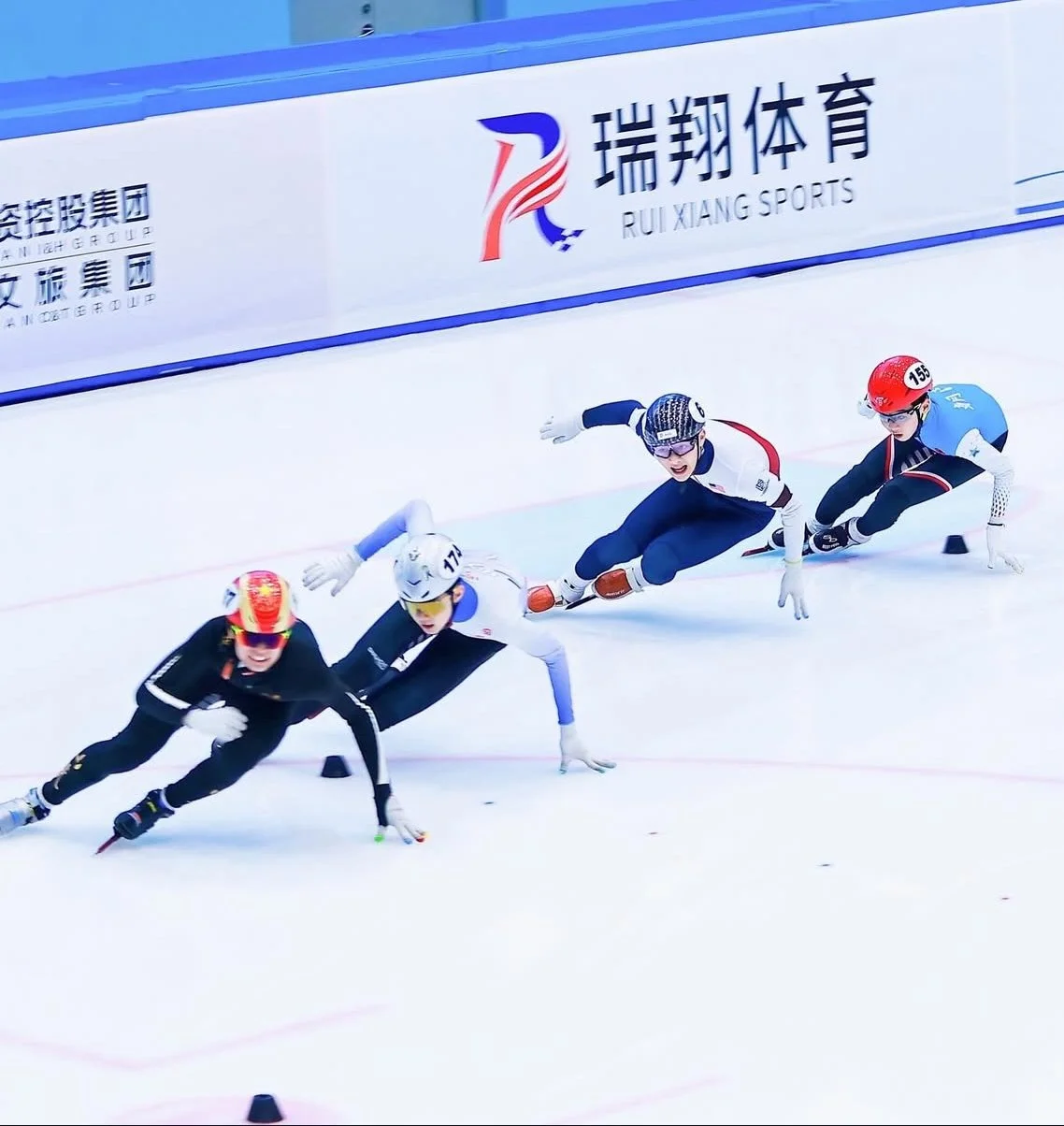
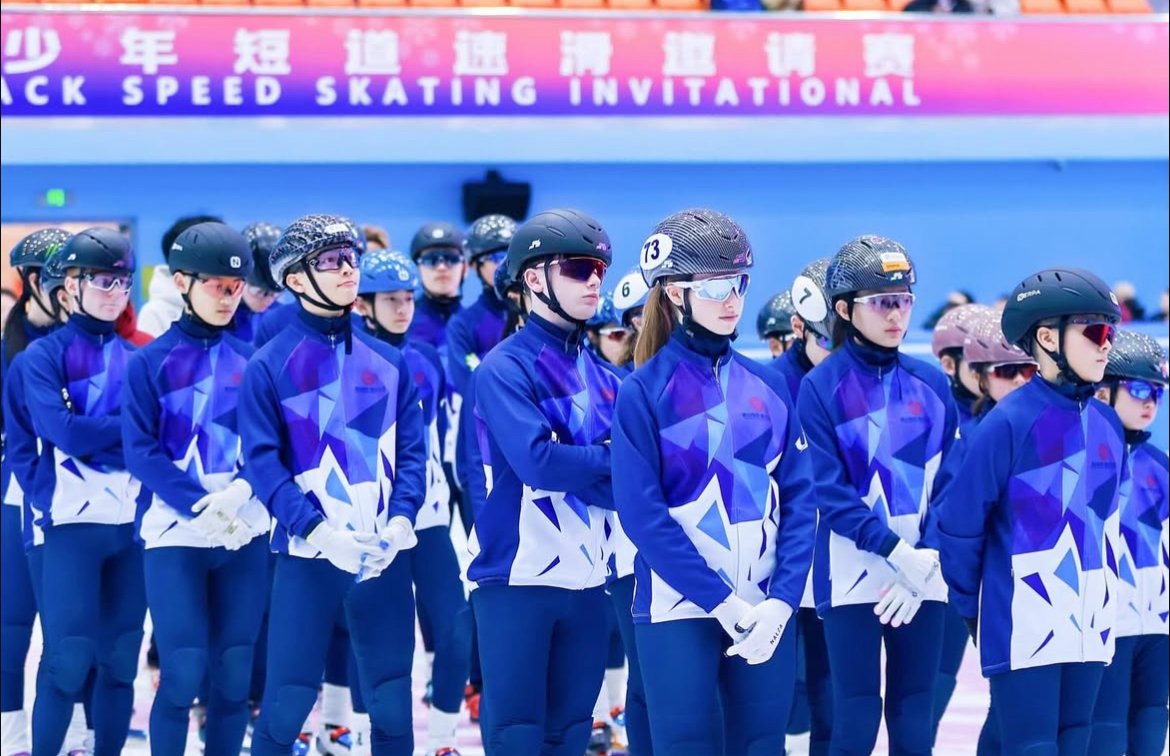
After skating in Tangshan and Beijing with half a million eyes on us at the 2025 Sino-US Invitational Junior Short Track Championships and the 2025 Beijing Short Track Speedskating League #1, I’ve gathered this mindset shift has struck even the youngest skaters: both my teammates and ones I got to meet and interview. These two racing opportunities and exchanges were extremely hard to come by—the firsts of firsts. Likewise, the lessons gathered were invaluable. A big takeaway from my trip is that it’s essential to show people, especially kids, what’s possible while their minds are more open.
Going to a new place opens doors and opens your eyes. It doesn’t just give you new things, people, and experiences to look at. It gives you new ways to look at yourself. Reflecting inwards gives you the clarity and self-actualization that are pivotal to growth. A trip to Burkina Faso makes you realize that the everyday problems you complain about are extremely first-world. A trip to the Netherlands proves that even a bike ride can feel like true freedom. A trip to China reminds you that ambition on a massive scale is plausible, normalized, prevalent—making you question whether your own limits are self-imposed.
“Before the trip, sometimes I would try my best, but not always. But after this trip, I saw how dedicated and hard-working these Chinese people are. So now I’m gonna do my best.” - Justin Wu, age 9
This newfound perspective isn’t just a personal growth factor. It’s a butterfly effect, spanning 6,559 miles across the Pacific.
How are you going to bring your new mentality back to the States?
“Well first, to get my mentality back to the States, I gotta take a plane back to the States. And then I’m not gonna leave my brain here. I’m gonna keep it in my head. Then I’m gonna put this mentality into every practice. There’s a lot to learn from skaters that come from different countries.” - Justin Wu, age 9
In Justin’s interview, I learned that he aspires to go to UCLA and become a professional speedskater. It’s always been a goal of his before and after the trip. After this trip, his new plan of attack is “to work hard, push [the ice] harder, and train with a brain.” What he’s yet to realize is that once he touches down on the west coast, his world and opportunities will open up in ways unimaginable. In the world of taco trucks and tech startups that is California, he’ll no longer have to search for or dream about opportunities and dreams. They’ll all be there at his fingertips. Whether it’s a day’s train ride to Silicon Valley or meeting esteemed intellectuals, large cities attract for a reason. And that’s something he knows and will hold on to.
Praew, a 12-year-old Thai skater I interviewed, comes from a relatively urban area in Thailand. Already exposed to the busy city life, it wasn’t the possibilities that Praew picked up from the competition but rather the discipline. “There are a few skaters I can look up to in Thailand. But not really much. Here, I can look up to everyone. I have learned something from everyone here.”
While I was crutching around the stadium interviewing skaters, I stumbled across multiple rinks of figure skaters training. I was walking around the entire day for around 6 hours, and still, it was the same few figure skaters each time. Although we have different ice disciplines, the International Skating Union always finds ways to mutually inspire and uplift each other.
With skaters in a certain nation or team coming from the same roots and coaches, everyone had distinct skating styles. Beijing became a melting pot and academy of technique. Praew states, “Many of the skaters I raced in this competition don’t just skate hard. They skate smart too. I realized that talent only can get me so far and that I need to train with plan and intention.”
14-year-old Kelly Grover says the same. “The skaters here are a lot more fierce than what I’m used to and it’s opened my perspective on racing a lot more. In the future, I want to focus more on the logistics and mentality of racing rather than just pushing hard and improving in terms of my fitness and technique.”
In the end, pushing limits isn’t about shaving milliseconds off PRs. It’s about expanding your boundaries and belief in what's possible. Walking the streets of Beijing and being surrounded by high-rise corporate buildings, men in suits and briefcases, and even families on a stroll shows us that success and knowledge is everywhere. Many may assume that making it in finance or starting a company is inaccessible due to the dominance of major corporations. The suburbs of Milwaukee don’t have thousands of large company buildings. What they haven’t seen yet is Beijing’s CBD or Financial District Street, full of nameless corporations. Each one rises thousands of feet, and has the roots of one person with a dream and no bounds as to what’s possible. University students hustle down the streets, subconsciously emanating discipline and values of education.
Perspective doesn’t always come with a passport, but for this competition, stepping into new cities and being immersed in new cultures stretched our vision in ways no practice ever could. While ice is still the same ice everywhere, the people you meet and places you’ll go change everything.
When you’re exposed to how big the world is, you start skating differently. You carry yourself differently. You dream bigger. Success and work ethic becomes normalized. And suddenly, the limits you once perceived dissolve. They were never limits at all—just the starting line.