Supersonic Flight: Unlocking the Key to Efficient Transportation
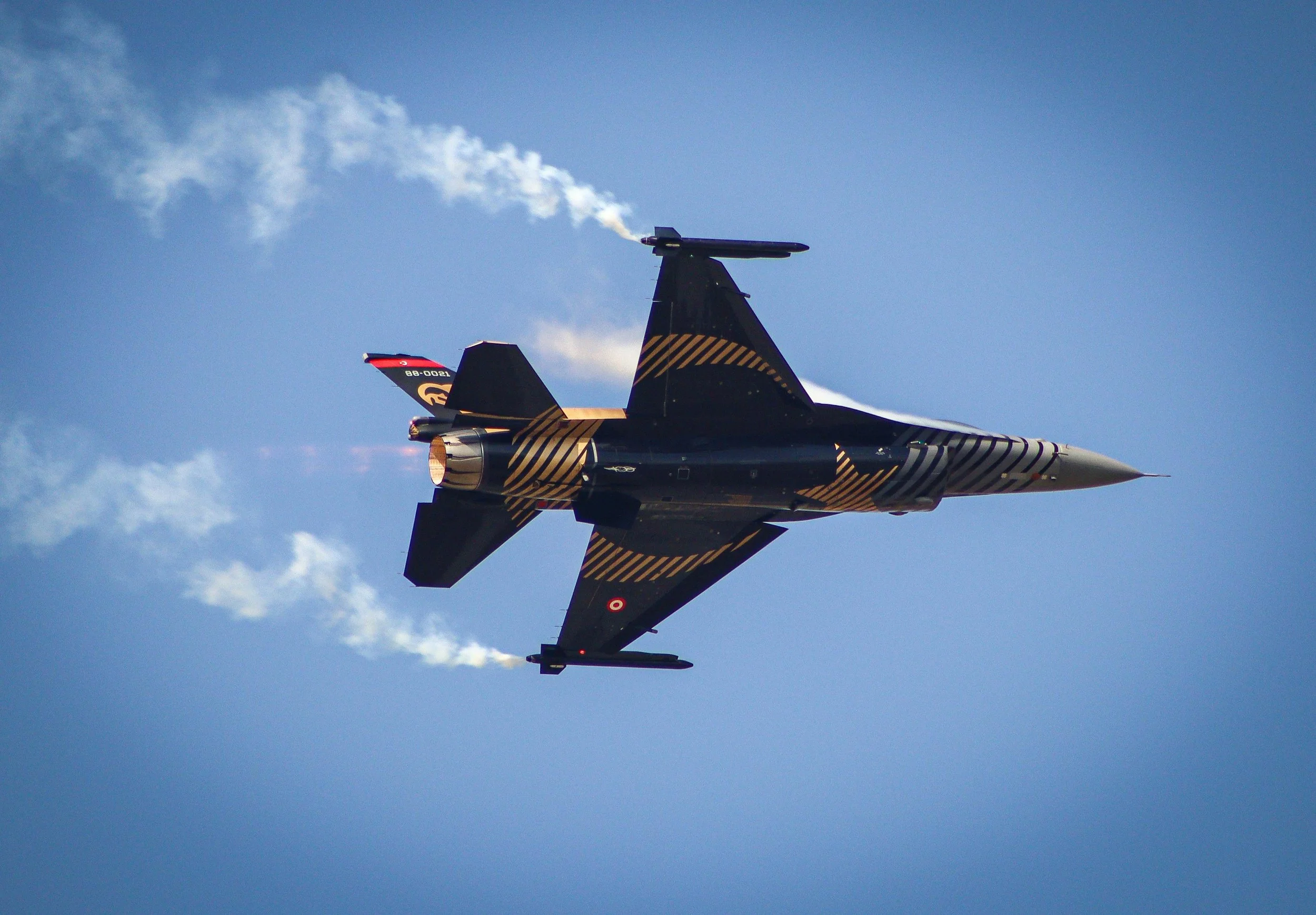
Photo from Pexels by Rümeysa Ersoy.
Derek Zhang
There’s always been a pride in being fast: running a mile in under five minutes, finishing a supposedly 83-minute test in 20 minutes, or completing your project a week ahead of the due date. But why is this interest so ingrained within us? Perhaps, evolution over the millions of years has always favored efficiency, leading to its emphasis in our current day. This conclusion is not entirely surprising when you consider all the examples that can be seen in the natural world; one could even argue that nature purposely seeks out more and more efficient ways to do things. Still, a natural limit will be placed at some point, one such as the speed of light that no object is said to surpass. Lightspeed typically only becomes relevant in the field of astrophysics, so for now, we’ll take it down one step. This begins with sound.
Nearly 338 years ago, “Isaac Newton published the first calculation of the speed of sound in air” (Research in Supersonic Flight). Since then, humanity has worked its way towards breaking this limit, with Bell X-1 becoming the first jet to travel supersonic—faster than sound. Jets like the Concorde offered commercial availability of supersonic flight in recent times, carrying both cargo and passengers, but it was ultimately discontinued due to rising costs, decreasing demand, and a fatal accident. In addition, around eight countries have outright banned supersonic flight over their territories and air spaces (Which Countries Banned Concorde From Supersonic Flight?).
But why has there been so much opposition? Is it just because of the Concorde? What about other objects like missiles and rockets? Well, the introduction of the Concorde jets definitely raised recognition of supersonic travel and the issues that came along with it. The topic’s increased awareness among the general population then became a leading factor in widespread protests, which caused banning laws to be enacted. It is to be noted, however, that supersonic missiles and rockets were not directly included; the US’s arsenal includes several of these, and they are even developing faster ones actively. Still, the Concorde was not the sole reason behind the demise of supersonic jets. New jets could have been created with improvements if this were to be the case, but unfortunately, what was at play here was a certain, innate feature common to all supersonic aircraft: the supersonic boom.
These booms are created once an object surpasses the speed of sound. They can travel from cruising altitude (anywhere from 30,000 to 42,000 feet up) all the way to the ground, affecting an area over 30 miles wide. They can create sounds loud enough to cause temporary hearing loss, significant discomfort, and damage to the ear drums. And they can even carry vibrations severe enough to physically damage buildings. These effects, although on the more extreme side of things, were severe enough to cause many nations’ resistance to the use of supersonic flight. Still, there may be hope to take advantage of the efficiency once again and make supersonic travel an integral part of transportation.
Supersonic flight, as mentioned before, causes largely disruptive “sonic booms.” This is due to how the jet pushes aside air molecules during its flight (Shock wave). Under normal circumstances, moving objects create vibrations in particles that are then translated as sound that you and I hear everyday. Clapping, for example, creates a disturbance in the surrounding air that causes nearby particles to begin vibrating. Next, your brain registers the different vibrational activities as types of sound; high frequencies are higher pitched, amplified vibrations are louder volumes, and vice versa for both. This process is how our ears help us perceive the world: a whoosh from a car driving by, a hum from an instrument being played, or a clang from an object being dropped. Of course, the speed at which this happens will outpace a plane that is slower than sound (also known as subsonic). What, though, happens if the plane is at the speed of sound? Faster than it? Hypersonic, even? (Hypersonic speed is five times the speed of sound.) Planes traveling at Mach 1—the speed of sound—create overlapping sound waves; this is because newer waves will continue being created at the same spot relative to the plane, which is usually at the nose (Sonic boom). Planes traveling faster than Mach 1 will create sound waves ahead of all the previous ones since those ones can’t catch up. All being said, both of these cases end up forming a cone-shaped trail of sound waves. This build up—along with the energy carried—is what creates the fascinating phenomenon that is called a sonic boom.
What’s interesting is that passengers inside a supersonic jet don’t actually hear the boom. Intuitively, this makes sense when you consider the fact that the plane is, after all, outpacing it (hence supersonic). Even those inside a plane traveling at exactly Mach 1 don’t hear a boom since it originates from the plane and travels outward; that is, the boom doesn’t rebound back into the plane. The same, however, can not be said for civilians on the ground. Although the shock waves do peter out the more they travel, they can still reach the ground with enough energy to create a disturbance (Shock wave). This most commonly occurs in the form of a loud sound but at times, can go as far as to shatter windows. As a result, many have protested the use of supersonic travel, leading to bans in Canada, Ireland, the Netherlands, Norway, Sweden, Switzerland, West Germany, and the US (Which Countries Banned Concorde From Supersonic Flight?). Achieving supersonic flights also means “higher fuel consumption” and higher maintenance standards of fuel, raising environmental and economical concerns as well (Supersonic Jet Fuels).
Despite the numerous worries of supersonic travel, there is still reason to look into improving the method of transportation. A typical flight from New York to London takes about seven hours to complete. On the other hand, supersonic planes can fit the same flight in a little over three hours. This makes supersonic travel crucial for the transportation of time-dependent cargo, such as organ transplants (Which Countries Banned Concorde From Supersonic Flight?). With such important uses, supersonic flight being made practical can help spread its use around the world, beginning with reducing the sonic boom’s effect.
How does one do this, you ask? Since sound is made up of vibrations, controlling them can affect the “path and direction” of a sonic boom. Now, we can’t just pick and choose where these vibrations go, but temperature can… in a way. “Just like [how] light bends when it goes through different mediums, sound bends as it goes through different temperatures” (This Plane is Bringing Supersonic BACK). Confused? Know that it’s based on the fact that sound travels faster in warm air than cold air. Picture a layer of cold air sitting above a layer of warm air near the ground. If a sound was created so that it originated from within the cold air, the waves would travel ‘slowly’ through the cold air. Any waves that reach the warm air would speed up, which causes them to be refracted or change direction (Here’s Why Sound Carries Farther on Cold Days). After continuously passing through layers of warmer and warmer air, the sound waves change direction enough to rebound back into the colder air. Simply put, a single wave that has sections traveling through both warm and cold air will experience the warmer portion bending back into the colder region.
This scenario was chosen because that’s how the atmosphere is actually like; air tends to be cooler the higher up it is. Just think about why people wear warm clothes or bring blankets on flights. As such, this ‘bending’ of sound can and already has been applied in real life. A recently tested XB-1 jet took advantage of “new tech that allows it to find just the right altitude and speed” in order to best utilize the refraction effect (This Plane is Bringing Supersonic BACK). As a result, it was able to fly supersonic with no audible boom! If this new development can continue to be expanded and spread onto other jets, it would allow supersonic flight to travel in a way such that the generated booms curve away from the ground. As a bonus, passengers aboard the plane will remain immune to the boom since they outpace it. The development of XB-1 marks a turning point in supersonic flight, proving that sonic booms can indeed be neutralized through temperature mediums.
From the first calculation to the first surpassing of the speed of sound, many great individuals have worked tirelessly to make such achievements possible. Even now, they continue pushing the boundaries of the physical world, developing jets like the X-43 that can reach Mach 9.6 (The top 10 fastest jets). There now remains one key step in unlocking supersonic travel for practical use: eliminating the boom.