The Unsung Heroes Behind the Curtain: A Day in the Life of a Drama Crew
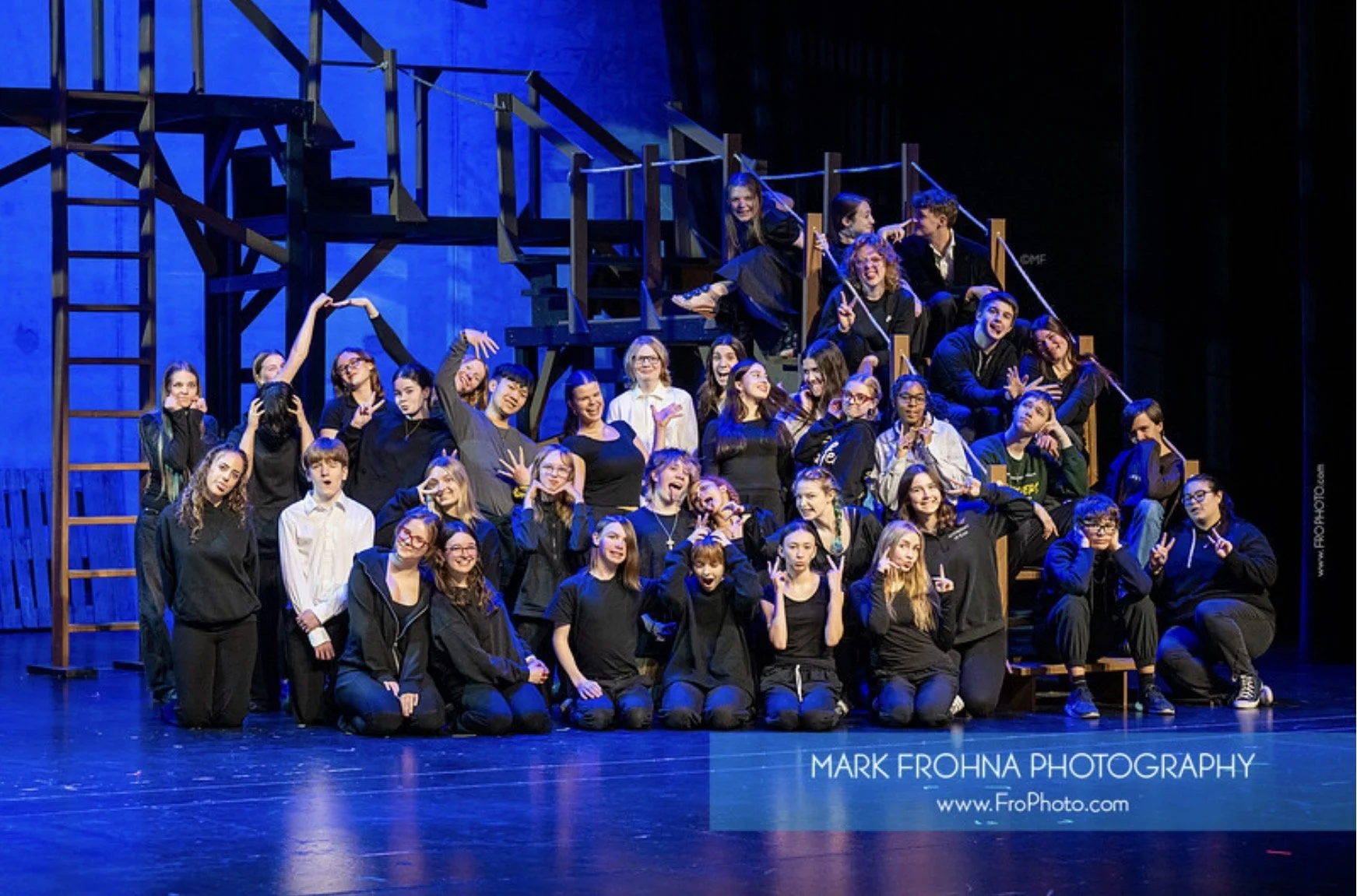
Photo by Mark Frohna.
Before we get started there are a few things that need clarification. In crew there are lots of roles to cover: Rails, Hair and Makeup, Run Crew, Student Direction, Stage Management, Lights and Sound, and Costumes. These are all separate roles that make the show run smoothly and look as best as possible.
In each show the numbers of each role besides rails, directors, and managers vary; these roles all require one person besides assistant stage managers as there are two assistant stage managers per show. In this, there are extensive opportunities to be on crew for anybody with any experience. If you would like to learn more about the crew experience you can contact anyone of us with questions about the corresponding roles!
Each section below was written by a member of the crew with experience in that specific role.
Run Crew
The thrill of running set pieces on stage in the dark, and knowing that one wrong placement could throw off the blocking of the actors is what makes Run Crew an important part of drama. Run Crew is responsible for setting the stage during scene changes in shows, moving large set pieces, or smaller furniture items. During rehearsals, students on run crew need to work with rails, props, and the ASM’s to learn cues for moving the set quickly and quietly. Being able to communicate with each other silently in the dark, and be ready to adapt at the last possible minute. Before shows, students on run crew are also responsible for making sure the stage is clean and safe for actors and crew to navigate, by sweeping/mopping, setting stage, and making sure all moving set pieces are locked in place. During shows, run crew has to be able to seamlessly transition the stage so it looks perfectly like the director intended. It being one of the largest sectors of a show is what makes it the most welcoming for new members. They are instantly introduced to all of the leadership so they know who they can go to, and have a plethora of people to back them up.
Nex Kramer
Rails
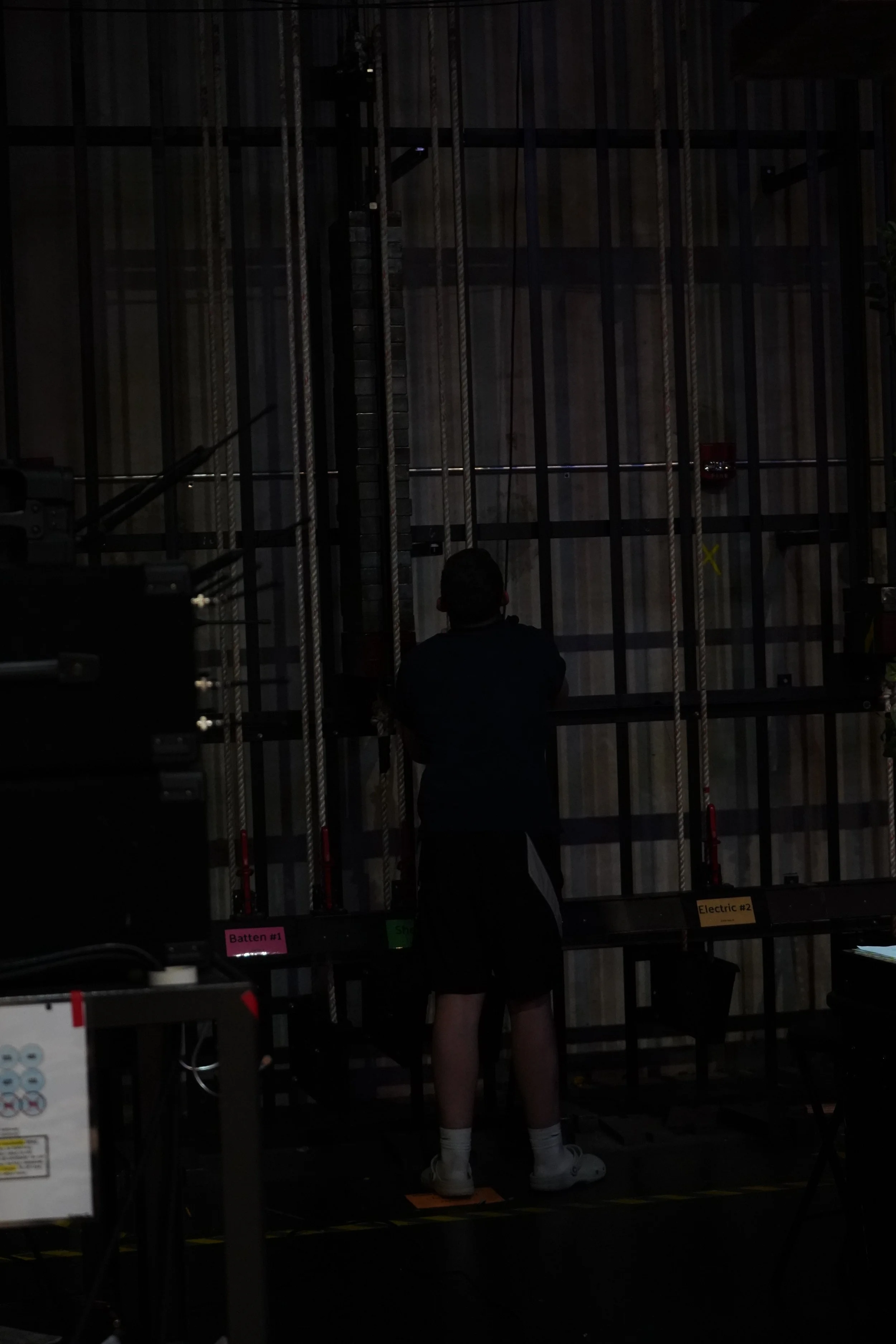
Photo by Xzavier Mielkie.
The name Rails does not give away what it is about, but intrigues anyone who hears it. They work closely with the rigging stations, and the ASM’s in order to know when to drop things in and pull things out. Being on Rails is very important to each show, you have to work hand in hand with the run crew to get your job done safely and efficiently. A day to day for someone on rails is never the same. One day you are involved, yelling things like “1st leg coming in/out” from the wings,” and can never catch a break, and the next you have all the time in the world to rest and relax. Shows are never the same as well, this job depending on the person can be physically demanding as raising/lowering things like walls and other set pieces can be heavy. Though this sounds terrible, it is a great spot to be at any grade level or skill level as there are a lot of future possibilities for somebody looking for another position in the ranks of crew. This is a very enjoyable experience for anybody, no matter who they are or where they come from!
Robbie Schmidt
Hair and Makeup
Hair and makeup for characters plays a huge role in bringing liveliness to the stage, and the H/M crew works hard to make sure everything is perfect. A couple weeks prior to each show, our process begins with a deeper look into the specific show’s context, time period, and overall style. By doing this, we can start planning hairstyles and makeup looks that accurately portray each character and the world of the production. From there, we work closely with cast members, and usually have to experiment with different hairstyles and makeup looks before we find what works best! Additionally, some shows feature mid show hair and makeup changes, which we have to factor into the supplies we have, the crew members we have, and the time we have to make sure the quick turnarounds are coordinated. By the time show week begins, every detail is planned so that we can ensure each character looks performance ready! Although being a part of the H/M crew lasts a short few weeks, every minute is needed to make sure we are making each cast member look as good as possible. A huge thing to note is that you might want to have a bit of experience doing hair and makeup, because we need to make sure everyone else that might not know what they are doing has the help they need!
Kylie Stieglitz
Costumes
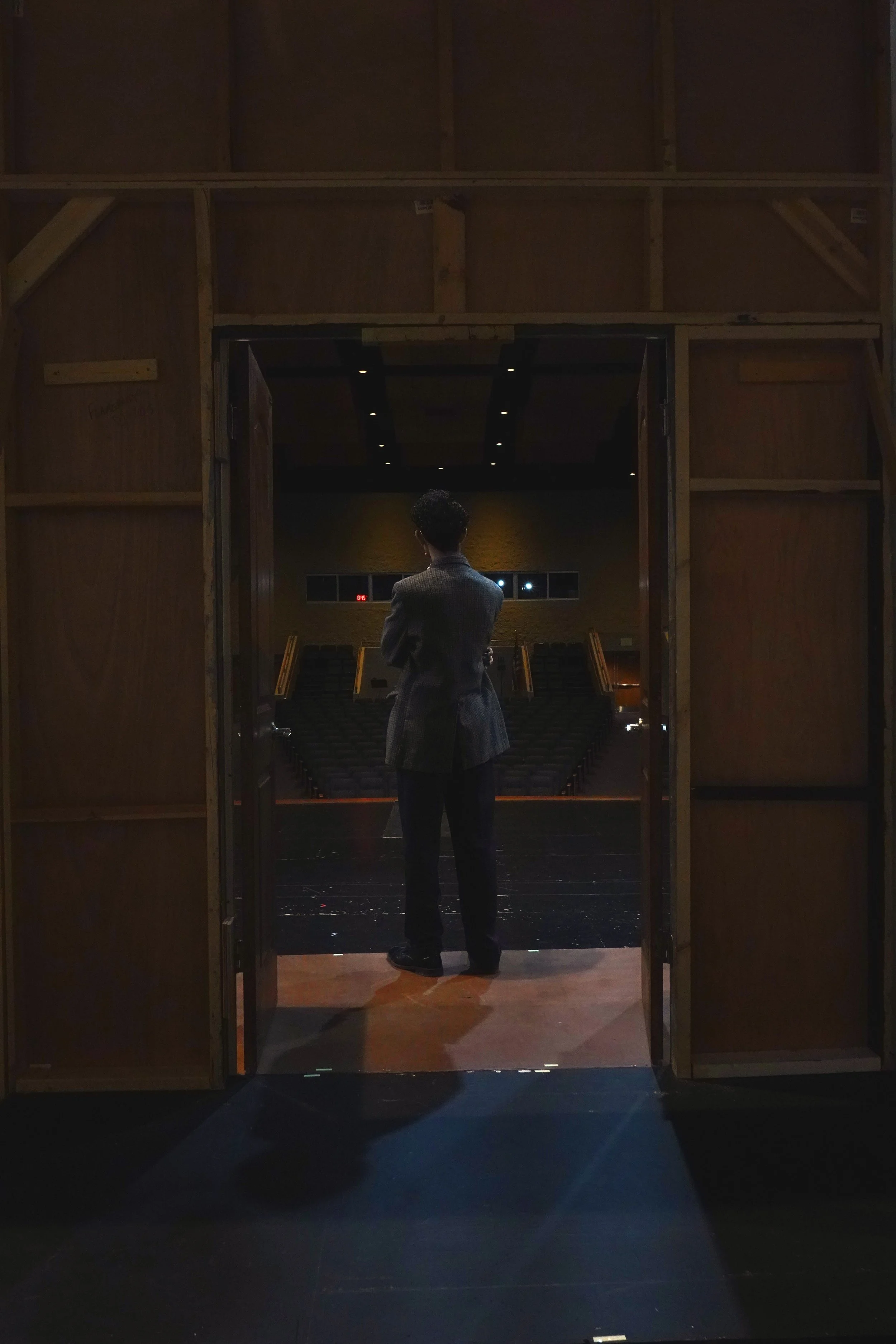
Photo by Xzavier Mielkie.
Costumes are an important aspect of each show. What I do each day varies. I work closely with Darcy, our adult costume technician, to find costumes to fit and match each character. Since I am the only student on costumes, I don’t really have a schedule for what days to come in. Before tech week I normally start coming in about halfway through when rehearsals start for about 1-2 days a week. During these days I help pick out costumes for each character and make sure they fit. We meet with every actor and have them try on the costumes and note changes we want to make on them. Then both Darcy and I take the costumes home to work on. Most of the work I do on the costumes is embellishing them, while Darcy does most of the alterations. By the time tech week comes, we aim to have our costumes finished. For dress rehearsals and the actual show I help actors get into costumes as needed. This position does require some understanding of alterations, and sewing in order to properly help.
Rahet Sangha
Lights and Sound
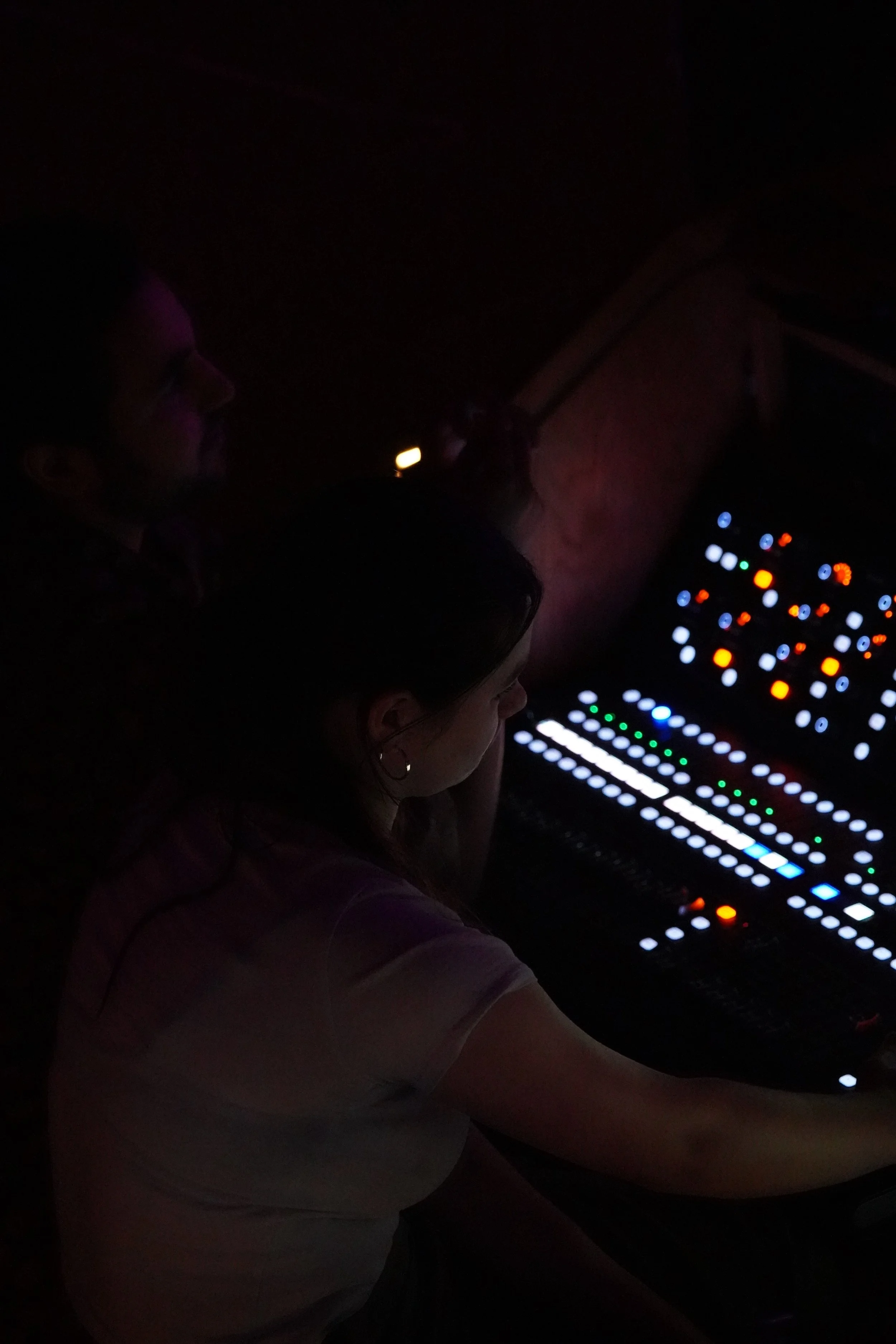
Photo by Xzavier Mielkie.
A day in life for a light and sound tech during the beginning of rehearsals is very busy as the rehearsals are incredibly important to how the show runs in regards to tech. For example, during tech week, sound systems must be set up and calibrated before any design begins. Beginning rehearsals with microphones as soon as possible is key to a smooth show as there are many hiccups and technical difficulties that occur especially with a larger group of actors. Throughout the rehearsals as a light tech, most of time is spent playing around with lighting and seeing what works for the feel of the scene. Ques for lights and sound constantly change until show week begins and things must be solidified. Into the shows, light and sound techs must be prepared to deal with technical issues that have to get fixed quickly, such as a faulty mic or a light that keeps flickering on and off. The most important part of being in charge of the boards is to be able to problem solve and stay calm in order to make sure things sound and look as good as they can. We often call this sector of the show tech crew, as they are responsible for all things technical. So know that when you hear tech crew it's about those behind the booth.
Elena Stone
Stage Management
Running the show. That is what stage management is all about. The lights, the sound, the actors on stage, all of that is cued by the stage management team. It consists of our productions of two ASMs, one SM, and one TD. The Stage Manager (SM) is the role that gives all the stage directions to when everything happens. They are the bones of our productions here at Hamilton. The Assistant Stage Managers (ASMs) are the ones that run the show from the wings. They communicate the information that is given from the stage manager to the entirety of the backstage. The Technical Director (TD), though not part of management, is responsible for the entire crew. They are where the questions are fielded, and make sure that everyone knows what they are doing, and how to execute it. All of the listed roles are aspects of the show that you cannot achieve in the first show, they take dedication, and commitment to be able to be given the role. During a rehearsal the TD is the one that calls the shots for the crew, they give directions, and make sure that everyone knows what they are doing from minute to minute. They even direct the SM during rehearsals. They provide a strong back bone for a crew team as they are more often than not the most experienced. The SM and ASM are still running the show during rehearsals. Within a production show the TD takes a step back and lets the management team run the show, but is there to field any questions or problems that occur. The SM and ASM run the entire show during performance days, and truly are the reason the shows run as smoothly as they do.
Colie Sobotta
Student Direction
Student director is a unique position at Hamilton Drama. The student director per show is chosen at the beginning of the school year, just before fall play rehearsals begin. The fun thing about getting to be a student director is that you get to sit in on rehearsals, help out the director with delivering certain notes, and play fun games with the cast to get them prepared for the day. In addition to this, the schedule is totally flexible, all you have to do is talk to your director on which days you are available to be there. As rehearsals start to pick up and we get into tech, the student director is there to deliver information to the cast and crew from the director, help when actors call for line, and be a bridge between the cast and crew to make sure everything runs smoothly with all of the moving parts. Once we have made it to show weekend, the student director works to make sure that everyone is staying on time, and getting to where they need to be when they need to be. Once the show starts, the student director is allowed to sit in the audience and watch the show unfold. The student director gets to be a part of the entire process from rehearsing with the actors, working with the director, and making sure everyone is working together, cast and crew, once it has come time for everyone to be there. You get to be there and see it all come together without having to step foot on the stage, but still be an active part of the show from start to finish. It is a great way to have a more leadership role in the show while also getting to know everyone and have so much fun.
Emily Muehlenbach