The Woman Who Changed Writing Forever - Virginia Woolf - Erased Queer Stories
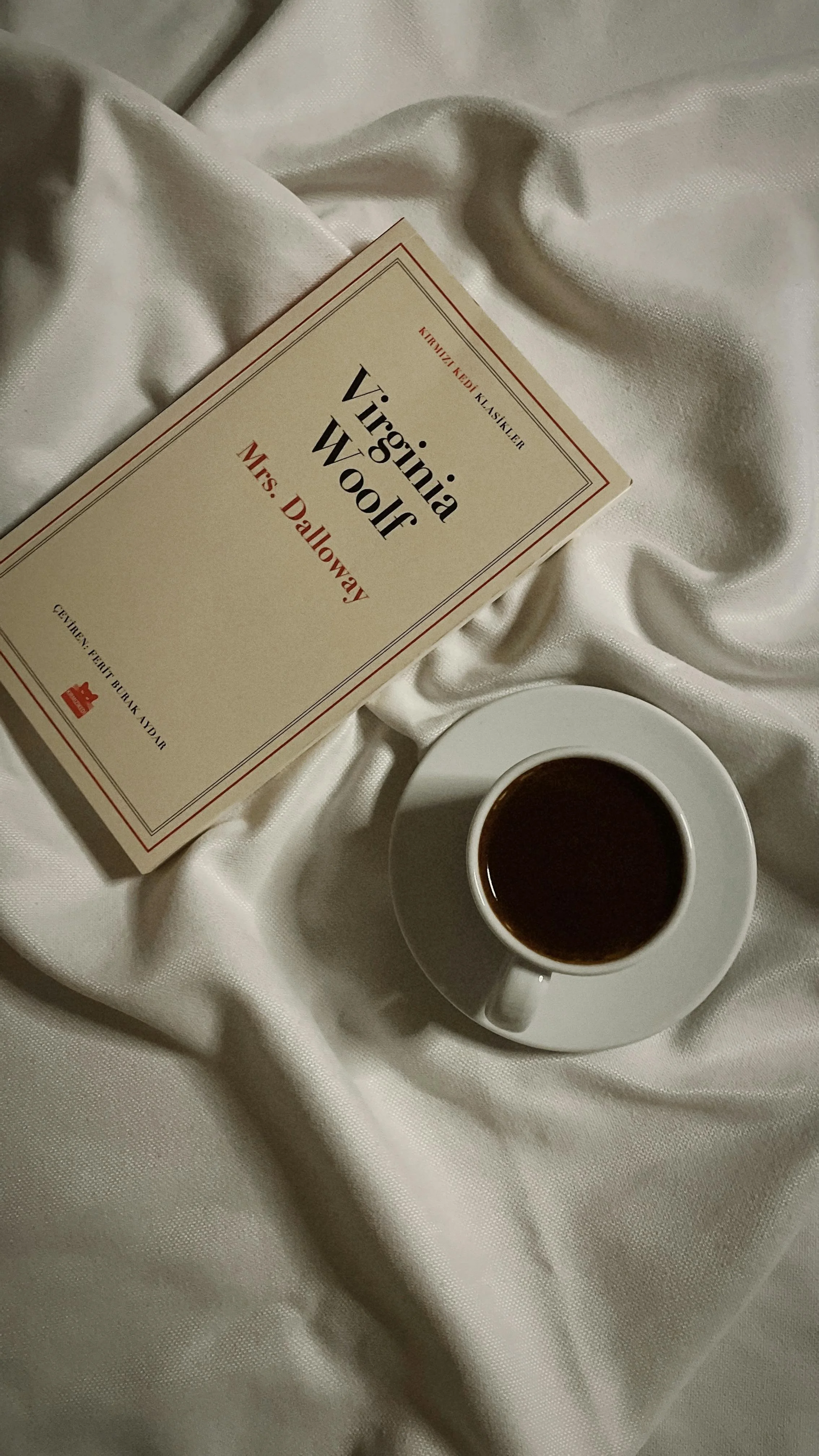
Photo from Pexels by Buse Çolak.
Evan Rosenau
Trigger warning: this article explicitly discusses suicide and other mental health struggles.
“No need to hurry. No need to sparkle. No need to be anybody but oneself.”
Between 2012 and 2022, the population of Americans who identified at LGBTQ+ increased by about 4%, more than 13.5 million people (Jones, 2022). Many argue the reason for such a dramatic shift. While an answer is hard to determine, made difficult by the lack of recorded LGBTQ+ history to look back on, with careful examination it is evident that queer people have existed for long before midway through the twentieth century. This series hopes to cover the countless stories of LGBTQ+ people from before pen first met paper to the beginning of the Stonewall Uprising on June 28th, 1969.
It should be noted, this series is meant to be informative and wishes only to highlight the lives of queer people throughout history, not to point with malice to any historical figures or practices which could have contributed to the erasure of these stories. In a similar vein, many of these stories may not have been well documented because of a lack of labels at the subject’s time in history or because a person lived in a society which did not view homosexual relationships as abnormal, such as in ancient Greece which “featured at least five different varieties of same-sex relations” (Hubbard, 2020).
This edition of Erased Queer Stories features Virginia Woolf, who was the single most prolific of three English-language Modernist experimenters in stream-of-consciousness writing, the other two being James Joyce and William Faulkner. Woolf’s perception-bending style shaped fiction as we know it today.
Early Life
Born Adeline Virginia Stephen, Woolf grew up the child of picturesque Victorian-era parents. Her father was a prominent literary figure, most notably as the first editor of the Dictionary of National Biography. Both of her parents’ first spouses' early deaths meant Woolf had many older half siblings, and her parents had four children together, including Virginia. As siblings often do, rivalries formed, and Virginia took it upon herself to write a satirical family newspaper, the Hyde Park Gate News, often at the expense of her eldest sister and youngest brother.
Sadly, this generally happy life was short lived. When Woolf was 13, in 1895, her mother passed away. She ceased writing immediately, with no recorded text written until nearly a year later, when she wrote a letter to her eldest brother. Yet her tragedy did not cease, with her half sister dying in 1897 and her father in 1904. These events led her to her first suicide attempt and institutionalization at the age of 22. As she moved toward recovery, she utilized writing as a tool for coping and expression, detailing her childhood and her feelings about her lost mother, even as she continued outwardly hosting gatherings for prominent English artists, philosophers, and authors. She expressed her goal in writing to be making “some kind of whole made of shivering fragments,” and capturing “the flight of the mind,” both goals evidence of her strength in making the best of her tumultuous life.
She married her husband, Leonard Woolf, in 1912. The two shared a life-long connection, with Leonard continuing to publish Virginia’s work after her death in 1941. Woolf was himself a political writer who helped self publish both his own and Virginia’s books. Though he never achieved her same fame, Virginia’s success would not have been possible without Leonard’s support and expertise.
Unfortunately, this success was not all Woolf knew. From a very young age, she struggled with her mental health, fighting bouts of depression that made it difficult to write, both attempting suicide and being institutionalized multiple times. She also consistently struggled with manic depressive worries and general hopelessness, often noting that she found little meaning in life.
Major Work
To list all of Woolf’s writing would be nearly impossible. She wrote near constantly, everything from non-fiction essays to full blown novels. Most of her published work not only has influenced literature today, but was popular at the time as well. One of her first novels to be written, titled The Voyage Out, was her first venture beyond the realism established by contemporaries of her time. To help publish her work, she and her husband bought a printing press in 1917 and founded the Hogarth Press. Hogarth Press published its first books in the summer of 1917: Two Stories, Three Jews and The Mark on the Wall, by Leonard and Virginia, respectively.
Woolf’s diaries, published by Leonard after her death, have shaped modern understandings of gender. Her outlook of the world, in which she viewed people as “splinters & mosaics; not, as they used to hold, immaculate, monolithic, consistent wholes” allowed for the beginning of gender-continuum ideology.
Throughout her life, her achievements only grew, her novels becoming more and more distinctive with each new work. Her surrealist work was furthered by numerous reviews she wrote attacking contemporary materialists, at the same time publishing stories like “Kew Gardens” and Jacob’s Room.
Queerness and Later Years
In her later years, she wrote “Professions for Women,” a piece blaming women’s absence from history on their “poverty” of rights, detailing how patriarchal society made it difficult for them to make a meaningful impact. Interestingly enough, this piece was created in response to a condescending comment from her friend and notable economist John Maynard Keynes.
While Woolf was in a heterosexual marriage until her death in 1941, there is no debate–-Virgina Woolf was queer. While many historians argue as to the details of how this impacted Leonard and Virginia’s relationship, it is widely accepted that Leonard was aware of Virginia’s extramarital affair: a years-long relationship with Vita Sackville-West. From their meeting in 1922, the two exchanged letters, detailing their love for one another. In fact, perhaps Woolf’s most popular work, Orlando, was written for Vita and described by her son as "the longest and most charming love letter in literature." If there was any doubt of these women’s love for one another, it was destroyed upon Vita Sackville-West’s death, when it was found she only possessed two photos: one of her husband and one of Woolf.
Now, while it must be acknowledged that both of these women were married; this fact does not discount either relationship. Both of their husbands were aware of the two’s affair, and even at times encouraged it. This fact did not mean that their marriages were any weaker. Virginia and Leonard still had a fierce devotion to one another, partners in every sense of the word, evident through their work with the Hogarth Press.
Unfortunately, as World War II began, Woolf’s mental health worsened. At the age of 59, she felt unable to fight anymore. Overcome by hopelessness, on March 28, 1941, Woolf put stones in her pockets and drowned herself in the River Ouse.
Legacy
Woolf’s novels have defined what literature is today. From her form-breaking novels like Mrs. Dalloway, which encouraged impressionism in writing, to To the Lighthouse, which introduced the tripartite structure (three act structure to story telling) and was one of the first titles to ever break narrative continuity, she challenged her contemporaries’ linear structure. Her love letter to Vita, Orlando, was one of the first widely popular novels that tackled gender, with its protagonist switching gender halfway through the book, opening up conversations that still continue to this day.
Woolf is remembered for her activism, championing both queer and feminist communities. She is remembered as one of three major English language modernists and for her many, many influential narrative works. Though it may not end well, Virginia Woolf’s story is not one of defeat, but instead triumph against all odds—from her happy relationship in a non-accepting time, to her deep, thoughtful explorations of perspective in the face of tremendous mental health struggles. Virgina Woolf proves once again the strength of queer people throughout history.
Remember, you’re not alone, if you or anyone you know is experiencing a mental health emergency, contact the 988 Suicide and Crisis Lifeline at 9-8-8. Or, if you or anyone you know is struggling with mental health issues, you can visit 988lifeline.org, Stress and Coping Resources, and reach out to a trusted adult at home or at school.
References
Greene, A., & Tonnis, C. (n.d.). A Study in Classics: Virginia Woolf, Gender, and the Greatest Lesbian Love Letter Ever Written - F(r)iction. Retrieved September 8, 2025, from https://frictionlit.org/a-study-in-classics-virginia-woolf-gender-and-the-greatest-lesbian-love-letter-ever-written/
Hart, N. (2024, June 30). Virginia Woolf Ain't No Punk B!tch. Medium. Retrieved September 8, 2025, from https://medium.com/modern-women/virginia-woolf-aint-no-punk-b-tch-c1dc51cde8e6
LGBT History Month: Virginia Woolf - English | Colorado State University. (2017, October 18). English. Retrieved September 8, 2025, from https://english.colostate.edu/news/lgbt-history-month-virginia-woolf/
Lindon, L., & Woolf, V. (2021, February 4). Virginia Woolf's (not so) secret lesbian relationship – in her own words. Penguin Books. Retrieved September 8, 2025, from https://www.penguin.co.uk/discover/articles/virginia-woolf-vita-sackville-west-letters-love-affair
Reid, P., & Kuiper, K. (2025, July 29). Virginia Woolf - Modernist Writer, Feminist, Novelist. Britannica. Retrieved September 8, 2025, from https://www.britannica.com/biography/Virginia-Woolf/Legacy