2016 Honda CB300F: What's it like riding 300cc?
Photo by Nathan Tran.
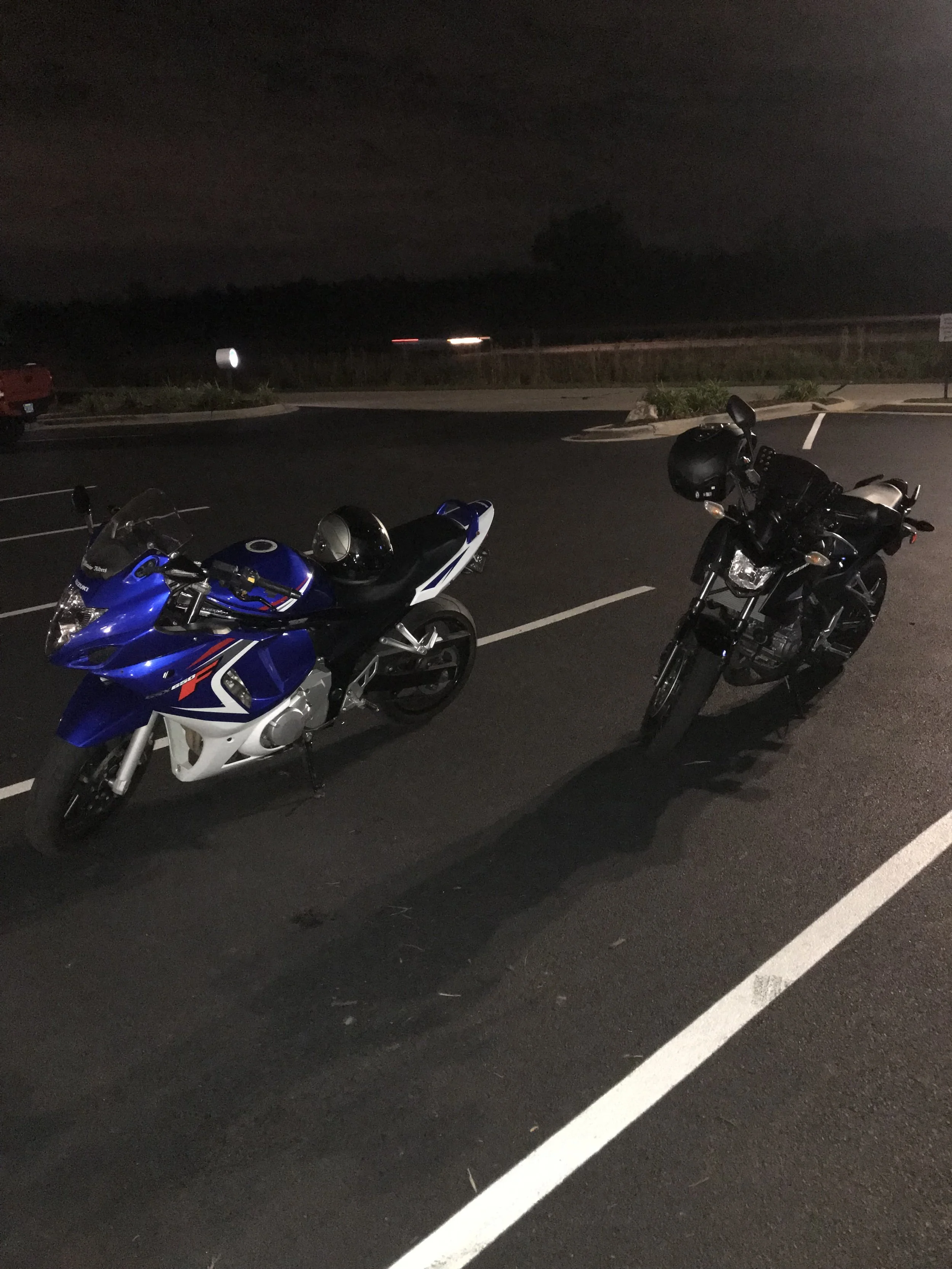
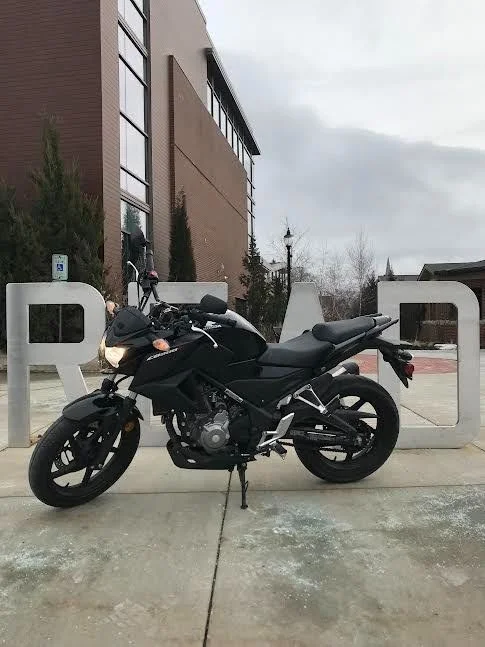
The Honda CB300F started as a 2015 production year bike. For some markets, it was meant to be a big motorcycle and accommodate premium tastes. However, in the United States, it is a quintessential beginner bike. No longer being sold on dealership floors, Facebook Marketplace has been flooded with these small displacement rippers. You can find good examples of the bike with around 2,000 to 8,000 miles for anywhere from $2,500 to $3,800. I was fortunate enough to buy it from a 37 year old man named Cortes for $2,150 before tax with 5,200 miles on the clock. It took a bit of fixing, but I managed to make it work. It isn’t the fastest or flashiest, but it makes for a pretty good daily. Let’s hope I didn’t buy a ticking time bomb.
Engine
The Honda CB300F is powered by a 286cc, liquid cooled, fuel injected, single cylinder motor. This engine makes the least intimidating 30 horsepower and 20 lb-ft of torque to ever come out of a motor vehicle, but it’s still enough for everyday riding. It’s unexpectedly smooth for a single cylinder as well. Power delivery from 5,000 to the 10,500 rpm redline is very linear. The bike comes with a 3.4 gallon fuel tank. That’s good enough for about 200 miles of range before you need to fill up. Bump starting this bike requires second gear and the battery to not be completely dead, just in case your battery doesn’t have enough power to start the engine one day. Since the transmission is part of the engine, I will talk about that too. It’s a relatively smooth 6 speed transmission, with a 1 down, 5 up shifting pattern. Finding neutral is really easy, especially with the neutral indicator on the dash. When you’re at a standstill, there’s a chance you won’t be able to shift through gears, but you’re supposed to wait at traffic lights in first or neutral, making this a non-issue. The cable actuated clutch is easy to maintain and doesn’t require much force to operate. The motor and transmission are buttery smooth, but not very fast. If you want to do highway pulls with your friends, you’re better off financing an S1000RR for 29.99% APR on a 144 month loan. This bike doesn’t have the powerplant for that.
Chassis/Frame
One reason why this bike can be relatively fast is because of its light weight. It weighs only 348 pounds, making it fast and flickable. It’s so light, I can lift the rear end and throw it around my garage. Being this light, it’s susceptible to being blown around. The lack of wind protection, due to being a naked bike, also makes the wind heavy on the rider’s chest. However, you can buy an aftermarket windshield to get the wind off your chest. I like the wind, so I took off the windshield that the FBMP seller included with the bike. The riding position is relatively upright, even more so with handlebar risers. When combined with softer suspension, the bike won’t destroy your back. The seat height is 30.7 inches. I’m 5’10” with about a 32” inseam, and I can flat foot the motorcycle easily. I’m sure someone 5’7” wouldn’t have trouble riding this bike. If you’re 5’6” or under, you can make it work, but you might have to tiptoe a bit. Storage space is limited. Under the passenger seat, there’s some underseat storage, but it’s small. It’s good enough for small items, but larger items may need to be carried with a backpack. Beyond this, aftermarket saddlebags do exist, so you can make a mini-tourer out of this bike if you want.
Suspension/Passenger Accommodation
The CB300F comes with non-adjustable inverted forks in the front and a single, barely adjustable shock in the rear. The front inverted forks are not very stiff, meaning the bike can handle bumpy roads, but may not corner as sharply as a more track focused bike. While the rear shock is only adjustable for ride height based on weight, I haven’t had to touch it, even if I carried a passenger. Overall, the suspension is most optimal for street duty, but can also be used for canyon carving from time to time. I’ve even taken this thing offroad. The passenger seat is decent, with the passenger having the choice of either grabbing the rider or using the grab handles mounted on the back of the bike. Naturally, the passenger seat isn’t very big, but will fit 1 adult of just about any size.
Technology
Being a very cheap bike, it doesn’t have much in the way of tech. The bike could be optioned with or without ABS. Mine doesn’t have ABS. It also comes with an LCD display that looks like it was ripped off of a TI-30 XA scientific calculator. The dash still contains a tachometer, speedometer, neutral light, fuel gauge, trip meter, clock, and some warning lights. Due to the lack of a gear indicator, you need to mentally keep track of what gear you’re in. There is no traction control or ride modes, but given what this bike is, you won’t need any of that.
Performance
The top speed is about 90 miles per hour. Sure, most minivans have a higher top speed than that, but I have never found myself having to go any faster than 90. Otherwise, it can drone on at 75 all day at 8,000 rpm. It isn’t fast, but it’s enough to get you from point A to point B. However, it can accelerate very quickly. I can get it to 60 in about 5 seconds. Obviously, this bike isn’t renowned for its straight line speed, so how does it do in corners? The motorcycle is very responsive and nimble. You can also lean the bike a lot without scraping hard parts. However, if you’re going to be Marc Marquez and drag knee around every corner, make sure your tires aren’t dry rotted like mine. The brakes work great, given the price point of this motorcycle. Despite them having an on and off feel, there’s enough control over the brakes that you won’t go down by looking at the front brake lever wrong. Braking power is more than enough, but of course, you can’t stop on a dime like you could on a supersport.
Maintenance
Single cylinder engines are easier to maintain in general, and that’s the experience I have had with this bike. Oil changes and air filter changes take all of 5 minutes. The battery can be very easily disconnected under the seat. The cable clutch is simpler and easier to maintain than a hydraulic one. However, there is one glaring problem. There is no obvious way to lift the motorcycle off the ground for maintenance. It doesn’t come with a center stand or any place to mount swingarm spools. You have to research how to get it off the ground. For me, this has led to some interesting situations (spilling oil on my garage floor, wheeling my bike down the street to lube the chain). Otherwise, parts are cheap and abundant, both OEM, and all of the tacky, anodized, Ebay junk you could hope for.
Who’s it for?
The CB300F, like most beginner motorcycles in the United States, is for beginners who plan on selling the bike after a couple of riding seasons, or for elderly riders looking to downsize. If this is you, that’s completely normal. However, there are many people who do not upgrade from their beginner bikes, as they feel they don’t need any more power than they have. If you plan on keeping your first bike for a long time, the CB300F will be okay, but there are better options out there. If you find yourself taking the highway for more than 1 hour at a time on a regular basis, I would recommend something slightly bigger. Instead of the CB300F, bikes in the 400cc or so class with parallel twins (Ninja 400, Rebel 500) provide a lot more staying power, boasting much more adequate power figures while still being super beginner friendly. If you only take those backroads with a perpetual 55 mph speed limit, the CB300F is more than adequate. Heck, you could’ve gotten away with an XR150L or a Super Cub. Is getting from point A to point B as sensibly as possible not your cup of tea? Want to go fast, almost exclusively in a straight line? Then the CB300F, or any 300 class bike for that matter, is not going to last very long in your stable. You’ll most likely sell it and swing a leg over a clapped deathtrap of a literbike 3 months after graduating from the MSF course. Don’t get me wrong, you can die on this thing too, but you’d have to be trying.
Competitors
There are many small motorcycles out there in the used market that compete with the CB300F. This bike on the used market tends to be slightly cheaper than competitors. Other 300cc naked bikes tend to be more premium. For example, used MT03s tend to be a bit more expensive, but are a bit more premium, coming with a few more features and more power. Used Duke 390s from about the same year are very bougie, but are a little less reliable (not Japanese). However, all of these naked bikes are only slightly different from one another. The fully faired options will behave similarly to their naked bike counterparts and will be priced similarly. The fairings provide wind protection, but are a pain to take off when doing maintenance.
Conclusion
The 2016 Honda CB300F does what it needs to do. Mine just so happened to come with a few extra goodies, like a 12V phone charger, an Amazon windshield, handlebar risers, and a Chinese wheel lock. It also came pre-dropped, thanks to the previous owners, but it looks decent enough that nobody would be able to tell from more than 2 feet away. In general, Japanese bikes are reliable. My bike just so happens to be a bit of a lemon. It has trouble starting in the morning when it’s super cold out and leaks a tiny amount of coolant, but it runs like a top. If you want a review of other 300cc motorcycles, just replace “Honda CB300F” with “[insert 300 class bike here]” and it’ll be mostly the same. I could upgrade to a bigger bike now if I wanted, but why would I? Small bikes are fun when you commute with them and corner hard. With rising fuel prices, the motorcycle is the most fuel efficient vehicle in the garage, short of a bicycle. If you want to embarrass bigger bikes in twisties and get 50+ miles per gallon on the cheap, a sub 500cc motorcycle, like the CB300F, is for you. Cortes, if this bike leaves me stranded in the middle of Southside Milwaukee, I’m coming back to haunt you.