A Beginner's Guide to Motorcycling for High School Students
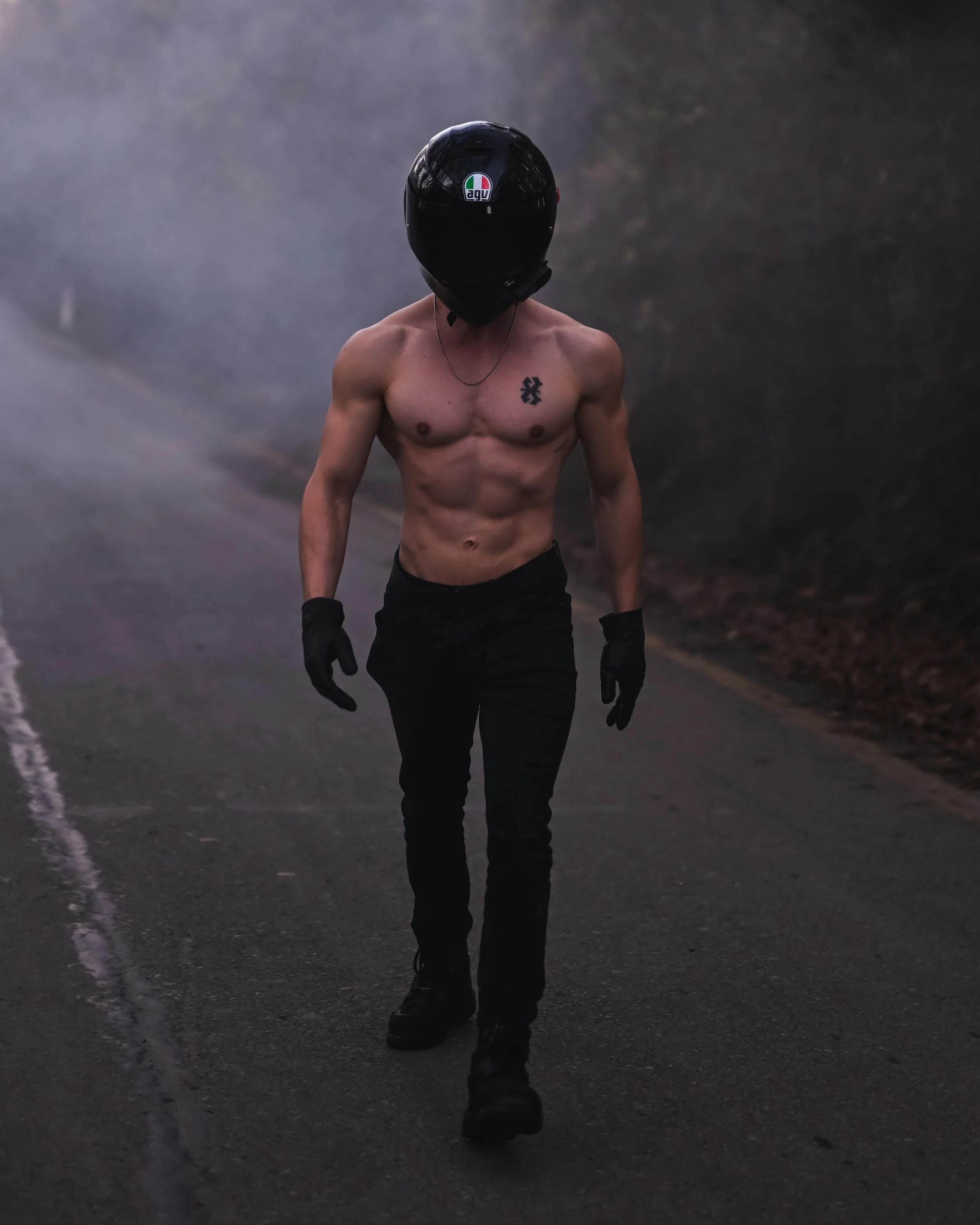
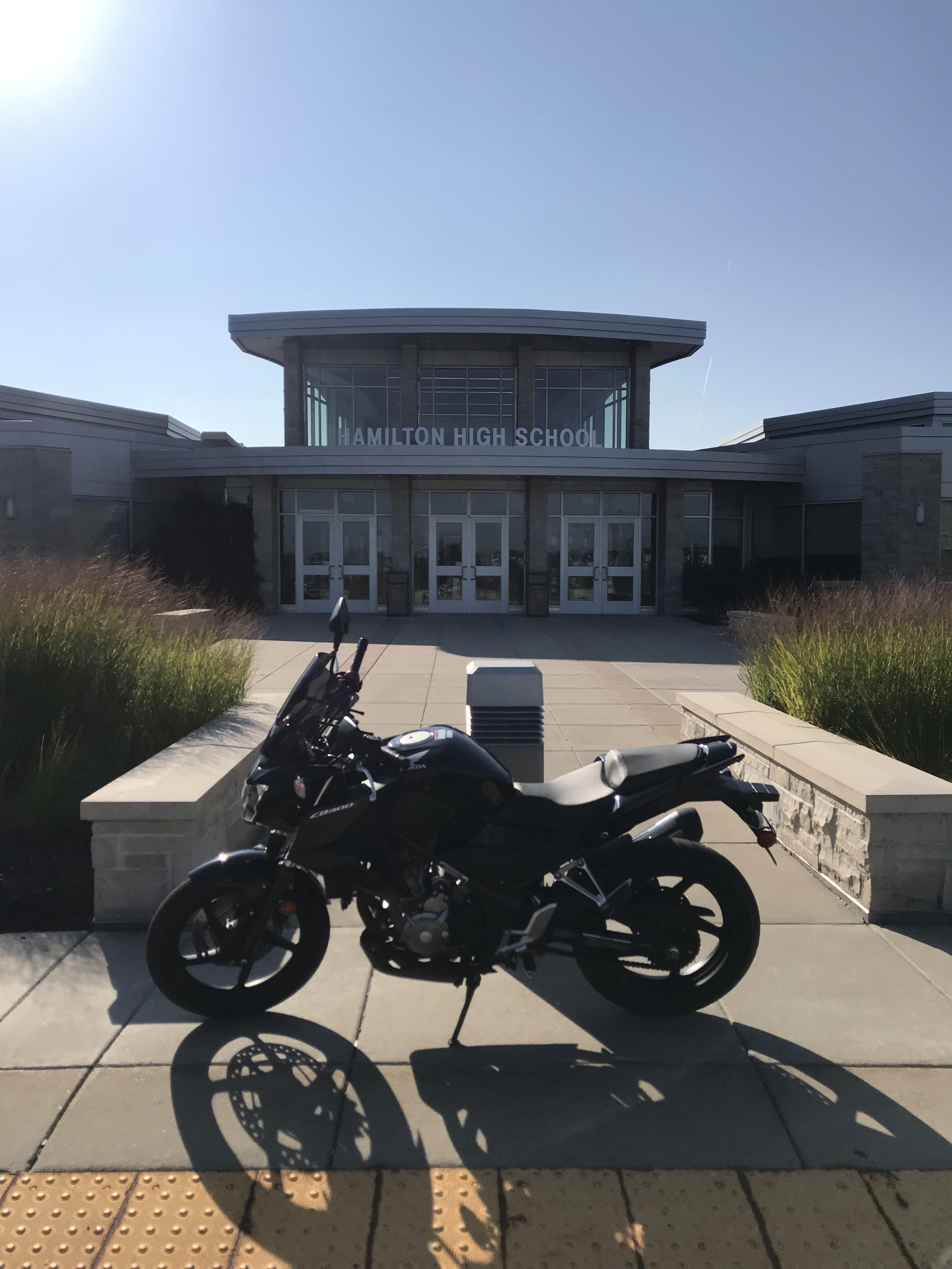
Photo by Nathan Tran.
Tirish Suresh and Nathan Tran
1.1 Riding season is almost over, and if you have scrolled through Facebook Marketplace like we have, you have seen many people selling their motorcycles for a steal. Maybe you have dreamed of riding for a while now. If you have, the fall season is almost the perfect time to pick up a motorcycle, as many people are trying to get rid of their motorcycles. However, if you have no idea how to get a motorcycle license, you won’t be able to. This article will show you how to get into motorcycles if you are a high school student.
1.2 There are a few prerequisites before you are able to enroll in the MSF course and get your motorcycle license. First, you must hold a valid driver’s license from the state you live in. Second, without your parents’ permission, you can forget about getting your motorcycle license until you turn 18. Lots of paperwork, both at the course and at the DMV, require a parent or guardian to sign if you are under 18. Therefore, if your parents are afraid of you riding a motorcycle, you are out of luck. Third, you may want a printer. Once you sign up for the MSF course through the website of the location that you will attend, lots of documents and instructions will be sent through email, which may require you to print forms and waivers.
2 Getting your motorcycle license can be a daunting task for new riders, but it's actually easier than you would expect. The first step is signing up online. There are many different institutions that offer basic rider courses. Some of the best include WCTC, Harley Davidson and other privately owned riding schools. Whichever one you attend, make sure that it can waive your motorcycle road test. Navigating through this process can be tough, but we are here to help you through the process. We recommend going to WCTC, as it is a budget friendly option (~$280) and very convenient for most Hamilton students. WCTC offers motorcycle classes for every type of rider, from complete novice to seasoned pros. According to the WCTC website, taking their motorcycle course can help lower your insurance premiums and exempt you from taking the motorcycle road test. Classes are offered May through September and include hands-on training on WCTC's Vehicle Training Track located at their Pewaukee campus.
3 Depending on where you go, you may be required to either take a 5 hour online e-course from MSF or classroom instruction. Classroom instruction is self explanatory, but the e-course isn’t. At WCTC, you are expected to complete the 5 hour online e-course before you step into their classroom for the first time, and are required to complete it before swinging your leg over a motorcycle on the second day. This is because the first day is dedicated to motorcycle range expectations and what to bring. Thankfully, the 5 hour e-course can be completed in a day. However, we recommend paying attention to parts of the course you may be unfamiliar with, as some of the acronyms will be very useful (FINE-C and T-CLOCS, for example). Once you complete the 5 hour online course, you will be sent a certificate of completion through email, which you will have to print and bring with you to the first day of riding. You are also required to get notarized parent or guardian signatures on all of the forms and waivers. In simple terms, this means that you have to go to a police station or bank with 1 of your parents and ask for a notarizer. In order to notarize a document, both you and your parent have to provide identification, such as a driver’s license. Once you have filled out the paperwork and have all of your documents ready, it’s time to find gear.
4.1 Helmets are up first. You can either use the MSF’s helmets or borrow one from someone you know. However, if you want to buy yourself a helmet, make sure it fits you. A good fitting helmet should be snug around your head, offering almost no side to side play. The helmet should be on the brink of being uncomfortable, but if it is too tight, try going up a size. For the MSF course, you need at least a ¾ helmet. As for gloves, any type of gloves will work, such as winter gloves or work gloves. Any type of long sleeve shirt or jacket will work, but denim jeans or better will be required. Any shoe that goes over your ankles will work, such as high top Jordans or any type of boot. If it is hot out, it is a good idea to wear shorts and a t-shirt under all of your gear. Keep in mind that this is the bare minimum amount of gear to ride in the MSF course. Once you hit the street, you will need proper riding gear.
4.2 Getting your motorcycle gear is one of the most important steps in starting your riding journey. Some of the terminology regarding gear safety ratings can be very confusing and we are here to break it down and even recommend you some basic beginner gear that won't break the bank. This system can be quite puzzling for new riders as it includes many acronyms and ratings, but we are going to keep it simple, DOT is the minimum certification recommended for helmets, and are usually the cheapest. One step up from DOT is ECE, a European rating system that tends to be a little bit pricier. The best type of helmet you can get are SNELL certified. A SNELL certified helmet offers the best head protection available to consumers. Due to this, they tend to be the most expensive. Whatever helmet you get, make sure not to drop it, as motorcycle helmets are only designed to sustain one (1) impact. It is also not recommended to borrow someone else’s helmet, since the helmet has been worn down to fit the contours of their head. We suggest trying on a helmet before you buy it. Next up are gloves. In the event of an accident, proper motorcycle gloves will prevent your hands from becoming a smoothie. We recommend getting motorcycle gloves that cover the fingers rather than fingerless gloves, since your fingers are very important. However, if the motorcycle glove has been involved in a crash, it is no longer safe to use and you should replace it. As for boots, if you value your ankles, you should try to pick up a pair of motorcycle boots. Aside from protecting your ankles from a crash, they will protect your legs from getting burnt or crushed by the motorcycle in case of a tip over. Finally, we suggest getting a motorcycle jacket and pants with built in armor. Jeans and a winter coat will do absolutely nothing at 75 miles per hour.
5 Once you have all of your gear (MSF bare minimum or proper gear) and all of your notarized documents, you can now begin the riding portion of the MSF course. It will be spread across 2 days, with a 5 hour riding session each day. Each riding section will consist of 2 exercises and a break. We suggest bringing about half a gallon of cold water, especially if it’s hot out. If snacks are your thing, we would recommend bringing those too. In addition, you can wear shorts and a t-shirt under all of your riding gear so that you can stay cool during breaks. Finally, make sure to bring your drivers license and paperwork if you haven’t done so already. After bringing everything you need, you will be able to start learning. The exercises start off really basic. For example, you will learn the hand signals, how to mount, and how to start the bike (FINE-C). The exercises will then progress to learning how to move the bike using the clutch. If you already know how to drive a manual car, you are at a massive advantage. The exercises will then progress to making turns and using the brakes. Once the instructors get past this point, you should be proficient in using the controls of your bike. From there, you will learn u-turns in a box, riding over obstacles, emergency stops, emergency swerves, and lane change procedures before you complete all of the exercises. After your group has completed all of the exercises, the instructors will give you a riding test to determine if you get waived for the road test.
6 The first word of advice we will offer to you is to not panic and stay calm for the final riding test. If you have been paying attention during the riding exercises, then all you have to do is stay calm and you will most likely pass. If you are excessively nervous, you will not be able to do as well as you could, even if you are a fantastic rider. Some of the things you may have to do include taking corners by slowing down using the brakes, quick stopping within a specified distance, box u-turns, emergency swerves, and cone weaves. If you drop the bike, you fail, but you are allowed to stall the bike 3 times. If you have passed, then the instructors will give you a card that will waive the motorcycle road test at the DMV. If you didn’t pass, don’t worry. You can simply wait until you turn 18 and get your license the regular way.
7 After you pass the final test, you should start studying for the written test at the DMV. You need to take this test to “get” your motorcycle temps, which will allow you to get your motorcycle license on the same day. Before you go, you should read the Wisconsin Motorcyclists Handbook, or the motorcyclists handbook for whatever state you live in. This handbook is a quick 30 minute read and will cover all of the material on the written test. Most of the “test answers” will be in the book as a single sentence. Statistics of motorcycle fatalities and drunk riding will also appear on the test. Once you are ready, go to the DMV with your driver’s license, the MSF card, and a parent if you are under 18. Wait in line. Once you get to the front, ask to take the M license written test. They will have you fill out a form and take a picture. Then, they will call you to the computer. The test is 25 questions, and you are allowed to get 5 wrong. If you pass, the computer will display instructions telling you to wait in the waiting area. You may also get some paperwork to fill out. Fill out the paperwork and when you are called up to the desk, show them the MSF card. In fact, if you can, show the MSF card to whoever you can. This will let you get your full motorcycle license. If you fail, you can try again the next day. If you fail 5 times in 1 year, you need special permission from the DMV to try again.
8 Once you walk out of the DMV with your receipt, you are able to ride any motorcycle you like, with no displacement restrictions. Does this mean that you should swing your leg over an R6 or ride off into the sunset on a brand new Road King? Not exactly. There are some general guidelines for buying your first motorcycle that will save you from turning into a fine red mist or crying all night when you drop it for the first time. In general, your first bike should make between 30-60 horsepower or so. If you go under this limit, you may find your bike too underpowered, even if you only have a month of riding experience. If you go over this limit, you will be more focused on trying to survive the bike than learning how to ride it, making you a worse rider. You may be tempted to start on a more powerful bike, thinking that you will grow into it, but if you wish for more power, start on a less powerful motorcycle and upgrade after a few riding seasons. Another consideration is weight. Heavier bikes are harder to ride and pick up, so try to get a bike under 500 pounds or so. You are going to drop your first bike, so get a bike that is relatively cheap. That way, you don’t feel bad when you drop it. Just make sure that if you are going to get a used bike, you know what to inspect, avoid, and how to negotiate. Finally, it is advisable to get a beginner bike of the type that you are planning to ride. If you are a cruiser person, look to start on something like a Honda Rebel 300 or a Kawasaki Eliminator. If you want to climb the sportbike power progression ladder, start on a Kawasaki Ninja 400 or a Yamaha R3. There are many other types of bikes in between these two extremes, such as naked bikes, adventure bikes, and scooters. Do your research and find the right bike for you.
9 With your license, motorcycle, and gear, you are ready to hit the road. However, we have all heard countless motorcycle horror stories where someone either ends up dead or in a vegetative state. If you don’t want to end up in one of these stories, be sure to be aware of your surroundings. Some common safety tips include flashing your rear brake light to let others know you are slowing down, riding defensively, and riding like nobody else on the road can see you. There are a lot more than just these, which you can find on Youtube or in the Motorcyclists Handbook. Learning to ride safely before learning to ride fast will help you and your motorcycle be on the road longer. That being said, please don’t go 186 miles per hour on the highway.