Banned Book of the Month: To Kill a Mockingbird
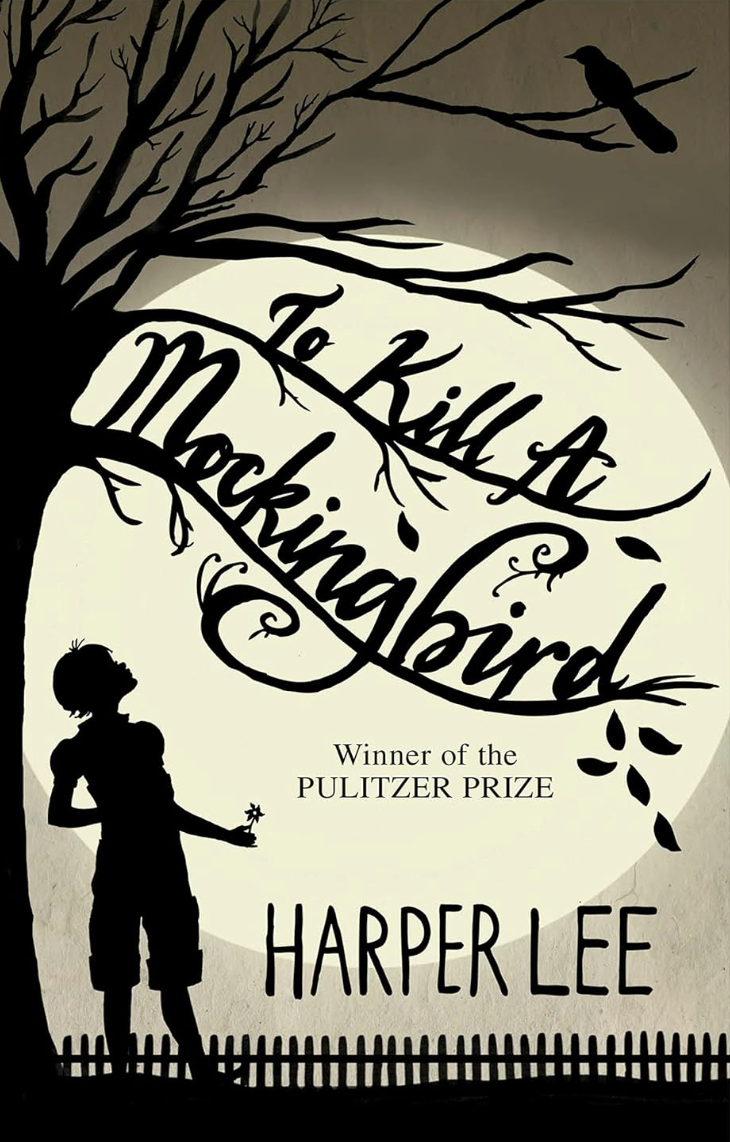
Photo from Amazon.
About the author:
Harper Lee, born Nelle Harper Lee, was born in Birmingham, Alabama in 1926. She used what she witnessed among racism and The Great Depression to write To Kill a Mockingbird. Lee also used numerous influential people in her life to create the characters of her novel. For example, Lee’s father was a lawyer in the south named Frances Cunningham Finch Lee and was the inspiration for Atticus Finch. Also, Scout Finch is the young daughter of Atticus, and Lee said Scout was inspired on behalf of her own childhood. Lee’s next door neighbor Truman Capote—author of In Cold Blood—was the inspiration for the character Dill.
Lee also based much of the plot of To Kill a Mockingbird on the Scottsboro case which wrongfully convicted young Black boys of raping a white woman in Alabama.
Lee started her education at the University of Alabama, spent an exchange year at Oxford, and then moved to New York without completing her degree. She focused her attention on writing short stories, which would soon come together to be To Kill a Mockingbird in 1960. She became something of a recluse after the fame of To Kill a Mockingbird and never published another novel during her lifetime.
Summary of the book:
To Kill a Mockingbird covers the Great Depression era of the deep south where racial injustices ran rampant. The novel follows the life of Scout and Jem Finch, and their father Atticus Finch, a prominent attorney in Alabama. Scout and Jem make friends with a boy named Dill, and the three are highly imaginative and share stories about Boo Radley—a resident of a haunted house on their street. The three children notice gifts left for them by the house and become curious about them. As they act on behalf of their imagination, they sneak into the haunted house and get shot at by one of the owners of the Radley House.
As the children explore their neighborhood that summer, significant change happens in the town as Atticus defends a Black man named Tom Robinson, who has been accused of raping a white woman. In the racist town of Maycomb, Alabama where the Finch’s live, citizens are outraged at Atticus defending Robinson. As a result, the Finch children face bullying from people who are opposed to Atticus’s choice in defending Robinson. The Finch children support their dad by trying to disperse a mob of racists who want Robinson lynched. The children also attend the trial and sit in the section designated for “colored” people, showing their alliance with Atticus and Robinson.
Throughout the trial, Atticus presents nearly concrete evidence that Robinson is innocent. He mentions the relationship between Robinson and Mayella Ewell—the accuser—as well as Ewell’s father being abusive, which offers tangible evidence for the violent marks on her body that were blamed on Robinson. Although the evidence Atticus presents is very persuasive, a prejudiced, all-white jury finds Robinson guilty. Scout loses faith in justice and the trial upsets her and shakes her confidence and faith in the goodness of her townsfolk.
Robinson is sent to prison and struggles with being locked up as an innocent man. Robinson has an unfortunate end to his story, leaving a further stain on Scout’s perception of justice. Mayella Ewell’s father, Bob, is also embarrassed to be made a fool by Atticus, so he seeks revenge on the Finchs.
As Bob Ewell attacks Scout and Jem one day when they are walking home, Boo Radley intervenes and saves the children from Ewell, showing the kids' imaginings becoming a reality.
Being saved by Boo Radley helps Scout develop a better sense of reality and her faith in justice begins to come back. She realizes that Boo Radley is a real person who deserves sympathy; he isn’t just a scary story to talk about with her friends.
Why it’s banned/challenged:
To Kill a Mockingbird is often challenged to silence its language and candid historical themes which are very mature. The novel often uses racial slurs which critics think harms the psychology and confidence of readers who align with certain minority groups.
Along with racial slurs used in the novel, there are emotional depictions of racism and discrimination that critics think are too sensitive for students. Aside from topics about racism, To Kill a Mockingbird also discusses rape, which is a heavy topic that causes the novel to be heavily challenged.
Although these topics are intense, the novel should still remain accessible so that people can fully understand the severe obstacles people of color face in our flawed justice system. The novel takes place in the 1930s, but its implications can be applied to present day injustices and must not be banned.