
Shalom: Conservation Haven or Commercial Zoo
All photos submitted by Varsha Sanjay.
Varsha Sanjay
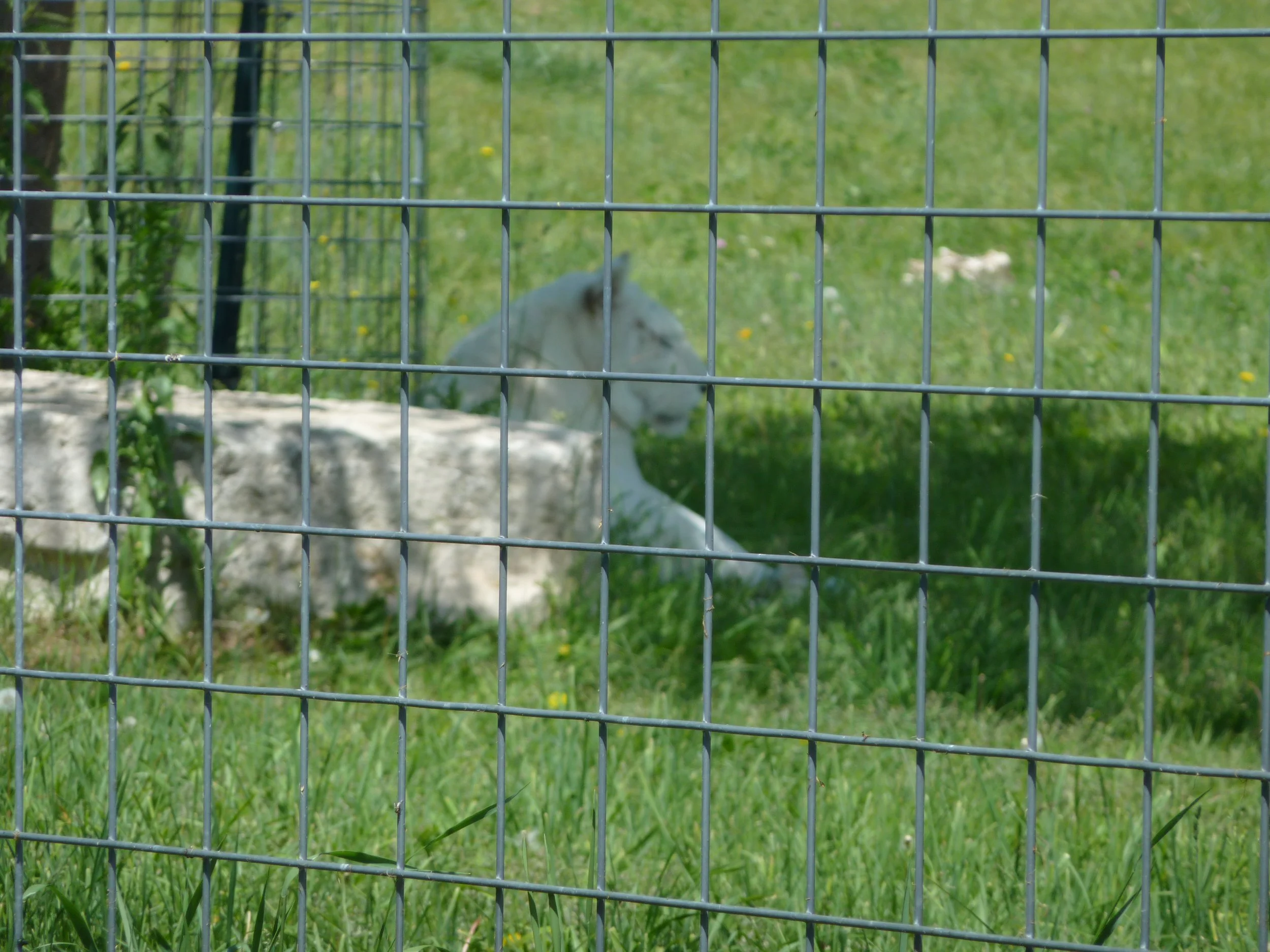
Shalom Wildlife “Sanctuary,” is located in West Bend, Wisconsin. This roadside zoo is a self-acclaimed sanctuary, but have you ever heard of a sanctuary with a tiger cub death toll of 5? Or one that holds over 800 animals, when registered sanctuaries generally hold up to 150 at the most, at a time? Oh, and what’s that in that cage over there? A white tiger. According to Big Cat Rescue, “The only way to produce a tiger or lion with a white coat is through inbreeding brother to sister or father to daughter; generation after generation after generation. The kind of severe inbreeding that is required to produce the mutation of a white coat also causes a number of other defects in these big cats.” So, how could this “sanctuary” still be open? Not just open, but thriving. Shalom is currently the number one “Best thing to do in West Bend” according to Tripadvisor, and a very well known, hyped, and visited place in Wisconsin.
But, maybe there’s another side to the place. I would not visit Shalom on my own accord, but this week, I went on a school field trip there, and took it to my advantage to write this critique. I went in with a good amount of knowledge of the place and their history.

We should start off with Ginger the White Tiger. Ginger is an 11-year-old female white tiger, and is one of Shalom’s biggest attractions. She has been there since 2019 and has had “3” pregnancies. Once in 2021, with two cubs fathered by an ailing male, Goliath, resulting in stillbirths. The second, in August 2022, with their new male, Jonah, where 5 cubs were born, but tragedy struck months later in November, when Nina and Khan, two of the cubs, fell through the icy pond in their enclosure and drowned, gaining Shalom a citation of a critical violation of the Animal Welfare Act. According to the staff, Ginger could be heard “moaning” from her loss, the same way she did when Goliath was euthanized.
Now here’s the interesting part: two of the three remaining cubs, Charlotte and King, were okay, but there was little information about the last cub; except the theory that it had passed sometime after birth. Her last pregnancy was all four healthy babies. But if you dig a little deeper, you'll find that she was expecting a litter in February 2022. If this is accurate, it means they gave her little time for recovery since Jonah came to Shalom in April 2022; a tiger’s gestation period is 3.5 months, meaning she would have conceived their first litter around May. So, putting this all together, the first two were Goliath’s, and the other two were Jonah’s. What it sounds like to me is that they bred her with a very old tiger, twice, both times resulting in no babies. So, knowing that, they brought in Jonah, a healthy male who then fathered two perfect litters. Something to remember, white tigers are inbred and only occur in captivity, which causes many health problems for them, especially during pregnancy. It seems unlikely that a real sanctuary would ever breed a white tiger knowing these facts, meaning that this is a profit-driven decision that ignores animal welfare.
Besides the citation relating to the cubs’ death, Shalom has also received seven other citations, and one official warning from the USDA they received in 2014. The most serious citation was Improper Public Feeding in 2022 and 2025 when they allowed outside food to be fed to the animals without supervision over it. Two of the citations are for Inadequate Barriers & Guest Supervision in 2025, for not having adequate barriers or supervision to prevent unsafe human-animal interaction. Another citation was given over the porcupine shelter in 2024, where they failed to provide the porcupine with proper shelter and heating, and lastly, one Unsafe Animal Contact in 2021 after a visitor jumped a fence and hand fed bears, and pet the bobcats.
Now after my trip to the zoo, here’s just some basic things I noticed. There weren't many workers along the trail and around the zoo. From the time I arrived at 10:20 to when we left around 12:45, I saw four and spoke to only three employees.
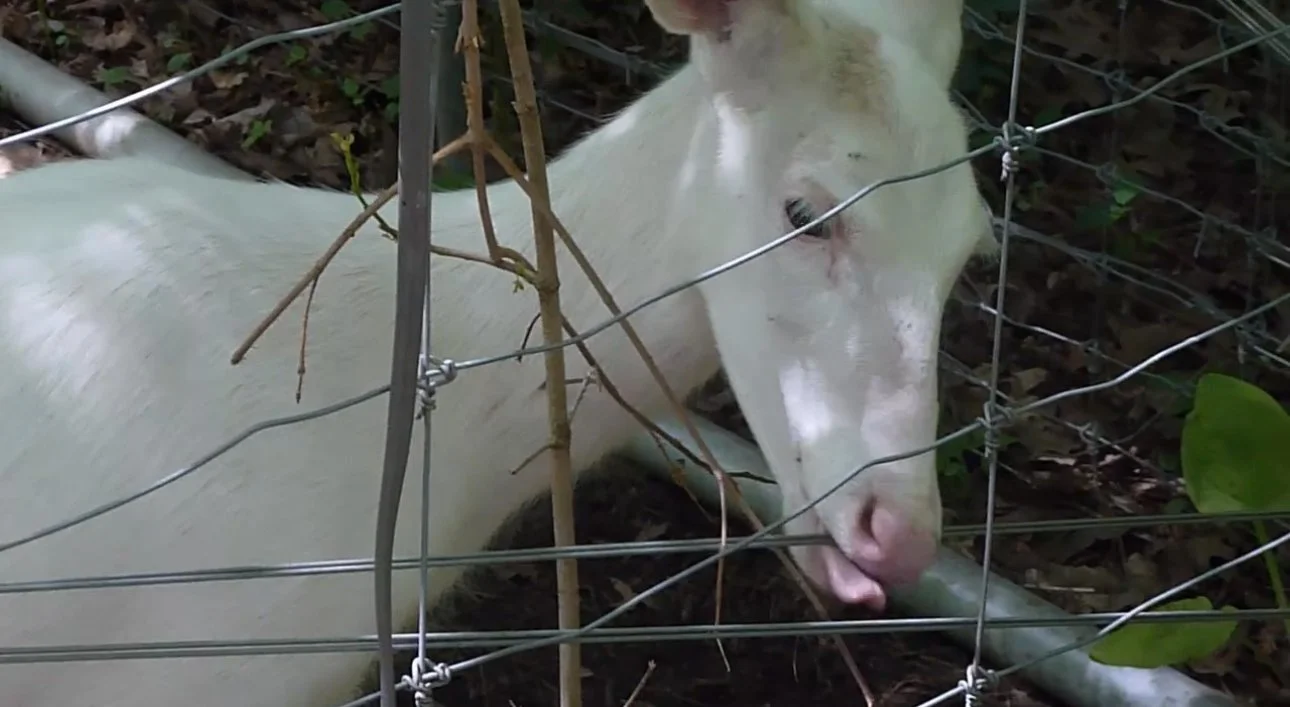
I started my walk at the petting zoo, not seeing much wrong with it, except the fact that they probably get fed the most out of all the animals, and it is difficult to see how the zoo could manage their diets. I also noted that one of the albino deer was licking and kind of chewing on the wired cage, then I saw this metal piece that didn't look very safe after seeing the deer already chewing.
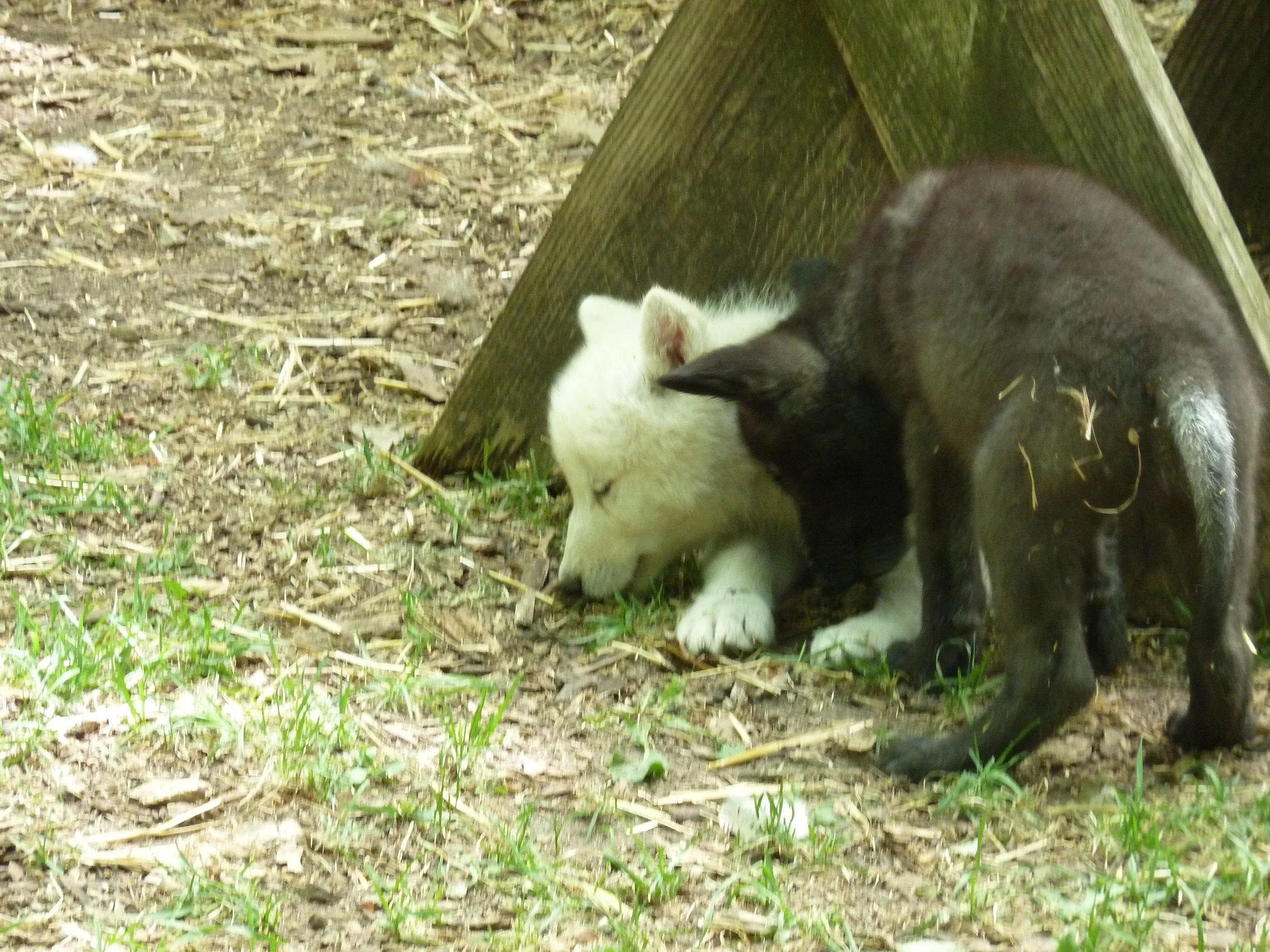
From my observations and talks with the few staff members, I gathered that the wolf enclosure was decently large, as far as zoo enclosures go. Another thing was that they are currently constructing a new enclosure for their female black leopard, Star. According to the worker, Star arrived at Shalom 9 months ago and was initially kept in the lynx enclosure, which, when I got to that part, was tiny and held two lynx. The enclosure was also shared, but separated, with the cutest little wolf cubs who had sadly been rejected by their mother. She gave birth to a litter of seven pups: three stayed at Shalom and four went to South Dakota. The three I saw were being watched over by a worker. I also noticed about 4-5 tortoises with the cubs. I asked if that was safe and she told me that, right now, they have just sniffed and not really bother them, and that they will be separated once they get more curious. Back to Star, she was then moved to her current habitat, still quite small and seemed to be hidden in the back. The only reason I can imagine why they are building this “$100k enclosure” is because, just like Ginger, she has risen to fame and is a very popular resident.
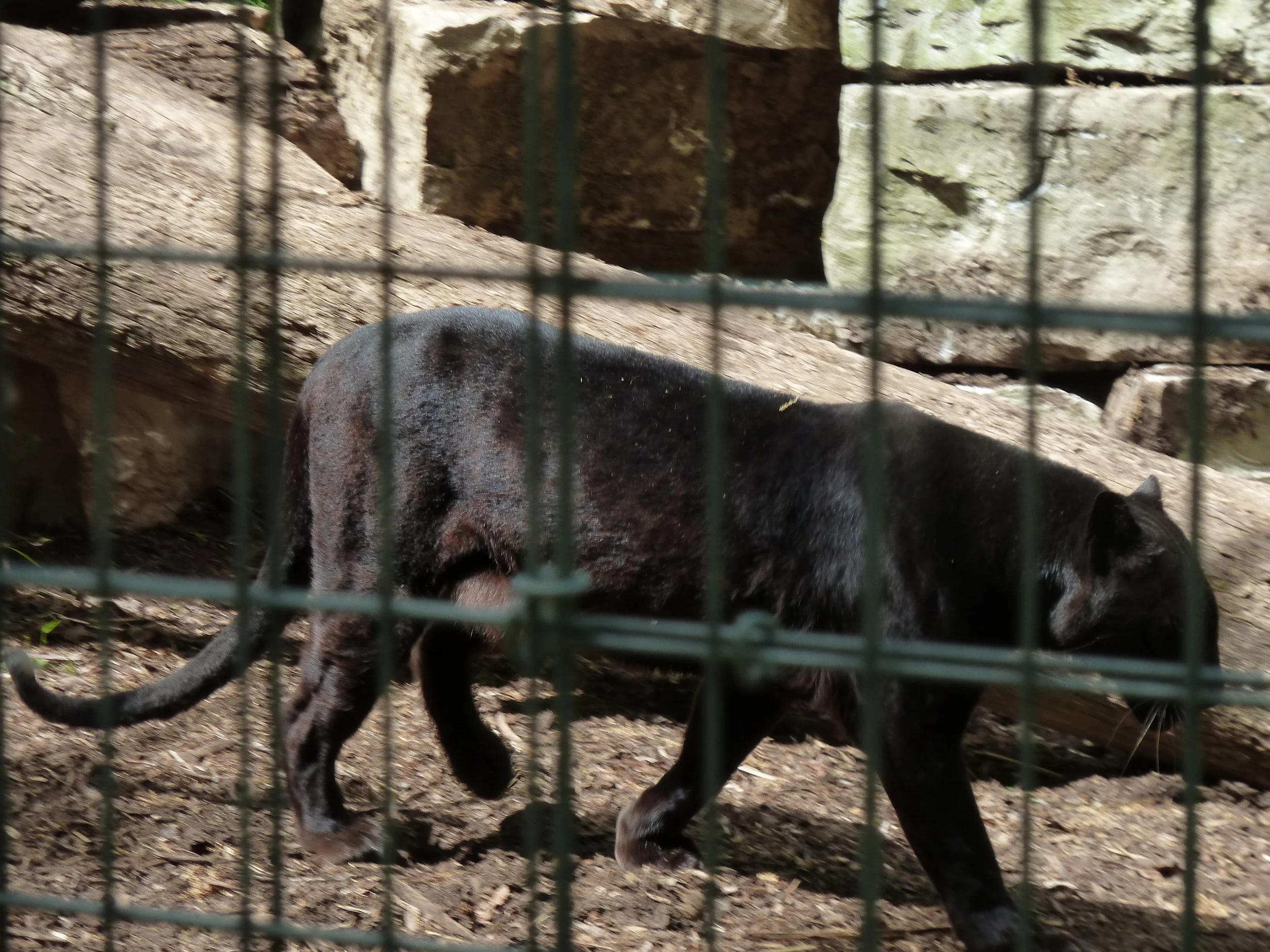
Along with the less than adequate conditions, I observed several animals displaying signs of zoochosis. Zoochosis is a type of psychosis found in animals held in captivity for too long, and about 80% of animals in captivity suffer from it. Classic symptoms are pacing or circling, swaying, over grooming, and self mutilation, such as pulling fur out, something I noticed. These behaviors are frequently monotonous, obsessive, repetitive actions that have no point.
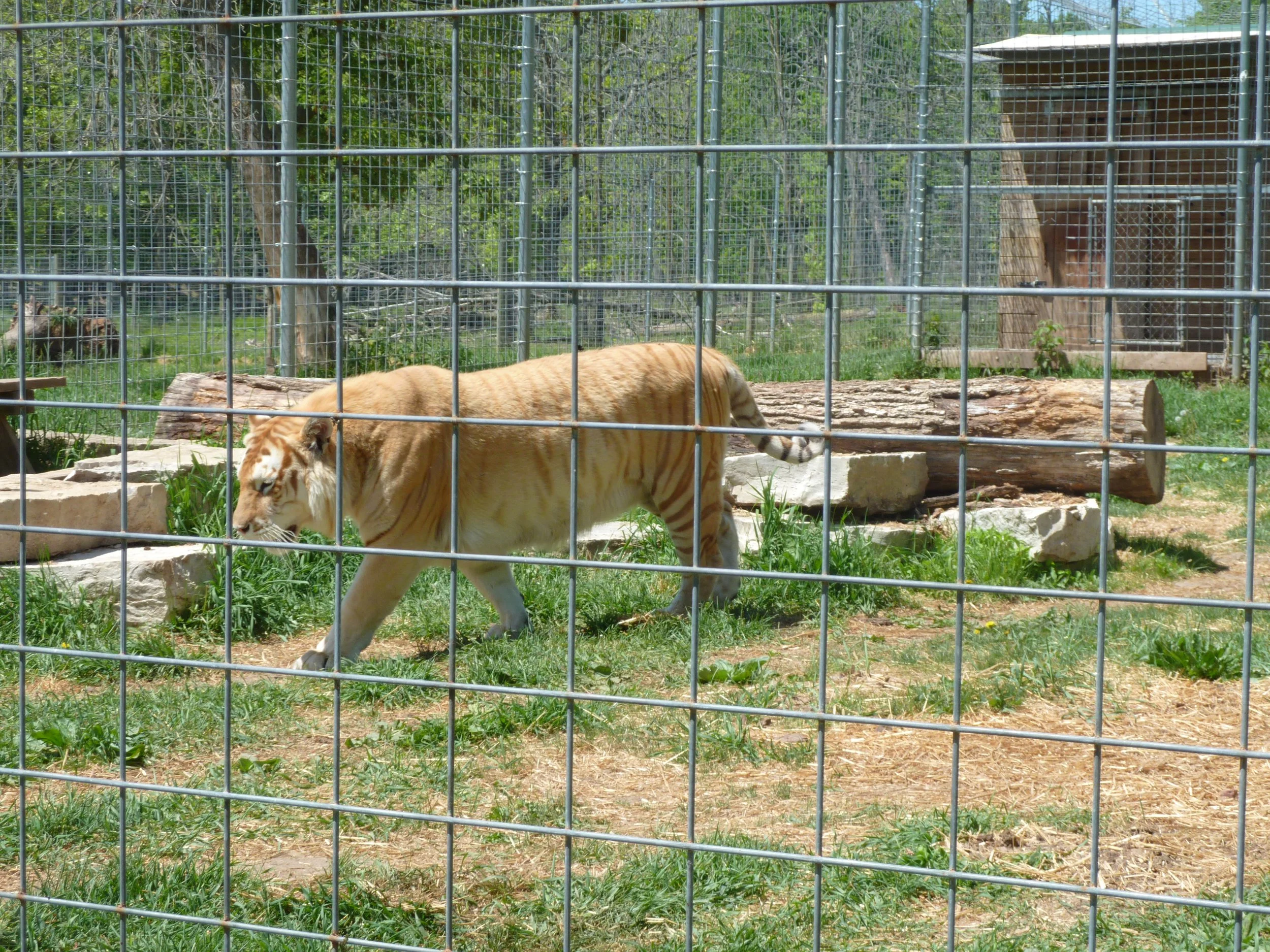
King, the Golden Bengal Tiger, paced for over 7 minutes, seemed very down and tired when he tried to play with his enrichment ball at first. The next two, Lewis and Clark, Syrian Brown Bear brothers who came to Shalom as cubs in 2014, were pacing back and forth the entire time, only stopping to eat when people threw them apples. Star showed the saddest, uninterrupted fast-paced pacing. When we arrived, it was just us by her cage and she came out of her hideout, stretched, then immediately started pacing. She stopped once for a few seconds when we tried to get her attention. I whistled and she looked up; we got excited that she stopped, but then she went right back to it and we left.
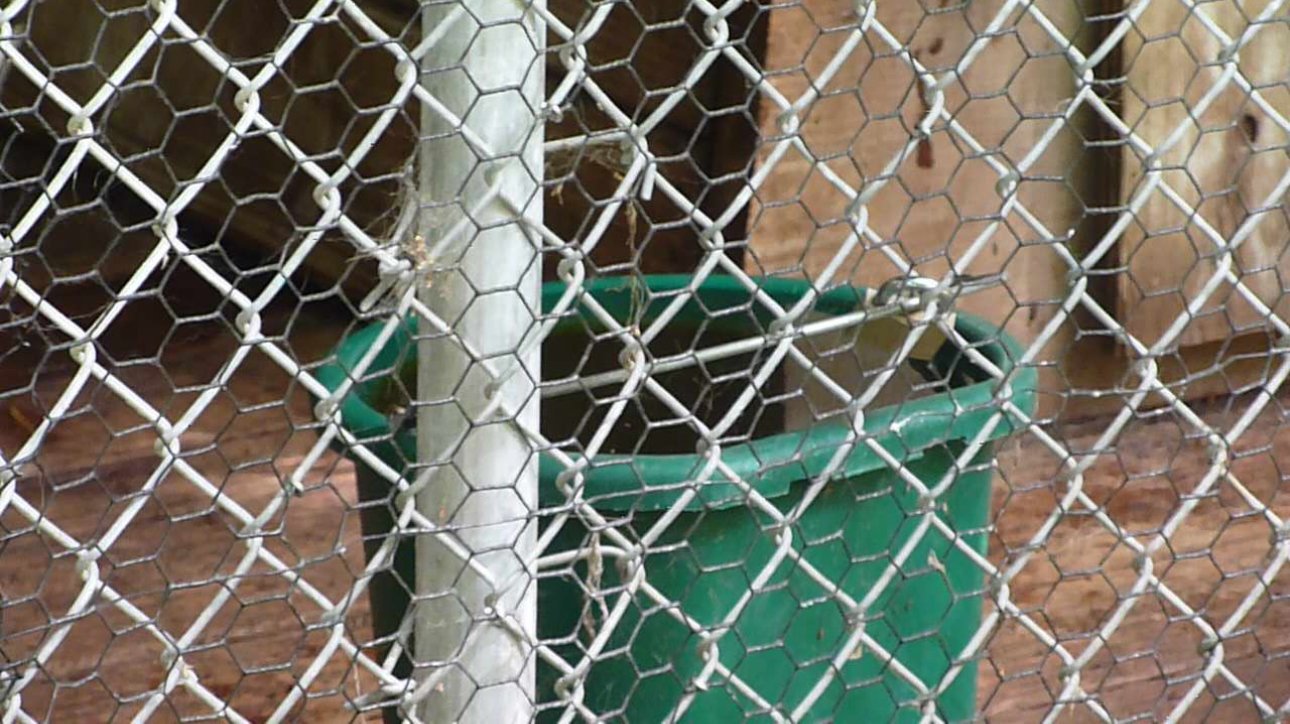
Lucy the Lynx is another animal that displayed a symptom of zoochosis. While filming her pacing, my friend pointed out that their water bucket was very dirty. As you can see in the photo, it has a black tint to it. Lastly, the Arctic Fox, either Aurora, the pure arctic fox, or Snowflake, the hybrid cross between an Arctic fox and a silver/red fox. who was rescued after being found roaming and living outside a Beaver Dam Walmart, was obsessively digging. Not only digging into the ground, but a grate, presumably hurting itself. This fox had an uneven coat as well. To me, it looked like it was pulled out forcefully by biting, like it was trying to rip it out. It was also completely restless, while the other one was sound asleep. I heard a kid ask his mom about the digging, and she mentioned something about it being cooler underground which I had considered at first, but the digging in the grate and the aggressiveness of it didn't add up.
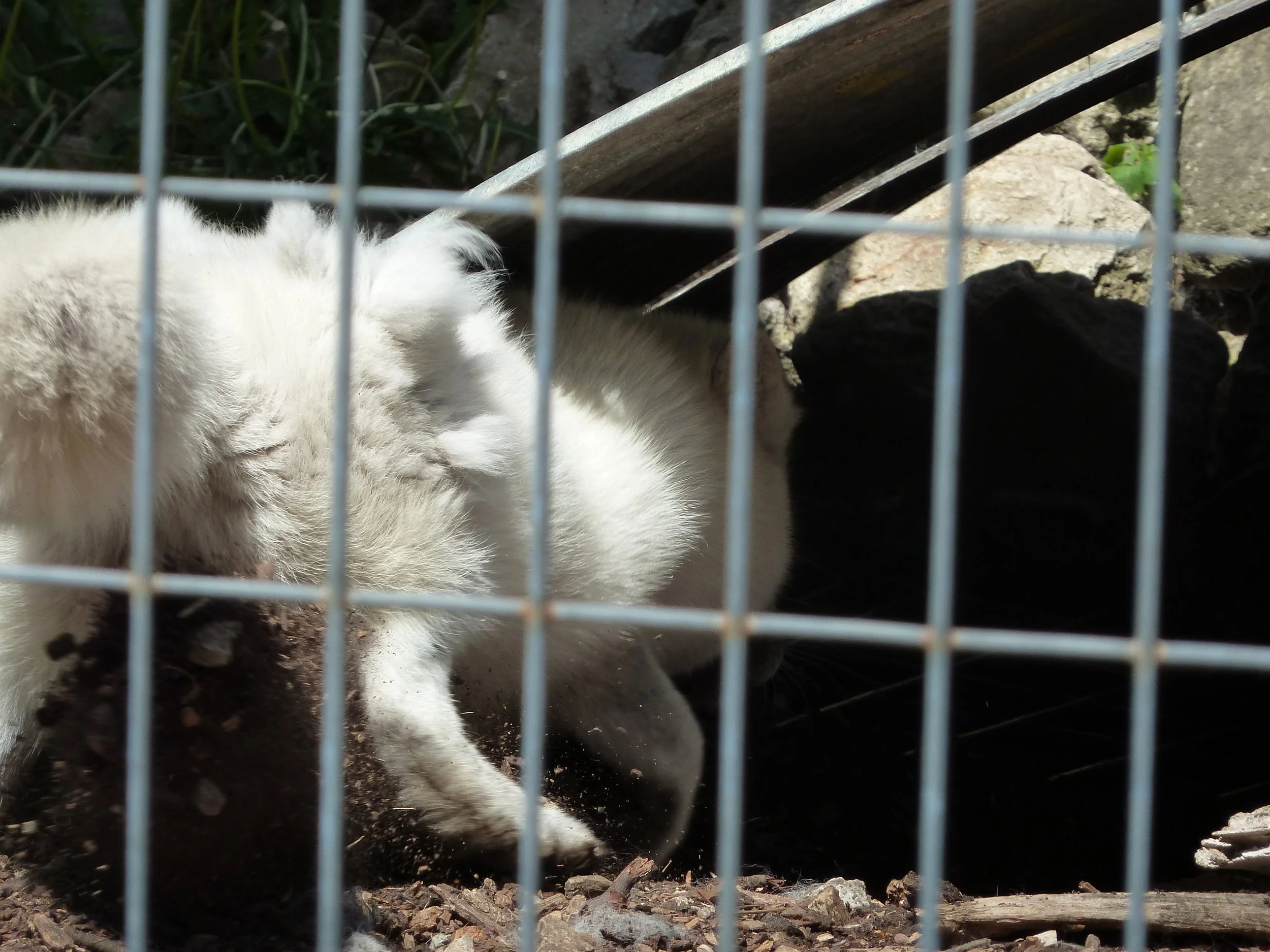
These behaviors also beg questions about if these foxes should be here at all. Snowflake presumably came here from Canada, so why wasn't she relocated there? They should both be in the tundra as Arctic Foxes have a highest heat tolerance threshold peak at around 78°F to 82°F. If temperatures surpass that point, they suffer from heat stress because their fur is very dense and meant for the cold. In fact, they have the warmest coat out of any mammal, and that, plus not having sweat glands, makes cooling down a big challenge. West Bend’s highest average temperature during summer is roughly 81°F, and the day I visited, June 3rd, the high was 73°F. It’s safe to say that if they were uncomfortable then, they’ve definitely experienced heat stress in the warmer summer months.
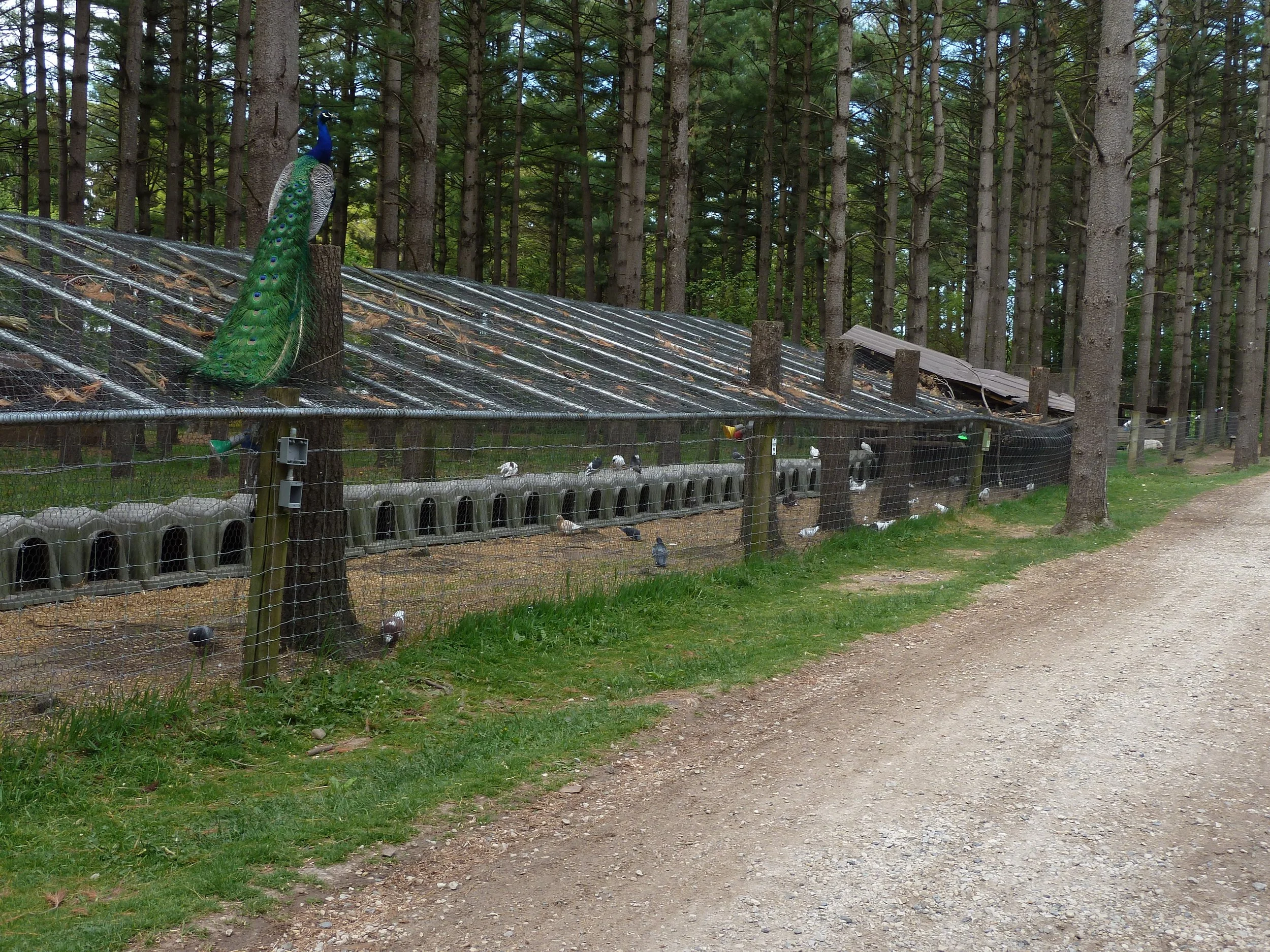
A few other concerns I have include the bird cage, parallel to the petting zoo. At first, I didn’t realize the small scale of it, being preoccupied when first entering the zoo. Upon further viewing, however, the cage is noticeably tiny. The shortest part standing at only about 4 feet, and the tallest at around 8, housing way too many birds. There were seven tree stumps that appeared to only be present to hold the structure up, and not designed for any enrichment purposes. There was also a lot of buildup of leaves and sticks on the caged roof as well, that spilled into the enclosure from the weight, which told me it was unkempt.
Moving on, there was a class of young children at Shalom at the same time as my group. We were all peering into a turtle enclosure when one of the kids decided he wanted to poke a turtle with a stick. Luckily, a teacher stopped him. This is yet another reason as to why proper safety and animal care is so important—kids are the main visitors. Kids who don’t know what they should or should not be doing to the animals, to no fault of their own, they’re curious. But these animals should be properly protected if they're going to be out in the open and accessible to visitors.
Despite the glaring animal rights abuses in the park, the employees of the zoo were kind. All of the staff along the trail were friendly. The first one I talked to, who gave me most of the information, was thorough in answering my questions. As we talked, she noticed my notepad and changed her tone to shed a brighter light on the zoo, talking about Star’s new glamorous $100k enclosure in the works. She also said that Ginger’s 2nd (1st successful) pregnancy had only 4 cubs, when my research said otherwise, and I had gotten my information from Shalom’s own Facebook page. All of this seemed odd, but she was kind and friendly throughout our interaction.
Overall the experience was valuable, with few portions of the visit being pleasurable, but many others making me sick to my stomach. At the end of the day, I still stand by my belief of being overly celebrated and not seen for what it truly is, a for-profit zoo, exploiting animals. In the face of blatant animal rights abuses, Shalom should be shut down. There certainly is irony in claiming themselves to be a sanctuary when they aren’t even registered as one, that to me, says everything. They want to be seen as a better place than classic zoos, they want to be popular, and somehow they did it.