Stunning, Heartbreaking, and Held Back: Reviewing Sunrise on the Reaping (Spoiler-Free & Spoiler Breakdown)
Photo from Gateway Film Center.
Rating: 4/5 ★★★★☆
Spoiler-Free Breakdown
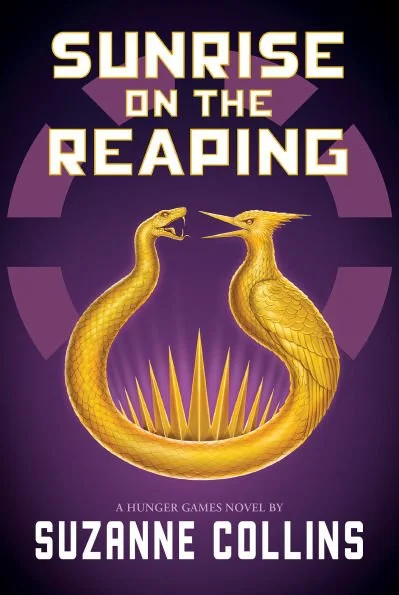
Walking out of an early screening of The Hunger Games: Sunrise on the Reaping, the only emotions lingering were heartbreak and amazement. The movie was stunning, but I strangely felt an intense urge to go back home and reread the book.
When viewed in terms of its filmmaking qualities, Sunrise on the Reaping is a remarkable achievement. It is visually stunning, genuinely heartbreaking, and a worthy addition to The Hunger Games franchise. The entire cast delivers standout performances across the board, bringing Panem’s 50th Hunger Games—the Second Quarter Quell—to vivid, agonizing life. It was a captivating watch from start to finish, and if I had walked into that theatre without having read Suzanne Collin’s novel first, I definitely would have rated this movie even higher.
That is the problem with reading and loving a book before watching it on screen. Knowing what is left out or changed can change how you experience the movie. After leaving the movie, I decided that if I had to choose between rewatching the film or rereading the book, I would easily choose to reread the book.
The Weight of What Was Cut
Granted, there is no argument that adapting any beloved novel for the screen is tricky—an uphill battle—and credit where it's due, the filmmakers nailed the broad picture of the novel in this movie. Most of the major set pieces and overall designs were brought to life just as I had imagined them. The problem wasn’t what the movie did; it was the sheer volume of what they couldn’t do.
It’s undeniable that condensing a story for theatres is tricky, but there were significant scenes that were trimmed or altered unnecessarily. More importantly, the things that were left out altogether weren’t just filler; they were small foundational scenes that forged a deeper emotional connection with the characters. Because those scenes were missing or altered, certain emotional payoffs from the book did not land as strongly in the movie. The movie makes you sad, certainly, but it fails to reach the heart-wrenching level of devastation that the book provided readers.
The PG-13 Limit
The other limitation wasn’t about the runtime—it was about the rating. Like every installment of the franchise before it, Sunrise on the Reaping carries a PG-13 rating. Given the series’ massive fanbase and younger audience, the rating makes commercial sense on paper and will probably increase movie profits. However, it puts a leash on a story that needed to be unleashed, raw, to the public. I mean, what do you even think The Hunger Games are about? It’s not meant to be a fun family-friendly story.
Suzanne Collins has never been shy about the brutal reality of what the Capitol does to children, and the 50th Hunger Games was written twice as bloody, twice as cruel, and twice as unforgiving. While I don’t believe in gratuitous gore being necessary for conveying the horror of the games, Sunrise on the Reaping often felt restricted by its rating. Several pivotal moments felt underdone and sanitized in a way where I was taken out of the film experience and the emotions never hit as hard as they could have. An R-rating—or at least a willingness to push PG-13 to its absolute limits—would have honored the book more powerfully.
The Verdict
Despite its constraints, Sunrise on the Reaping is still—in my opinion—a four-star film well worth seeing on the big screen. The craft, the performances, and the emotional core are there from what I imagined from the novel.
Still, if you haven’t bought your ticket yet, take this as a plea: read the book before you see it. We are living in an era increasingly defined by declining literacy and shrinking attention spans, where it’s tempting to skip the pages and wait for the two-and-a-half-hour movie. Resist that urge. There is so much nuance and heartbreak that Collins does an exceptional job of displaying in the novel that did not quite match what was shown on screen—and experiencing the book first won’t ruin the movie for you. It will give you the full emotional weight the film only has time to hint at.
⚠️ SPOILER WARNING ⚠️
Everything below this line contains major spoilers for both the Sunrise on the Reaping novel and film. If you haven’t read the book or seen the movie yet, stop here and come back after!
The Spoiler Breakdown: What Got Lost in Translation
The hardest part of watching an adaptation you’ve already read is feeling the absence of the scenes that made you care in the first place. In the book, our attachment to Haymitch and the people around him isn’t built in a single dramatic speech—it’s built through time spent together before and inside the arena. There were plenty of scenes that were scrapped or altered in a way that weakened the connection we felt emotionally with the characters on screen.
Here is a quick list of all the scenes that were cut or altered; I’ll go into some of the most important scenes that were cut or changed after. (I have tried to compile all of what I can remember and what is available online, so I may have missed even more!)
Haymitch is the first to notice the inscription on the striker, not Snow (not a big deal)
Haymitch doesn’t carry Louella’s body across the parade
Haymitch doesn’t come up with the name “Newcomers” in the movie; Ampert does
They did not show any of the training and how Haymitch received a 1
The milk scene was cut, and the only bit we got was when Plutarch gave Snow the milk instead
Snow mentions Lucy Gray directly (felt a little “easter egg-y” and too on the nose)
They changed how Haymitch discovers Wyatt’s death
Lou Lou’s pump and earpiece are completely cut, and she never yells, “You’re murdering us!”
The chocolate scene with Silk was cut entirely (this was a big deal for me)
Silka’s death was slightly different
Ampert’s death was nothing like the book (obviously due to the PG-13 rating, but I think they could have gotten away with a little more)
Almost all of Wellie’s scenes were cut (especially any at the end of the games with Haymitch)
There were zero sponsor gifts or references to sponsor gifts
The entire porcupine scene was cut
The scene where Maysilee and Mariette kill two gamemakers in the arena was also cut
The ladybugs seemed to be alien berries
Wellie’s death was not included at all
The hedge maze was a thin hedge that they didn’t get lost in
Haymitch’s injuries aren’t as significant as in the book (again due to PG-13 most likely)
They did not show Haymitch on his victory tour or in the cage
They didn’t include Wyatt’s father in the funeral
They didn’t show Peeta’s incubator for the geese
…and probably even more things I didn't catch!
Those are the changes and cuts that I can recall. That being said, it is undeniable that adapting a book into a movie is extremely difficult, and a lot of material inevitably has to be cut. However, some of the things that were cut or altered were incredibly important, especially when it came to the depth of the story and our connection to the characters. In many aspects, the movie felt rushed, and it didn't quite capture the same sadness and heartbreak that the book made you feel. I don't say this to bring down the movie, because it still did a fantastic job telling the story and getting the main points across. However, I do think it fell short in several smaller areas. At times, it almost felt like we were watching the book through the lens of the Capitol, rather than actually experiencing the story alongside the characters.
What it Lacked
One of the most disappointing aspects of the movie was the lack of character depth we got to see on screen. Scenes that were left out, like the chocolate scene with Silka, Lou Lou's pump and earpiece, Wellie's scenes, and many others, were, in my opinion, important to building a deeper emotional connection with the characters. So much of the movie felt rushed, jumping from one event to the next without giving us enough time to sit with certain moments or really get to know the characters. Yes, the movie was sad, but it could have been just as heartbreaking, if not more, than the book. Once again, it felt like we were viewing everything through the lens of the Capitol because we never truly got the chance to connect with the kids. Their stories and deaths often felt more cut and dry, rather than carrying the emotional weight they had in the book.
Not only did the movie lack some of that depth, but the PG-13 rating held it back more than I initially expected. There were several scenes, including the deaths of Ampert, Silka, Wellie, and others, where the rating seemed to limit how much of the original story they could portray. That being said, some of these scenes, especially Ampert's death, genuinely took me out of the movie and left me dumbfounded by just how different they were from the book. Ampert essentially died with a few scratches on his body, which was nothing like what we read. Even if the movie wasn't going to push for an R rating, I think there was still more room to capture the brutality and emotional impact of these moments while staying within PG-13 boundaries. A little more of that could have gone a long way in making the movie feel more accurate to the book.
Overall, I was a little disappointed with how certain aspects were portrayed, but that definitely didn't stop me from enjoying the movie. It was still such a fun and crazy experience to see it early, and I had an absolute blast (even if it was pretty heartbreaking at times). Visually, it was a gorgeous film, and the acting was outstanding across the board. You could barely even recognize Glenn Close! I also have to give a special mention to Joseph Zada, because he embodied Haymitch so incredibly well that I was completely entranced whenever he was on screen. The same goes for Mckenna Grace and the rest of the cast. All around, it was a very good movie. I just think it had the potential to be an amazing one.
But please, go read the book! I cannot stress enough how important it is to experience the story in its original form, whether or not you plan on seeing the movie. Suzanne Collins does an incredible job capturing the heartbreak, emotion, and sadness of this story in her writing, and it might honestly be one of my favorite books in the entire series.