Abolition Is The Future
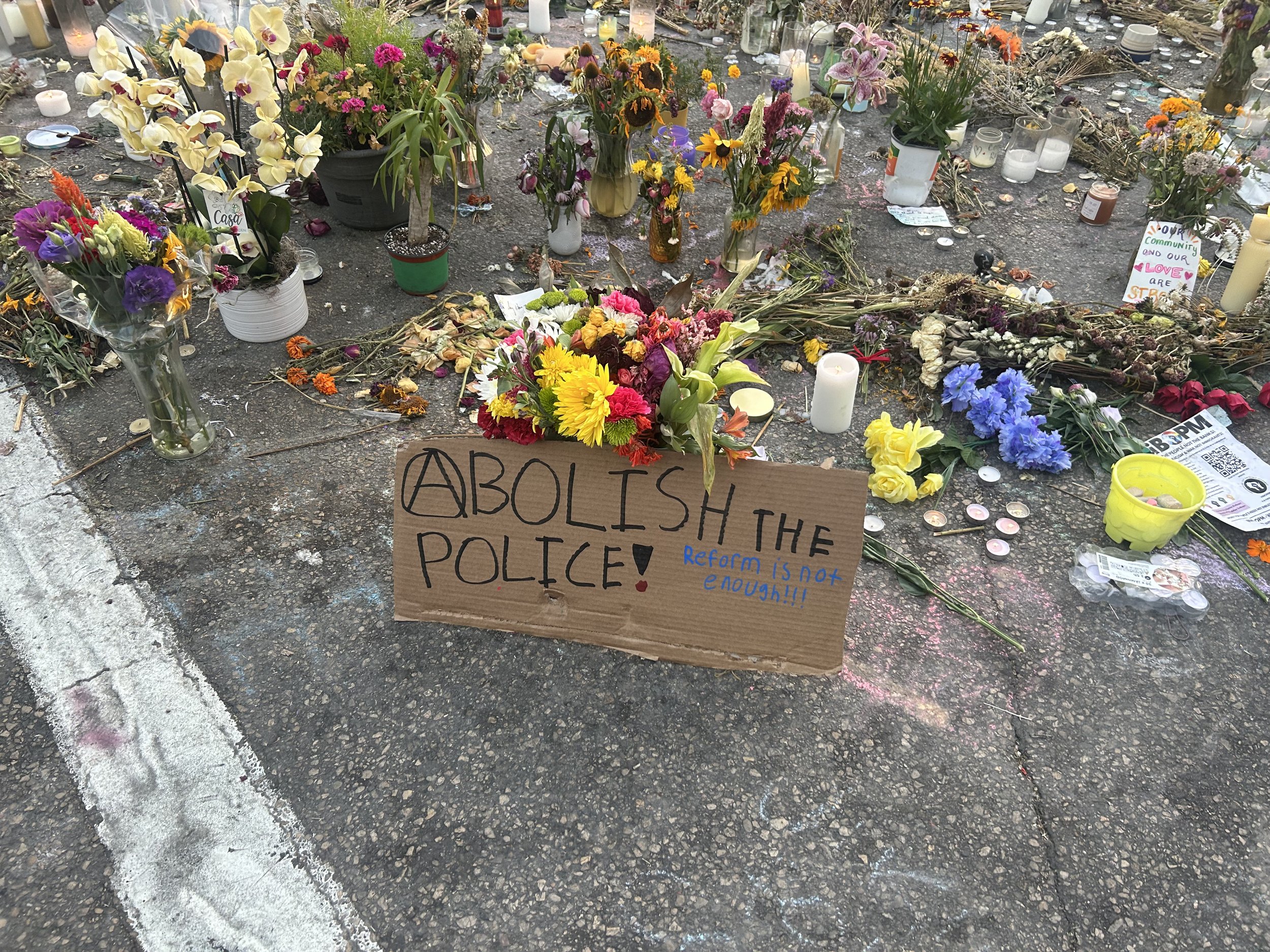
Photo provided by Miki Pope with permission: @Miki.takes.photos on Instagram
PRISON ABOLITION ARTICLE 3 of 3
Article 1: No, The Thirteenth Amendment Didn’t End Slavery: The Origins of the Prison-Industrial Complex
Article 2: Locked Away and Dehumanized: The Abject Failure of Punitive Justice
CONTENT WARNING: This article discusses sexual assault and rape, violence, drug abuse, and racism. If you are sensitive to these topics, be cautious reading.
I dedicate these three articles to the two million people currently languishing behind the cell bars of these United States; to Corey Ruiz, Tony Robinson, Breonna Taylor, George Flyod, Emmit Till, and the innumerable of Black and Brown lives cut too short by police and the carceral state. You are not alone. Your suffering will not be in vain. Your freedom is inevitable. And it will be impossible to ignore.
PART 1: Justice As It Stands
“Today’s lynching is a felony charge. Today’s lynching is incarceration. Today’s lynch mobs are professionals. They have a badge; they have a law degree. A felony is a modern way of saying ‘I’m going to hang you up and burn you.’ Once you get that F, you’re on fire.”
But Your Honor, He's Black!
When talking about the criminal-legal system in America, it is impossible to sever its direct ties to racism and the disenfranchisement of communities of color. Although the prison system is officially a race-neutral institution, criminalization and imprisonment disproportionately affect Black and Brown people. Around 5% of illegal drug users are African American, but represent 33% of those incarcerated on drug charges.(1) Black people represent around 12% of the population, and Hispanics represent around 14%, but respectively they account for 40% and 20% of the prison population.(2) Now the defenders of the prison-industrial complex would have you believe that this is just because Black people and people of color are more “prone to criminality.” Not only is this a fundamentally flawed and bigoted belief, but it fails to understand how the system of policing and the institutional violence of the prison system function in America. This belief is rooted in the idea that the legal system serves to “keep us safe,” and not as a system of state and class control, as was made evident by the preceding articles and will be reinforced throughout this one.
The first slight to Black communities by the carceral state is the fact that they are regularly overpoliced compared to white communities. Cops wait on street corners and drive laps around the neighborhood, watching for anyone that they deem "reasonably suspicious." What counts for “reasonable suspicion” is laughably low, sometimes only needing to “look like a criminal,” according to Michelle Alexander’s The New Jim Crow.(3) The police are then empowered to intervene in people's lives through the use of stop and frisk laws, which give the police the legal freedom to stop and search anyone that they have targeted as having “reasonable suspicion” of being involved in criminal activities. What then, is the effect of being able to stop anyone who “looks like a criminal” in a country where the idea of criminality and danger is synonymous with poverty and Blackness? If we look at a city like Philadelphia, it’s Black people being 50% more likely to be stopped and searched, even though less than 6% of cases resulted in an officer finding a gun,(4) which, as a reminder, is legal to own in the United States.
The very foundations of the prison system in America rest on the desire for the continuation of the racial control and subjugation that has existed since and before the founding of this nation. After the end of slavery, when the white landowning class had to forgo its population of free labor, those same wealthy elites, fearing that equality would threaten their business interests, created the Black codes and the vagrancy laws that allowed for convict leasing; divulged more thoroughly in the first article. Race was the key factor in this seismic shift in the attitude towards incarceration, as even though there were free Blacks, in the antebellum period the makeup of southern prisons was primarily white—99% white, in some cases. Racist subjugation didn’t die out after slavery, and it didn't die with Jim Crow; it merely reforms itself to fit the changing attitudes of race relations in the United States. The separate but equal doctrine of Jim Crow was considered to be better than slavery, but as history proved, it was just a fresh set of clothes on a rotting corpse. The state and capital were simply adapting to the progress made by civil right advocates and not fundamentally shifting how the system operates in regards to the racist repression of Black and Brown people that causes generational poverty and trauma.
The prison-industrial complex, seeing its first major boom under the Regan and Bush Sr. administration, follows the exact same path of accepting the popular movement for social justice (in this case, “colorblind” policy that does not discriminate based on race), while continuously undermining the lives of people of color in this country. There is no policy that explicitly states that Black people are to be rounded up and thrown in jail, but there doesn’t have to be. Through the criminalization of things like drug use, homelessness and poverty, and the usage of racial profiling tactics, the system ensures that people of color will be the primary targets of the prison-industrial complex. This, of course, is not to disregard the experiences of white convicts. The prison system is equally as brutal for them, but it is critical to understand that prisons serve primarily to uphold the established hierarchies of white supremacy and state dominance.
A Cage That Follows You
Most people believe that the violence and the punishment of the prison-industrial complex ceases to affect individuals once they walk out of the prison gates. But the reality is not so optimistic. After release, former convicts are shackled with debt in the form of trial fees, prison fees, interest on debts, supervision fees from parole officers, and a myriad of other charges pertaining to an individual's case. Some prisons do provide what's referred to as “gate money,” but there is no federally mandated minimum that would help a convict onto their feet. Some prisons that do provide gate money give as little as $10; which is the more polite way of spitting in someone's face. Even if a prison does give substantial amounts, there is still no guarantee that it would get anyone very far.
Additionally, once released from formal control, those with criminal records can be legally discriminated against in almost every area that would actually be conducive to their financial stability. Felons who apply for housing are more often than not denied on the basis of a criminal record, despite the fact that having a felony does not necessarily mean that someone would be a poor tenant. Discrimination based on felony status is routine in both the public and private housing sectors, with 8 out of 10 applicants who have a record being denied, resulting in felons being 10 times more likely to experience homelessness.(5) Felons who do manage to beat the insurmountable odds and find a cheap, stable housing arrangement are subject to “strike laws,” like those mandated by Bill Clinton's 1998 “Quality Housing and Work Responsibility Act.” The Quality Housing act gave Section 8 and subsidized housing landlords permission to discriminate and evict tenants with convictions by stating, “To enhance the ability of [public housing agencies] to combat drug-related and violent crime within their developments, Resident Councils, Resident Management Corporations, and Resident Organizations will be permitted to undertake management functions specified in this part 964.”(6) These decisions can be challenged in court, but without the money for a lawyer, the government wins the vast majority of claims.
On top of all of this, felons and those with criminal records are discriminated against and sometimes excluded from welfare. Those with felony arrests related to drugs are entirely eliminated from the Supplemental Nutrition Assistance Program (SNAP) and Temporary Assistance for Needy Families (TANF) benefits under the 1996 Welfare Reform Act. This is considerably damaging, given that the vast majority of arrests made are for drug crimes.(7) “Ending welfare as we know it” seems to mean excluding the most vulnerable and most destitute from our society.
Someone then, still faithfully believing in the goodness of our representative democracy might say, “Well if you don’t like these policies, then vote for someone who will get rid of them!” This would be a fair point, if felons could vote. Thirty five states have contingencies (certain rules that cannot be violated) on parole or probation completion, which, as described before, is incredibly difficult considering that something as simple as failing to meet a payment can land someone back in prison. There are only 15 states that have no restriction on felon voting after their sentence is completed, but only two states, Maine and Vermont, allow for incarcerated people to vote in elections while incarcerated; elections that very well could decide their fate.(8)
In the job market there is much the same issue. Felons who are trying to find stable employment must go through the ringer of discriminatory hiring practices. On almost all job applications, individuals must disclose their conviction status, which may seem benign at first, but oftentimes is the determining factor in the hiring process. A 2001 study from the University of Wisconsin-Madison found that from a group of 600 employers, that around 40% would “Probably” or "Definitely" not hire someone with a criminal background, with the remaining majority stating it “Depends” on the crime, with only a small percentage saying that they would hire someone regardless.(9) Considering the fact that the majority of arrests that lead to a criminal record are drug crimes and that many companies require mandatory drug testing and sobriety, it can reasonably be assumed that a large portion of the “Depends” crowd will fall towards not hiring. The study also found that when compared with the data from the past decade, the trends stayed relatively similar “despite a much tighter labor market”(9) which suggests that there is a deeper sense of anti-criminal bias that overrides even economic necessity. To add salt to the already bleeding wound, those on parole are required to "maintain gainful employment.”(10) The cost of not doing so is more prison time, and harsher parole fees, these conditions force felons and former convicts into an eternal catch-22 of being simultaneously forced to find employment while not being allowed to work anywhere.
The cruelest part? The average incarcerated person will make from $180-$1,500 a year, given the current rates of pay while in prison.(11) And those going into prison were often not rich beforehand, with the average annual income being only $19,650 for men, and a meager of $13,890 for women.(12) So how does the state expect individuals to find a job, a car to get that job, a home, food, water, all while paying back monumental debt and not resorting to crime for very basic survival? The answer is that they don’t. The prison-industrial complex is far too profitable and works far too well to maintain a permanent underclass of primarily Black and Brown people, who are so starved, so universally traumatized by capitalism, that they have little hope of resisting this brutal system of extraction and persecution.
Once A Criminal, Always A Criminal
But it’s not just the direct systems of control that cause harm; the stigma that comes with the label of felon and the consequences of that label of criminal can be considerably more damning than the time served itself. In The New Jim Crow, it is described as “The permanence of one’s social exile is often the hardest to swallow. For many it seems inconceivable that, for a minor offense, you can be subjected to discrimination, scorn, and exclusion for the rest of your life.”(13) Our relationship with punitive justice is ingrained in our psyche early on where the police and prisons are seen as the “thin blue line” that divides the law abiding from the savage and morally corrupt criminals. Those with convictions are seen as less than and personally responsible for their actions, the culpability of capitalist manufactured poverty and the violence of the state completely removed from the equation.
As a thought experiment, I would like you, dear reader, to imagine yourself confronted by someone who has a felony record—one of the 19 million people(14)—in the grocery store, or somewhere else in the safety of your white suburban neighborhood.What do they look like? Black? Hispanic? What is your reaction? Is it fear? Are you scared that they will try to hurt you? If you’ve grown up being exposed to any kind of media or been socialized by the majority opinion that prison and punishment is the just, moral option, I bet that you were horrified and stuck in place with fear by the armed, high, Black man you saw in your mind's eye. But felons are just like you and me. They have families. Many have children they must provide for. Many more have mental health that sometimes slips into disastrous drug use. They pay the same bills that you do, whether it be for school, or the hospital, or a home. They have made mistakes and are just as imperfect as someone fortunate enough to have the right resources to survive. But unlike you, they are warehoused and segregated away from all of that, away from work, away from an education, a home, a family, community, love, acceptance. They are you, and they are me. We are all so close to being a part of that 19 million. Much closer to that than wealth and the power of the state.
It should be understood by now as to why this system is fundamentally flawed, and how the intense dehumanization of prisoners doesn’t address the conditions that lead to crime in the first place. To get rid of crime, people must divest from the punitive measure of justice and instead focus on restoring community relations, and constantly transforming systems that no longer, or never, served the people.
PART 2: Justice is More than a Cage
“But how will we understand what it is in human society that produces violence, if we refuse to recognize the humanity of those who commit violence?”
Right now, the prison-industrial complex is the sole proprietor of our community's delinquents and wrongdoers. Communities impacted by harm have very little choice of what happens to those who do harm, or are harmed. The prison consumes all and is the solution to all of the social ills and aches; a cure all miracle drug or in other words, a myth. The abolitionist movement aims to break apart this universalizing system, and divide the ground that prisons cover with a vast web of social services and programs that actually reduce harmful behaviors without creating cages and branded individuals. There is no monolithic solution to the prison-industrial complex, but rather Minuscule Structures of justice that serve the interests of local communities, a concept described by the Mixe activist and linguist Yásnaya Elena Aguilar Gil in her essay of the same name.(1) Abolitionists believe in the fundamental truth that communities are capable of self-governance, and that cooperation between them is also possible and in fact more reliable and just than the centralized power of the state, and its universalizing laws. When communities create a web of varying support structures that meet their specific needs, that is when crime is reduced, and when harmful behavior is eliminated.
Hate Thy Enemy
Part of people's aversion to prison abolition and non-punitive measures of justice is their individual sense of vindication towards those who have wronged them, and their loved ones. So often, we are told that the best form of justice is revenge, that justice looks like the person who made you suffer, suffering just as much, if not more. But this logic, while initially fulfilling, often leaves a lot to be desired from the perspectives of the victims of crime or violence, while also failing to address the root causes for the violence and harm in the first place. The prison-industrial complex does not consider the feelings of those on the receiving end of harm, being guided by the laws of the state and the laws only. The problem with this is that every harm done to someone, and every crime that is committed, is committed in a different context and social situation. The justice system demands that every thief, murderer, and vandal be treated the exact same way, when the reasons for why they committed these crimes are as diverse and unique as the people who commit them. Under punitive justice, it is you versus them, a back and forth to find out right and wrong; justice is a battle, a war in which participants adorn themselves in suits of armor and cover their face in a desperate attempt to win. But as the adage goes, war is hell, and finding justice through this system can leave victims feeling incomplete and as though their hurting was validated, but not resolved.
The overall malaise that our system of “justice” has set up is less than inspiring. You hire an attorney, you explain your side and rebuke the others, as your attorney speaks in what is basically a foreign language, and eventually people you don’t know, and that don’t know you, decide yours and another member of your community's fate. Your emotions and all of the nuanced expressions of right and wrong are entirely disregarded. The conditions that lead up to the situation don’t matter and are never even addressed, in a central way. The impact of harm on other members of the community is never addressed. Crime is not about systems or circumstance, it's about individuals–evil people, who exist to do harm–and unfortunately others get caught in their crosshairs. From this distorted perspective of human behavior, there is no wonder as to why the punitive measure of justice is so ingrained into our minds. It is hard to give grace to people when we are under the assumption that a criminal's actions are entirely because of their own choice. Nobody will confront the state and the systems of racism, patriarchy, queerphobia, and capitalism if those systems have nothing to do with someone's behavior.
Damn Junkies
Of the people currently imprisoned or been arrested with a felony charge, a majority are for drug charges, sometimes as little as possession of marijuana, a substance that is far less damaging than alcohol. In fact, alcohol is “the third leading preventable cause of death in the US,” but is still perfectly legal, with 87.6% of the US population drinking at some point. Marijuana, a drug that is not psychoactively addictive, but also has shown to help with insomnia, anxiety, pain treatment and even Alzheimer's,(2) is a schedule 1 drug, and will land you in prison in most of the country for up to 3 years. The argument over substance bans is not even a modern one, and the consequences of making vice a crime have already been laid out in full in the aptly named prohibition era. During that time period, from 1920-1933, the sale and consumption of alcohol was entirely outlawed. By the end of the era, alcohol consumption was still at 70% of the rates prior to the ban.(3) 30% decrease is meager, compared to the consequences of its outlaw, which include $11 billion in lost tax revenue, $300 million lost in the effort to keep the laws enforced,(4) and the creation of modern organized crime, and a lucrative Black market that encouraged other kinds of harmful behavior. The point being that when it comes to addictive products and vice markets, outlawing them is a surefire way to get back very little of what you put into it, and a slew of consequences that are a direct response to the ban. Criminalization doesn’t make a practice less likely to happen, and it certainly doesn't make it safer; it just pushes those who partake into the fringes of society, where they can be ignored or disposed of.
This is not to diminish the issues relating to drug abuse, but rather to address the problem from a different perspective. There are no “good” or “bad” drugs, simply good or bad relationships to drugs. Drug abuse should be looked at as a public health epidemic, with substances like heroin, cocaine/crack, fentanyl, and methamphetamine being on the front-line of combat. These are seriously addictive and have demonstrable effects not only on individuals, but communities as a whole, and the current method of “rehabilitation” by shipping off drug addicts to face the brutality of the prison-industrial complex does nothing to fundamentally address this problem. In fact, it makes it worse. The reason why people take up drug use is multifaceted, and cannot be diluted down to the simple platitude of "because they want to.” The real causes of drug abuse can be traced back to many different entry points, with one of the strongest indicators of potential usage being poor or declining mental health.
1 in 4 adults that live with a mental health disorder also struggle with substance addiction. (5) Drug usage offers a cheaper and more consistent method of self medication and coping in times of crisis, as opposed to going through the rigorous and expensive process of finding a therapist and navigating the nightmare that is the American health insurance system. Our mental health in this country is a commodity, bought and sold by medical corporations. The consequence of not being able to pay, and being forced to turn to illicit substances is indicative of a greater societal issue, one that cannot be mitigated by locking up the people who abuse drugs.
The way that harmful drug use ought to be combated is not through the harsh, violent means of the prison-industrial complex, but a more thorough, compassionate form of rehabilitation, that comes with the understanding that drug abuse is not a monolithic behavior, and that the reasons behind it are not about the personal failings of isolated “junkies,” but rather a byproduct of the oppressive systems that are already in place. To combat drug abuse, we must first decriminalize drug use and possession and then create free, community based facilities that deny access to nobody. To the unconvinced and thoroughly patriotic reader, the idea that drugs and drug usage could become a regular and safe part of life, and not some taboo behavior to be shamed, is laughably far-fetched. But the decriminalization of drugs is not even an anomaly in neoliberal and capitalist countries. As an example, Portugal faced an intense and fatal drug epidemic in the 1990s that saw a rise in problematic drug use and overdose deaths, along with an outbreak of HIV/AIDS deaths related to needle sharing
But, instead of declaring a “War on Drugs” as the U.S. did, the government decided to leverage humanistic ideas, and the idea that a drug free world cannot exist, and that drug users are not uniquely evil people. The Portuguese government set out on an education campaign that “[Aims] to provide accurate information about drugs, the potential risks of drug use, and harm reduction strategies, in a non-judgmental way. The goal is for people who use drugs to become better informed and develop healthier relationships with drugs. Thus, people who use drugs can do so without risking punishment or incarceration.”(6) Instead of investing in militarized police, jails, and large detention centers, the Portuguese government aimed to center the causes of drug addiction, and the individualized care of drug addicts as a health crisis, and not criminality. The results are surely shocking to punitive advocates. The Drug Policy Alliance report on the situation speaks of how “Portugal went from having one of the highest rates of problematic drug use in Europe before decriminalization, to having a rate of overall drug consumption that is low in comparison with that of other European countries," with cases of HIV/AIDS deaths related to drug use plummeting from 52% to just 6%.(6) The fundamental difference between the response to drug usage in the U.S. and Portugal, is the view of the drug abuser themselves. In the U.S, we are blind to the realities of poverty, mental health, and stigmatization that make someone a user; instead choosing to condemn the individual as the cause for the entirety of their suffering. What we need is not more sentences for drug users, but a web of free community that comes from a place of understanding, and trauma informed support.
Gender-Based Crime
Above all else, what comes to mind when talking about crime, and the abolition of prisons, is the image of “murders and rapists running amuck in the streets.” There is an unquestioning support of the carceral state and a feminism that uses prisons as its primary method of bringing about justice for survivors of violence. This view of violence as an inherent evil of humanity, and not a consequence of systems that reward violent attitudes and a patriarchy that empowers men so thoroughly that a distinct “rape culture” exists, actually ends up disenfranchising and harming victims further.
The stereotype of the “battered woman” is what most people perceive domestic abuse victims to be. Women who are white, fragile, innocent beings, being beaten by men. These are the victims that lawmakers are writing about, an image of what domestic and gender-based abuse looks like that ignores the incredible amount of complexity behind real cases of abuse. As Kylie Cheung elegantly states in her book Survivor Injustice, “[The laws governing sexual assault and rape] exclusively serves ‘good,’ ‘innocent’ victims—middle-class, straight, white women, who are regarded as the face of sexual violence victims, or at least the only faces worth caring about; the law exclusively serves women who have been perceived as sexually demure, compliant with tacit, patriarchal rules governing proper sexual conduct.” (7) Black women and women of color, who, despite being more likely to experience rape and sexual violence than white women,(8) have compelling reasons to not turn to the carceral state and the police in these situations. Police routinely revictimize those who have survived sexual assault by denying them even the belief that their assault happened, while also doing little to prevent harm.
When survivors go to the police, the expectation, and the propaganda that has been written into all of the cop movies and shows, is that police believe their account and set out to find the perpetrator. This is not the reality we live in however. A 2015 study from the American Civil Liberties Union (ACLU) found that police did not take accusations of rape seriously 88%(9) of the time, while statistics of false rape allegation only account for only 2-10% of all reported rape and sexual assault investigations.(10) That likely is a large contributing factor to why sexual assault goes unreported 60% of the time.(11)
Those who are victims of sexual crimes and are impoverished often will not report assaults out of the fear that they might lose their financial stability that comes with staying with an abuser. Women of color are already more likely to be poor or impoverished, so, on top of an unfriendly and violent police force that ignores trauma, they also must face the courts, which are outside of the affordability of these victims of rape and domestic abuse. For immigrant women, reporting a sexual or domestic crime could mean deportation if they have come into the country illegally, or are still going through the process of legalization. Because of the abjectly abysmal state of the U.S. economy for all but the richest, women are often trapped in situations that are abusive, forced to weigh out whether it'd be better to die on the streets, or live with an abusive partner.
Prisons and the carceral state have not helped to support women or those impacted by the horrors of gender-based violence becasue it does not address the systemic issues that lead to rape in the first place and actually enforces rape culture, keeping it alive. It is naive to treat violence as something that is “human nature” and not something that can reasonably be eliminated or mitigated. Justice for those impacted by sexual assault begins with the tearing down of the systems that make gender-based violence viable in the first place. The systems of white supremacist patriarchy is the most prevalent and obvious of the systems that contribute to rape culture. Men, simply for being born with the right genitals are socialized to be dominant in encounters and to believe that women are inferior. These biases may be subconscious and appear even in the most liberal minded of individuals (Not unlike racial biases). Anti-women rhetoric being challenged looks like putting pressure on capitalist exploitation that systematically puts men on a pedestal. It looks like dismantling the structures of centralized state control that cannot address the individuality of harm and of gender-based violence. It looks like creating community with the people around us to make spaces safe and conducive to conversation about accountability.
When we lean so heavily on punitive justice that we forget there is a time when everyone is innocent, before a man becomes a rapist or a murderer, and time to interject lessons about healthy relationships and to deconstruct the male-centered reality that we have built up. Comprehensive and queer inclusive sex-ed is a way to catch the biases that can potentially lead to rape before they manifest fully. There currently stands an unbearable and puritanical prudishness around sex, intimate relationships, and pleasure. For most youth in the United States, sex-ed looks like a very uncomfortable educator who is not trained in anatomy, safety, or reproductive health talking to a group of bored and embarrassed children about how abstinence is the only safe and proper way to conduct your relationships, and that sex is something only adults are ever allowed to think about. When lessons about consent and appropriate sexual contact between people become far more ingrained and permanent when you learn to treat sexual and romantic partners with dignity early on. In a report about sex-ed in K-12 education and sexual assault rates in college, a peer reviews article published by the Public Library of Science stated “[D]ata suggests that adolescents who receive refusal education before college (but not other aspects of sex education) are at decreased risk of PSA during college.”(12) Its important to note that “refusal education” does not refer to abstinence education, but lessons about how to safely reject unwanted sexual advances.
Moving away from sexual prudishness and towards inclusivity of a diverse array of experiences and not shying away from the "embarrassing" or "inappropriate" questions about sex helps to fundamentally shift minds towards understanding consent and breaking down the predatory biases before society has a chance to develop them. Education is one of the most critical parts of creating a more equitable society based around sexual safety and liberation.
Beyond the preventative measures that should be the focus of the movement for the rights of victims and rooting out the causes of sexual and gender-based violence in the first place, we also must understand that rape and sexual assault will still happen at some point. Without prisons, it's understandable to be concerned that abusers and those who perpetrate gender-based violence will be left unaccountable and free to commit more crimes. These concerns however feed into a fundamental misunderstanding about what restorative and transformative justice are. Unlike the carceral process, restorative and transformative justice center accountability and community relations, and are proven to create stronger bonds and to limit the trauma inflicted upon others
Justice, Uncaged
Where are we supposed to go after the abolition of the prison system? How could we possibly maintain peace if we have no way to deal with harmful behaviors? The answer lies in the same wisdom that comes with tackling drug addiction: divestment. There is no single solution that will solve crime, no one institution that will replace the universalizing character of the prison-industrial complex, and we cannot treat our alternatives as we have the prison-industrial complex, as they serve fundamentally different interests. There are two main tenants of abolitionist thought that will fill the gaps of the carceral system; restorative and transformative justice.
As I have repeated, in an attempt to make a slogan, systems are primary forces that impact our behavior. A large proportion of crime, like drug usage, theft, robbery, and even things like sexual assault and murder, can be linked back to the poverty created by capitalism. Interpersonal violence is directly linked to systemic and state violence. On a broad scale, we need the decentralization of justice to individual communities. The centralized justice system does not care for the individual and nuanced circumstances that lead to crime in the first place, and “democracy” under a representative government works far too slowly to implement meaningful change in the communities that need it the most. Transformative justice prescribes that when systems no longer work in favor of communities, or have shown to cause harm, they need to be abolished or amended with rapidity and the consent of those who have to be governed by them. Under the current domain of laws and the court system, community members have almost no say in the systems that are supposed to protect them, and the “proper” channels for creating meaningful change are often not reliable ways at creating change. Communities need self-managed power and the authority to govern without the oversight of the state or of capital informing the decisions about what justice ought to look like.
This kind of radical justice will by nature look different from place to place, given its highly localized nature, but what it can look like is worker councils of any and all community members coming together to decide and deliberate about what solutions need to be put in place to prevent harm in the future. It can also look like smaller numbers of those directly impacted by harm working together and then presenting those solutions to a greater community, as those directly impacted by harm are those who understand what needs to be done to engage in healing more so than a punitive and far away carceral system. The underlying reality of any system of transformative justice is the passing of the reins of power away from the state, prisons and police and into the hands of those who have been impacted by harm. Communities need horizontal control over how they are governed, and that necessarily means abolishing the highest form of hierarchical control; prisons.
If transformative justice is the tool to address the broad, overarching issues that cause harm, then restorative justice is the tool that gets into the weeds of the interpersonal harm, and the trauma it leaves behind on a community. What restorative justice is predicated on is the repair of broken community trust and connection, as well as finding solutions that hold those who perpetrated accountable to the victims. Unlike transformative justice, which is intended to quickly and effectively change systems of harm, restorative justice can turn out to be a much longer winded process that involves long periods of healing and community closeness.
Restorative justice looks different depending on the type and severity of the harm that is inflicted, but for the majority of the cases of harm, it looks like a social worker doing individual interviews and sessions with those implicated and involved in disputes to learn both sides of the conflict/ Those involved in a dispute will then come to sit down together, along with a person or people to support them, moderated by a trained social worker that sets up the boundaries and the intention of the gathering. This creates a safe, supportive environment where the full scale of emotions can play out in a setting that brings what otherwise would have been two isolated individuals together before harm or animosity can escalate further. When there is immediate harm, these sessions can be used as a tool to devise a plan that addresses all forms of harm that are caused, both directly and for those in the greater community who have been impacted by harm; all without a cop, a judge, or a jury. Substantial efforts for restorative justice have to be made up of community members and those who are implicated.
This kind of harm reduction and approach to justice has been tried and proven before. Since the late 1980s and the beginning of the 2000s, restorative justice practices have been implemented in K-12 schools and colleges as a sort of proof of concept. The book Restorative Justice Up Close By Sally Swarthout Wolf chronicles her lived experiences as a restorative justice practitioner, and throughout the course of it, the same themes that cooperation between individuals, without the oversight of the state and instead trusted community members leads to more substantial gains for both the victim of harm and the perpetrator of harm. In one confrontation between late-teen students that had escalated to threats of, and actualized violence, the school brought in a restorative justice counselor instead of going through the usual route of disciplinary action. It's important to note that sessions of restorative justice are voluntary, and those involved are allowed to step away when they feel they need to take a break from intense emotional discussions. This part is crucial to understanding why restorative justice practices are so effective; it's because those involved are given agency over the conflict, as opposed to being moved around and used by lawyers and the state.
One of the staff tasked with overseeing the circle states, “The girls all participated eagerly as their turns arrived. There were many accusations, insults, and emotions… There were more exits of students with their assigned adults, and it was affirming to watch them use that resource… At times fewer than half of us remained in the circle. Thankfully there were [as many entries as exists].. It was clear they’d never heard each other's perspectives before, and they wanted to hear and be heard.”(13) Between what would be two sessions, there was a mutual understanding of each other's perspectives, and a community bond that ended up forming between the many students involved.
“The biggest lesson for me, though, is that when you offer an authentic [restorative justice] process, and calmly sit with the participants as they navigate their own conflict, those affected are always in the best position to create solutions that work for them.” (14) That is the ultimate end goal of restorative practices, the building of strong bonds with people involved in conflict so as to prevent further harm. When a community is nurtured, not torn apart by the violence and the intervention of the state, we can see a kind of ripple effect in places; when people become connected to a collective, we tend to treat others with more respect and dignity.
It also comes to the realization that “victim” and “perpetrator” are often hard categories to fill. Human behavior does not have distinct moral lines of good versus evil, and the carceral system's eternal battle to find who is in the wrong ignores this reality. “Instead of focusing solely on the question of what laws or rules were disobeyed and ‘who did it,’ restorative justice asks… ‘Who was harmed? What has been the impact of that harm, and how can it and the breach in relationships be repaired?’”(15)
For victims of gender-based violence, and violence in general, it is important to understand that exposure to the perpetrators of harm can induce retraumatization (a fact that the current legal system fails to address) and can end up being reductive overall. Restorative justice advocates have created a system of surrogate harm reduction and justice. Family members, or trusted community members of victims will take the place of a victim to advocate on their behalf to confront the perpetrator about the harm they committed. Restorative justice practices are not about letting the violence and the harm created by these people go unaccounted for, but precisely the opposite. They allow for levelheaded and emotionally informed responses to harm to unfurl in a way that makes those implicated in violence accountable. Restorative justice centers the need for healing instead of the desire for immediate vindication and punishment. Time should be given to the victims to grieve, process and deliberate about solutions with people who are trained in trauma informed therapy and crisis response and not violent, belligerent police that exist to defend the state’s authority
As restorative justice practitioner L. Tomay Douglas puts it, “That thinking that restorative justice is ‘soft’ – is the result of a punitive mindset… What [restorative justice] does is give agency to the survivor. It's the community coming together to heal itself, not including institutions and police that reproduce harm.”(16)
With violent and gender-based crimes, accountability will look entirely different depending on the victim(s) wishes. The designated consequence can be to never see that person again in a similar fashion to restraining orders today, mandatory therapy and rehab, or even ousting from the community if harm becomes too great. It is incredibly important to note that these drastic measures are not the primary or even tertiary methods to be used. They are last resorts that will come when all other methods have been exhausted.
This is not a resource or funding issue. The state and capitalism will never allow for these systems to be put in place, because the abolitionist movement demands their destruction, to place people over profits and property. Abolition does not have one face, but millions; so many faces that I as one person cannot possibly do justice to the facets that concern our collective liberation from the carceral state. Abolition looks like healthcare, sexual and creative liberation, housing for all, the meeting our basic material needs, environmental justice. But above all else, the recognition of human fallibility and that dignity is not to be earned, but something we are all entitled to.
PART 3: Abolition, Not Reform
“Prison, a social protection? What monstrous mind ever conceived such an idea? Just as well say that health can be promoted by a widespread contagion”
Despite the inhumanity of the prison system being on full display to anyone who simply looks behind the walls of our cages, the voices of liberals and moderates supposedly playing to the fairness of our just-world will ask for us to be kinder in our tone; to the police that gun us down in the streets, to the guards that slam and lock the cell doors, and to the capitalists working with the state to churn out every ounce of humanity from those incarcerated and transform them into dollars. They will tell us that we can vote to reform our way out of this. We simply need kinder prisons, to root out those bad apple cops; we just need better systems of oppression, that is all! The flags that fly over the prison yard ought to include a pride flag, and not just the stars and (jail) bars. But it is not the character of the prison-industrial complex that we must fight against, but its entire being. We have seen what it looks like when we try to make prisons “better” and less brutal. Our desperate attempts at reform reveal that the injustice and the violence is baked into the structure that is the prison-industrial complex. As Angela Y. Davis put it almost 40 years ago,
Prisons do not disappear social problems, they disappear human beings. Homelessness, unemployment, drug addiction, mental illness, and illiteracy are only a few of the problems that disappear from public view when the human beings contending with them are relegated to cages.(2)
Prisons were never designed to fix the societal problems they claim to, but to be a tool of racist and classist control. The carceral system exists to break apart our communities and our trust in one another. The forces of capitalism and the state want you to be afraid of your fellow workers, of your neighbors. Like a vampire sucking the life from its victims, the criminal-legal system siphons our humanity and our love. But worse than a vampire, who leaves their sufferer dead, the state fills in our empty veins with fear of the stranger, hate for the vulnerable, and vindication for all. Only you can keep you safe, with the police and the cage as your implements. It is the most insidious lie that they will tell you about your fellow human.
This is not the time for centrist fence sitting, or for compromising with the state. There is no compromising on who deserves a chance at freedom, or who deserves human dignity. There are no just or moral cages. We have the ability to stop harmful behaviors and actions before they can even begin to manifest in reality. This is not an issue of our ability, but an issue of our willingness to challenge institutional power. There is no liberation until we break down this most insidious system of state control and tyranny. The future is not to make the cages softer, more friendly looking or more palatable. What the future demands is liberty; and liberty is abolition. We all need to be a part of it. Have the humanity to look at your fellow humans with compassion, not vitriol.
None of us are free until all of us are free.
Additional Notes and Thanks
If you have made it this far, thank you from the bottom of my heart. Writing these 3 articles has been both a project of passion, anger, and love. I have read countless articles, studies and books written by incredible abolitionist authors and those committed to a better world. I owe this piece and everything that came before and will come after it to the fighters and activists that have bled and died for the movement for total liberation, and to those who give me a platform to speak upon. Thank you to Miki Pope for allowing me to use their wonderful photography for the cover image.
Never give up the fight.
Further reading on abolition: The New Jim Crow by Michelle Alexander; Are Prisons Obsolete? by Angela Y. Davis; Abolition, Feminism, Now by Angela Y. Davis; Survivor Injustice by Kylie Cheung; Abolition Geography by Ruth Wilson Gilmore. This is all of our fights and the least you can do is educate yourself.
If you have the resources, consider donating to the Milwaukee Freedom Fund.
Read the uncensored versions of all my articles on my substack
Sources
Justice as it Stands
Criminal Justice Fact Sheet (NAACP)
Are Blacks and Hispanics Disproportionately Incarcerated Relative to Their Arrests? Racial and Ethnic Disproportionality Between Arrest and Incarceration (National Library of Medicine)
Alexander, M. (2016). The New Jim Crow: Mass Incarceration in the Age of Colorblindness. (10th anniversary) The New Press https://thenewpress.org/books/the-new-jim-crow/
Wasted Resources: The Failures of Stop and Frisk in Philadelphia - ACLU of Pennsylvania
HUD Excludes People With Convictions From Public Housing. Local Solutions Can Help. (Next City)
https://www.congress.gov/crs_external_products/RS/HTML/RS21591.web.html*
FBI — Table 43 (Federal Bureau of Investigation) **
If I am convicted of a felony in Federal court, can I vote? (United States Probation and Pretrial Services)
How willing are employers to hire ex-offenders? (University of Wisconsin-Madison)
State Regulations | US Law | LII / Legal Information Institute (Cornell law) ***
How Much do Prisoners Make in Each State? (Kent State University)
Prisons of Poverty: Uncovering the pre-incarceration incomes of the imprisoned (Prison Policy institute)
Alexander, The New Jim Crow 203
Felon history and change in U.S. employment rates - ScienceDirect (Science Direct)
*1998 Quality Housing and Work Responsibility Act section 964
** Table 43c
***Note that all state laws regarding parole are listed on this website under their individual categories.
Justice is More than a Cage
Alcohol Versus Cannabinoids: A Review of Their Opposite Neuro-Immunomodulatory Effects and Future Therapeutic Potentials - PMC (National Library of Medicine)
Alcohol Consumption During Prohibition (National Bureau of Economic Research)
Prohibition began 100 years ago – here's a look at its economic impact (CNBC)
Mental Health and Substance Use Co-Occurring Disorders (Substance Abuse and Mental Health Service Administration)
Drug Decriminalization in Portugal (Drug Policy Alliance)
Cheung, K. (2023) Survivor Injustice. North Atlantic Books. https://www.northatlanticbooks.com/shop/survivor-injustice/
Racial Disparities in Sexual Assault Characteristics and Mental Health Care After Sexual Assault Medical Forensic Exams - PMC (National Library of Medicine)
Highlights: Responses from the Field | American Civil Liberties Union (ACLU)
The rarity of false rape reports; a brave new world of technology | PCAR (Pennsylvania Coalition to Advance Respect)
Criminal Victimization, 2016: Revised (U.S. Department of justice)
Does sex education before college protect students from sexual assault in college? | PLOS One (Public Library of Science)
Wolf, S. S. (2026) Restorative Justice Up Close. The New Press https://thenewpress.org/books/restorative-justice-up-close/
Wolf, Restorative Justice Up Close 26
Wolf, Restorative Justice Up Close 5
Cheung, Survivor Injustice 227
Abolition, Not Reform
*Note that this is not the original publication.